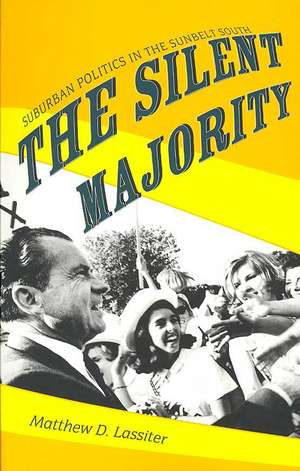
The Silent Majority
Autor Matthew D Lassiteren Limba Engleză Paperback – 26 aug 2007
Notăm cu interes apariția volumului The Silent Majority, o lucrare fundamentală pentru studenții și cercetătorii istoriei politice americane, esențială pentru înțelegerea mecanismelor care au dus la reconfigurarea liberalismului și ascensiunea centrului-dreapta. Remarcăm modul în care Matthew D Lassiter deconstruit mitul „excepționalismului sudic”, demonstrând că transformările politice din Sud nu au fost anomalii regionale, ci precursori ai unui model național bazat pe expansiunea suburbană. Autorul propune o nouă hartă conceptuală, înlocuind narațiunile clasice despre rasismul individual cu o analiză riguroasă a ideologiilor de clasă și a politicilor spațiale. Putem afirma că forța acestui studiu rezidă în ancorarea în date arhivistice vaste, volumul incluzând 8 hărți și 4 tabele care ilustrează segregarea rezidențială și școlară. The Silent Majority extinde cadrul propus de The New Suburban History de Kevin M. Kruse cu date noi din perioada post-drepturi civile, oferind o perspectivă mai nuanțată asupra modului în care retorica „neutră din punct de vedere rasial” a servit la consolidarea privilegiilor economice în suburbii. În timp ce White Flight se concentrează pe exodul populației albe din Atlanta, Matthew D Lassiter lărgește spectrul analizei către Virginia și Tennessee, explicând convergența dintre Nord și Sud într-un peisaj de „apartheid rasial intractabil”. Stilul este academic, dar narativul are o cadență fluidă, facilitată de includerea celor 23 de ilustrații care umanizează datele sociologice și politice prezentate.
Preț: 394.64 lei
Carte tipărită la comandă
Livrare economică 05-19 decembrie
Specificații
ISBN-10: 0691133891
Pagini: 408
Ilustrații: 23 halftones. 1 line illus. 4 tables. 8 maps.
Dimensiuni: 163 x 232 x 26 mm
Greutate: 0.58 kg
Editura: Princeton University Press
Locul publicării:Princeton, United States
De ce să citești această carte
Recomandăm această carte oricărui cititor interesat de politologie și istorie modernă. The Silent Majority oferă o explicație clară, lipsită de clișee, despre cum s-a format majoritatea politică actuală din SUA. Veți câștiga o înțelegere profundă a modului în care urbanismul și politicile publice de locuire influențează direct rezultatele electorale și structura socială a unei națiuni, dincolo de retorica partizană.
Despre autor
Matthew D Lassiter este un istoric recunoscut, specializat în istoria politică și urbană a Statelor Unite din secolul XX. Activitatea sa academică se concentrează pe intersecția dintre politicile publice, dezvoltarea suburbană și relațiile rasiale. Prin lucrări precum The Silent Majority și colaborări la volume ca The Myth of Southern Exceptionalism, Lassiter s-a impus ca o voce critică în reevaluarea istoriei Sudului american, fiind apreciat pentru capacitatea de a conecta mișcările de bază locale cu tendințele politice la nivel național.
Descriere scurtă
"Impressively researched, The Silent Majority brings together valuable and wholly new collections of archival material. Many historians pay lip service to the need to draw connections between the grassroots and the leadership, the local scene and national affairs. Lassiter actually does it. With verve and grace, he presents compelling accounts of grassroots mobilizations in Virginia, South Carolina, and Tennessee, and sensitive, detailed case studies of Atlanta and Charlotte. At the same time, he demonstrates how these local, suburban movements both reshaped national politics."--Bruce Schulman, Boston University
The Silent Majority stands as a landmark in a new generation of scholarship on the American South. Matthew Lassiter is spot on in his dissection of the myths of de facto segregation, national innocence, and southern distinctiveness. Rejecting a narrative that revolves around individual racism, he shows us how we arrived at our current dilemmas. This book is indispensable reading for anyone seeking to understand how the North and the South have converged around an 'intractable landscape of racial apartheid' in which class ideologies and divisions play a central role."--Jacquelyn Hall, University of North Carolina, Chapel Hill and Director, Southern Oral History Program.
"The Silent Majority is a compelling recounting of modern liberalism's demise and the ascendance of center-right politics. It is based not on Nixonian Southern strategies and stubborn remnants of malign racist thought and deeds, but on the adoption of socially acceptable race-neutral resistance to racial equality, financed by federal initiatives which created white suburbs and encouraged majority black urban cores. This is a breakthough rethinking of established thought, discarding conventional wisdom."--Julian Bond, Chairman of NAACP
"Matthew Lassiter has mastered an impressive body of primary and secondary sources ranging widely over national, regional and local materials over the past fifty years. He uses this mountain of evidence to make a telling point about the emergence of suburban southerners as a primary political force in the region, and about their impact on school desegregation."--David R. Goldfield, University of North Carolina, Charlotte