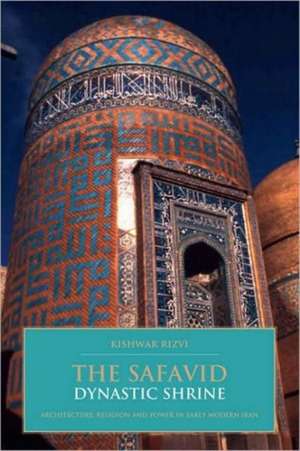
The Safavid Dynastic Shrine: Architecture, Religion and Power in Early Modern Iran: British Institute of Persian Studies
Autor Kishwar Rizvien Limba Engleză Hardback – 28 feb 2011






Preț: 798.93 lei
Preț vechi: 1206.03 lei
-34%
Puncte Express: 1198
Preț estimativ în valută:
141.26€ • 166.69$ • 123.71£
141.26€ • 166.69$ • 123.71£
Carte tipărită la comandă
Livrare economică 14-28 aprilie
Specificații
ISBN-13: 9781848853546
ISBN-10: 1848853548
Pagini: 288
Ilustrații: 90 bw integrated, 24pp plates
Dimensiuni: 164 x 242 x 22 mm
Greutate: 0.66 kg
Editura: Bloomsbury Publishing
Colecția I.B.Tauris
Seria British Institute of Persian Studies
Locul publicării:London, United Kingdom
ISBN-10: 1848853548
Pagini: 288
Ilustrații: 90 bw integrated, 24pp plates
Dimensiuni: 164 x 242 x 22 mm
Greutate: 0.66 kg
Editura: Bloomsbury Publishing
Colecția I.B.Tauris
Seria British Institute of Persian Studies
Locul publicării:London, United Kingdom
Cuprins
Introduction: The Historical Imagination
Urban and Architectural Contexts of the Shrine of Shaykh Safi (1250-1501)
Foundation Myths and Charitable Foundations (1501-1584)
Consolidating the Safavid Past: Shah Tahmasb and the Architectural Expansion of the Shrine
The Aesthetics and Ideology of Building: The Sarih al-milk of 'Abdi Beg Shirazi
The Princely Aesthetic: Shah 'Abbas I and the Imperial Setting (1589-1629)
Marking the Sacred Landscape: The Shrine in a Broadened Context
Urban and Architectural Contexts of the Shrine of Shaykh Safi (1250-1501)
Foundation Myths and Charitable Foundations (1501-1584)
Consolidating the Safavid Past: Shah Tahmasb and the Architectural Expansion of the Shrine
The Aesthetics and Ideology of Building: The Sarih al-milk of 'Abdi Beg Shirazi
The Princely Aesthetic: Shah 'Abbas I and the Imperial Setting (1589-1629)
Marking the Sacred Landscape: The Shrine in a Broadened Context