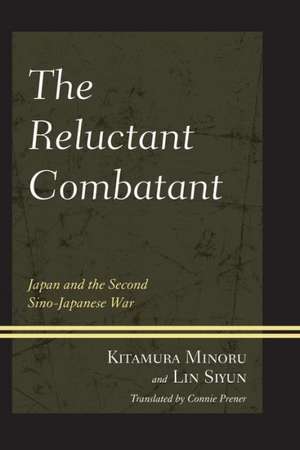
The Reluctant Combatant: Japan and the Second Sino-Japanese War: University Press of America
Autor Kitamura Minoru, Lin Si-Yunen Limba Engleză Paperback – 15 apr 2014
Din seria University Press of America
- 35%
 Preț: 376.42 lei
 - 26%
 Preț: 262.22 lei
 - 33%
 Preț: 388.94 lei
 - 27%
 Preț: 256.41 lei
 - 29%
 Preț: 343.67 lei
 - 33%
 Preț: 356.32 lei
 - 34%
 Preț: 442.53 lei
 - 27%
 Preț: 352.54 lei
 - 25%
 Preț: 362.95 lei
 - 32%
 Preț: 497.14 lei
 - 26%
 Preț: 285.87 lei
 - 27%
 Preț: 280.25 lei
 - 39%
 Preț: 527.38 lei
 - 23%
 Preț: 322.16 lei
 - 23%
 Preț: 314.30 lei
 - 25%
 Preț: 306.96 lei
 - 36%
 Preț: 369.19 lei
 - 27%
 Preț: 276.77 lei
 - 34%
 Preț: 443.80 lei
 - 27%
 Preț: 276.97 lei
 - 34%
 Preț: 351.50 lei
 - 35%
 Preț: 374.40 lei
 - 33%
 Preț: 491.96 lei
 - 27%
 Preț: 266.67 lei
 - 33%
 Preț: 481.51 lei
 - 27%
 Preț: 252.84 lei
 - 23%
 Preț: 322.03 lei
 - 34%
 Preț: 348.03 lei
 - 27%
 Preț: 277.28 lei
 - 29%
 Preț: 345.60 lei
 - 26%
 Preț: 279.74 lei
 - 27%
 Preț: 258.17 lei
 - 34%
 Preț: 506.57 lei
 - 27%
 Preț: 252.91 lei
 - 32%
 Preț: 390.38 lei
 - 28%
 Preț: 238.63 lei
 - 32%
 Preț: 399.92 lei
 - 28%
 Preț: 251.94 lei
 - 32%
 Preț: 363.17 lei
 - 27%
 Preț: 255.50 lei
 - 34%
 Preț: 536.65 lei
 - 26%
 Preț: 286.36 lei
 - 25%
 Preț: 364.66 lei
 - 32%
 Preț: 458.54 lei
 - 34%
 Preț: 474.70 lei
 - 37%
 Preț: 730.79 lei
 - 26%
 Preț: 357.73 lei
 - 39%
 Preț: 531.33 lei
 - 27%
 Preț: 253.44 lei
Preț: 253.93 lei
Preț vechi: 349.07 lei
-27%
Puncte Express: 381
Carte tipărită la comandă
Livrare economică 05-19 decembrie
Livrare prin curier în România Termenul estimat este afișat lângă disponibilitate.
Transport gratuit de la 400.00 lei Plată online sau ramburs, în funcție de opțiunile comenzii.
Retur gratuit în 14 zile Comandă securizată și suport în română.
Specificații
ISBN-13: 9780761863243
ISBN-10: 0761863249
Pagini: 118
Dimensiuni: 154 x 231 x 10 mm
Greutate: 0.23 kg
Ediția:New.
Editura: Bloomsbury Publishing
Colecția University Press of America
Seria University Press of America
Locul publicării:New York, United States
ISBN-10: 0761863249
Pagini: 118
Dimensiuni: 154 x 231 x 10 mm
Greutate: 0.23 kg
Ediția:New.
Editura: Bloomsbury Publishing
Colecția University Press of America
Seria University Press of America
Locul publicării:New York, United States
Descriere
The Reluctant Combatant offers proof that Japanese political leaders were reluctant to engage China in a full-scale conflict during the Second Sino-Japanese War. This book identifies several key aspects of the political context surrounding the Second Sino-Japanese War, including the extreme fragility of the national united front against Japan, the view of Soviet Russia as Japan's principal potential adversary, and the potential threat to Japanese national defense a protracted war with China would pose. This book reveals that the Communists, the National Government, local gentry, peasants, and bandits occasionally collaborated with the enemy-Japanese troops-to expand their spheres of influence.
Cuprins
PREFACE
INTRODUCTION: INTERNATIONAL POLITICS AND WAR
I. The Second Sino-Japanese War and world history
II. Aggressive wars not considered crimes
III. Japan: victim of circumstance
CHAPTER 1: EVENTS LEADING UP TO THE SECOND SINO-JAPANESE WAR
I. Japan and China join European-oriented international order
II. Russo-Japanese War spawns a new conflict
III. Tension between Japan and China heightens
CHAPTER 2: CHINA AND THE SECOND SINO-JAPANESE WAR
I. Behind the groundswell of support for war against Japan
II. From the Marco Polo Bridge Incident to full-blown war
CHAPTER 3: JAPAN AND THE SECOND SINO-JAPANESE WAR
I. Japan's response to the outbreak of the Second Sino-Japanese War
II. Initial peace overtures
III. The war in the context of international politics
CHAPTER 4: THE SECOND SINO-JAPANESE WAR AND CHINESE SOCIETY
I. Who fought in the war?
II. Recruitment of soldiers in China
CHAPTER 5: WAR DYNAMICS ALTER CHINESE SOCIETY
I. The effect of Japanese occupation
II. Establishment of pro-Japan governments
CHAPTER 6: FROM THE SECOND SINO-JAPANESE WAR TO THE PACIFIC WAR
I. Japanese government's efforts to negotiate peace with Nationalist government
II. The road to the Pacific War
CHAPTER 7: THE CHINESE PERCEPTION OF HISTORY
I. Chinese views about crimes and punishment
II. Confucian ethics encourage lying: the bihui syndrome
AFTERWORD
SELECT BIBLIOGRAPHY
INTRODUCTION: INTERNATIONAL POLITICS AND WAR
I. The Second Sino-Japanese War and world history
II. Aggressive wars not considered crimes
III. Japan: victim of circumstance
CHAPTER 1: EVENTS LEADING UP TO THE SECOND SINO-JAPANESE WAR
I. Japan and China join European-oriented international order
II. Russo-Japanese War spawns a new conflict
III. Tension between Japan and China heightens
CHAPTER 2: CHINA AND THE SECOND SINO-JAPANESE WAR
I. Behind the groundswell of support for war against Japan
II. From the Marco Polo Bridge Incident to full-blown war
CHAPTER 3: JAPAN AND THE SECOND SINO-JAPANESE WAR
I. Japan's response to the outbreak of the Second Sino-Japanese War
II. Initial peace overtures
III. The war in the context of international politics
CHAPTER 4: THE SECOND SINO-JAPANESE WAR AND CHINESE SOCIETY
I. Who fought in the war?
II. Recruitment of soldiers in China
CHAPTER 5: WAR DYNAMICS ALTER CHINESE SOCIETY
I. The effect of Japanese occupation
II. Establishment of pro-Japan governments
CHAPTER 6: FROM THE SECOND SINO-JAPANESE WAR TO THE PACIFIC WAR
I. Japanese government's efforts to negotiate peace with Nationalist government
II. The road to the Pacific War
CHAPTER 7: THE CHINESE PERCEPTION OF HISTORY
I. Chinese views about crimes and punishment
II. Confucian ethics encourage lying: the bihui syndrome
AFTERWORD
SELECT BIBLIOGRAPHY
Recenzii
The mainstream view on the Second Sino-Japanese War is that Imperial Japan was bent on destroying China, and the rest of Asia, for purely selfish reasons. However, careful analysis of the global situation, particularly of the social and political development of China and the attitudes of the Chinese leadership, indicates that the Chinese were not the innocent victims of 'aggression' as is currently claimed.
Authors Kitamura and Lin recount the circumstances that ultimately lead to the Second Sino-Japanese War, demonstrating that the war was neither a Japanese 'brutal war of aggression' or that China was a 'helpless' victim.
Authors Kitamura and Lin recount the circumstances that ultimately lead to the Second Sino-Japanese War, demonstrating that the war was neither a Japanese 'brutal war of aggression' or that China was a 'helpless' victim.