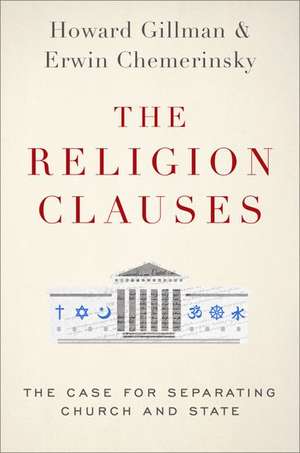
The Religion Clauses: The Case for Separating Church and State: Inalienable Rights
Autor Erwin Chemerinsky, Howard Gillmanen Limba Engleză Hardback – 12 noi 2020
Considerăm că The Religion Clauses reprezintă o intervenție esențială într-un moment de cotitură pentru justiția americană. Abordarea autorilor diferă de cea din Equal Separation de Paul J. Weber prin faptul că, deși ambele caută o bază teoretică solidă, Erwin Chemerinsky și Howard Gillman sunt mult mai puțin abstracți și mai direct aplicați pe realitatea juridică imediată. În timp ce Weber explorează neutralitatea ca teorie, Chemerinsky și Gillman oferă o critică tăioasă a modului în care Curtea Supremă a interpretat greșit clauzele religioase în ultimii ani, propunând o revenire la secularismul strict.
Subliniem importanța acestei lucrări în contextul operei lui Erwin Chemerinsky. Dacă în Presumed Guilty autorul analiza subminarea drepturilor civile de către forțele de ordine, în acest volum din seria Inalienable Rights el extinde critica asupra modului în care libertatea religioasă este „înarmată” pentru a obține privilegii. Spre deosebire de American Crusade, care se concentrează pe naționalismul creștin, The Religion Clauses se ancorează în analiza riguroasă a celor două prevederi ale Primului Amendament: clauza de stabilire și clauza de liber exercițiu.
Suntem de părere că cititorul va obține o înțelegere clară a motivului pentru care legile neutre trebuie să se aplice tuturor cetățenilor, fără excepții pe baze de credință. Stilul este cel al unui manual dens, dar accesibil, care demonstrează că un stat secular este singura garanție pentru o societate pluralistă. Autorii argumentează convingător că zidul dintre biserică și stat nu este doar o metaforă istorică, ci o necesitate funcțională în secolul XXI.
Din seria Inalienable Rights
- 14%
 Preț: 113.24 lei
 -
 Preț: 193.64 lei
 - 20%
 Preț: 131.56 lei
 - 16%
 Preț: 162.88 lei
 - 25%
 Preț: 212.85 lei
 - 15%
 Preț: 150.09 lei
 - 15%
 Preț: 149.39 lei
 -
 Preț: 152.27 lei
 - 15%
 Preț: 185.81 lei
 -
 Preț: 144.93 lei
 -
 Preț: 152.68 lei
 - 24%
 Preț: 206.77 lei
 -
 Preț: 159.32 lei
 -
 Preț: 220.15 lei
 - 19%
 Preț: 296.37 lei
 - 19%
 Preț: 296.37 lei
Preț: 142.05 lei
Preț vechi: 186.62 lei
-24%
Carte disponibilă
Livrare economică 19-25 noiembrie
Specificații
ISBN-10: 0190699736
Pagini: 240
Dimensiuni: 211 x 135 x 25 mm
Greutate: 0.39 kg
Editura: Oxford University Press
Colecția OUP USA
Seria Inalienable Rights
Locul publicării:New York, United States
V-ar putea interesa
-
 -15%Preț: 150.09 lei175.86 lei
 -
 -15%Preț: 163.64 lei192.23 lei
 -
 -16%Preț: 175.86 lei208.62 lei
 -
 Preț: 245.59 lei
 -
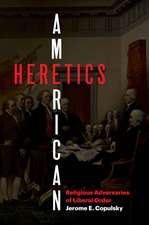 American Heretics: Religious Adversaries of Liberal OrderJerome E. CopulskyPreț: 303.30 lei
 -
 The Battle Over School Prayer: How Engel V. Vitale Changed AmericaBruce J. DierenfieldPreț: 245.50 lei
 -
 Democracy and ReligionOdell-ScottPreț: 186.66 lei
 -
 Religion and the State: Essays in Honor of Leo PfefferJames E. Wood, Jr.Preț: 307.74 lei
 -
 -34%Preț: 136.89 lei207.40 lei
 -
 UpheldChristine FarenhorstPreț: 94.56 lei
 -
 A Letter Concerning TolerationJohn LockePreț: 33.29 lei
 -
 -27%Preț: 97.96 lei134.13 lei
 -
 Solemn ReverenceRandall BalmerPreț: 71.27 lei
 -
 Religious Freedom and the Supreme CourtRonald B. Flowers-23%Preț: 476.61 lei618.98 lei
 -
 Preț: 280.12 lei
 -
 Religious Entanglements in a Secular WorldJarrett T Baume-27%Preț: 889.47 lei1210.97 lei
 -
 Religion in the ClassroomJonathan M. GoldenPreț: 160.66 lei
De ce să citești această carte
Recomandăm această carte celor interesați de drept constituțional și de filosofia politică a separării puterilor. Veți învăța cum s-a transformat interpretarea Primului Amendament și de ce neutralitatea statului este vitală pentru protejarea diversității religioase. Este o lectură esențială pentru a înțelege mizele ideologice din spatele deciziilor recente ale Curții Supreme a SUA, oferind argumente juridice solide împotriva privilegiilor confesionale în spațiul public.
Despre autor
Erwin Chemerinsky este un reputat expert în drept constituțional, absolvent al Harvard Law School și decan fondator al Facultății de Drept de la University of California, Irvine. Specialist de renume în Primul Amendament, acesta deține și funcția de profesor Raymond Pryke. Co-autorul său, Howard Gillman, este de asemenea un cercetător proeminent în domeniul constituționalismului american. Împreună, aceștia au publicat numeroase analize critice despre rolul Curții Supreme și drepturile fundamentale, Chemerinsky fiind recunoscut la nivel internațional pentru rigoarea academică și implicarea în dezbaterile privind libertățile civile.