Cantitate/Preț
Produs

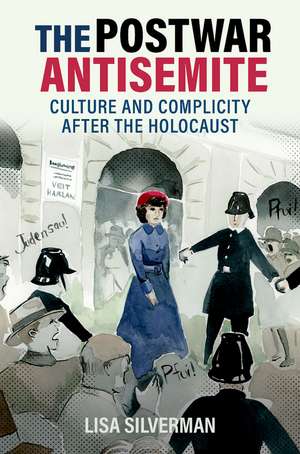
The Postwar Antisemite: Culture and Complicity after the Holocaust

Autor Lisa Silverman
en Limba Engleză Hardback – 9 oct 2025

Considerăm că The Postwar Antisemite aduce o perspectivă critică esențială în studiile despre Holocaust, investigând nu doar supraviețuirea prejudecăților, ci și construcția culturală a figurii „Antisemitului” ca instrument de exonerare colectivă. Lisa Silverman demonstrează cum, în primii ani după 1945, societățile germană și austriacă au creat un portret stereotip al răului — Antisemitul — pentru a proiecta asupra acestuia întreaga vinovăție, permițând restului populației să ignore propria complicitate. Reținem analiza autoarei asupra modului în care limbajul codificat a înlocuit manifestările violente, oferind o structură narativă prin care vechile prejudecăți au persistat sub masca unei noi identități naționale „curățate”. Cartea completează perspectiva oferită de The Figural Jew, adăugând o analiză a modului în care nu doar imaginea evreului a fost reconstruită filosofic, ci și cea a persecutorului a fost distorsionată pentru a servi nevoilor politice postbelice. De asemenea, lucrarea intră în dialog cu The Holocaust, Israel and 'the Jew', însă acolo unde Evelien Gans se concentrează pe reciclarea stereotipurilor în spațiul public olandez, Silverman sondează mecanismele psihologice și culturale profunde din centrul Europei. În contextul operei sale anterioare, The Postwar Antisemite reprezintă o evoluție firească de la studiul identității evreiești din Becoming Austrians către o examinare a structurilor de putere care au modelat memoria colectivă. Stilul este riguros, academic, fundamentat pe o cercetare vastă a arhivelor juridice și a producțiilor culturale ale epocii, oferind o explicație nuanțată pentru reziliența urii de tip codificat în societățile contemporane.

Citește tot Restrânge

Preț: 16459 lei

Preț vechi: 19502 lei
-16%

Puncte Express: 247

Carte disponibilă

Livrare economică 08-13 mai


Specificații

ISBN-13: 9780197697726
ISBN-10: 0197697720
Pagini: 360
Ilustrații: 20 images
Dimensiuni: 165 x 240 x 29 mm
Greutate: 0.64 kg
Editura: Oxford University Press
Colecția OUP USA
Locul publicării:New York, United States

De ce să citești această carte

Această lucrare este indispensabilă cercetătorilor și studenților interesați de istoria europeană postbelică și de sociologia memoriei. Cititorul va înțelege cum mecanismele de apărare culturală au transformat antisemitismul într-un cod ascuns, dar eficient. Este o resursă valoroasă pentru a descifra modul în care societățile procesează trauma și vinovăția, oferind instrumente critice pentru a recunoaște formele moderne de prejudecată care se ascund în spatele discursului oficial.


Despre autor

Lisa Silverman este un specialist recunoscut în istoria culturală a Europei Centrale, cu un accent deosebit pe interacțiunile dintre evrei și neevrei în Austria și Germania. Opera sa explorează teme precum spațiul urban, reprezentările Holocaustului și construcția identității naționale. Printre lucrările sale de referință se numără Becoming Austrians și Holocaust Representations in History, volume care analizează impactul evenimentelor traumatice asupra culturii vizuale și literare. În prezent, contribuțiile sale academice sunt esențiale pentru înțelegerea modului în care categoriile sociale și religioase sunt negociate în contexte de criză istorică.


Descriere

In his influential Anti-Semite and Jew, French philosopher Jean-Paul Sartre observed "If the Jew did not exist, the anti-Semite would invent him." In doing so he articulated the figure of an Antisemite responsible for imagining the Jew in a formulation that has lasted for decades. This figure became an indispensable trope in the period immediately after the war. It enabled Germans and Austrians to navigate a radically changed political and cultural landscape and reestablish lives upended by war by denying complicity in perpetuating antisemitic ideology. The deeply ingrained cultural practices that formed the basis for age-old prejudices against Jews persisted via coded references, taking new forms, and providing fertile ground for explicit eruptions. Decades before the Nazi persecution of the Jews would emerge as a master moral paradigm of evil in popular culture, the constructed Antisemite became part of a forceful narrative structure that allowed stereotypes about Jews to persist, even as explicit antisemitism became taboo. Lisa Silverman examines the crucial development and implications of the figural Antisemite in a range of trials, films, and texts during the first years after the end of the Second World War. She argues that, in their economically shattered, emotionally exhausted, and culturally impoverished postwar world, Austrians, Germans, and others used the Antisemite as a way to come to terms with their altered circumstances and to shape new national self-understandings. A readily recognizable and easily adaptable figure of evil, the Antisemite loomed large as a powerful and persistent trope in a wide range of artistic and cultural narratives. As a figure onto which to project or imagine as a source of the hatred of Jews, the Antisemite allowed audiences to avoid facing the implications of crimes committed by the Nazis and their accomplices and to deny the endurance of widespread and often coded antisemitic prejudices. In postwar Europe, where everyone looked to blame others for the murder and dispossession of the Jewish population, the authority to define the Antisemite as a receptacle for explicit Jew-hatred became a powerful force.As The Postwar Antisemite argues, antisemitism as a hidden code gained new force, packing stronger, more effective punches and affording its users more power. This era is critical to understanding ongoing struggles over the authority to set the parameters of antisemitism and the power and persistence of this hatred in society.

Notă biografică

Lisa Silverman is Professor of History and Jewish Studies at the University of Wisconsin-Milwaukee. She is the author of Becoming Austrians: Jews and Culture between the World Wars (OUP, 2012) and the co-author of Holocaust Representations in History: An Introduction.