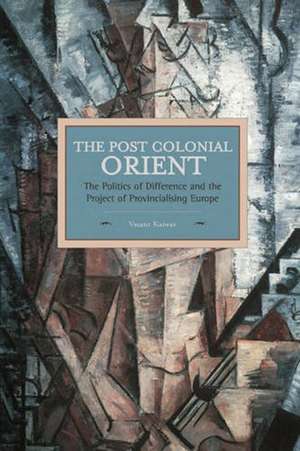
The Postcolonial Orient: Historical Materialism
Autor Vasant Kaiwaren Limba Engleză Paperback – 22 dec 2015
Din seria Historical Materialism
-
 Preț: 216.84 lei
 -
 Preț: 279.33 lei
 -
 Preț: 508.92 lei
 -
 Preț: 278.61 lei
 - 11%
 Preț: 456.27 lei
 -
 Preț: 317.10 lei
 -
 Preț: 338.19 lei
 -
 Preț: 446.60 lei
 -
 Preț: 357.03 lei
 -
 Preț: 317.48 lei
 -
 Preț: 219.50 lei
 -
 Preț: 225.69 lei
 -
 Preț: 217.79 lei
 -
 Preț: 339.09 lei
 -
 Preț: 257.90 lei
 -
 Preț: 216.84 lei
 -
 Preț: 218.67 lei
 -
 Preț: 219.62 lei
 -
 Preț: 222.39 lei
 -
 Preț: 176.69 lei
 -
 Preț: 259.77 lei
 -
 Preț: 222.39 lei
 -
 Preț: 219.62 lei
 -
 Preț: 218.67 lei
 -
 Preț: 446.24 lei
 -
 Preț: 177.62 lei
 -
 Preț: 301.02 lei
 -
 Preț: 302.65 lei
 -
 Preț: 337.26 lei
 -
 Preț: 454.02 lei
 -
 Preț: 259.45 lei
 -
 Preț: 219.62 lei
 -
 Preț: 215.91 lei
 -
 Preț: 258.10 lei
 -
 Preț: 216.84 lei
 -
 Preț: 500.82 lei
 -
 Preț: 178.52 lei
 -
 Preț: 223.32 lei
 -
 Preț: 219.62 lei
 -
 Preț: 218.67 lei
 -
 Preț: 339.09 lei
 -
 Preț: 299.88 lei
 -
 Preț: 218.67 lei
 -
 Preț: 448.47 lei
 -
 Preț: 179.45 lei
 -
 Preț: 302.23 lei
 -
 Preț: 448.61 lei
 -
 Preț: 179.45 lei
 -
 Preț: 447.53 lei
 -
 Preț: 218.67 lei
Preț: 298.99 lei
Puncte Express: 448
Preț estimativ în valută:
52.93€ • 61.64$ • 45.98£
52.93€ • 61.64$ • 45.98£
Carte tipărită la comandă
Livrare economică 24 februarie-10 martie
Preluare comenzi: 021 569.72.76
Specificații
ISBN-13: 9781608464791
ISBN-10: 1608464792
Pagini: 415
Dimensiuni: 154 x 229 x 30 mm
Greutate: 0.59 kg
Editura: Haymarket Books
Seria Historical Materialism
Locul publicării:Chicago, United States
ISBN-10: 1608464792
Pagini: 415
Dimensiuni: 154 x 229 x 30 mm
Greutate: 0.59 kg
Editura: Haymarket Books
Seria Historical Materialism
Locul publicării:Chicago, United States
V-ar putea interesa
-
 Armies Of GodDominic GreenPreț: 111.44 lei
 -
 UtopiaThomas More-22%Preț: 42.22 lei54.03 lei
 -
 -9%Preț: 218.57 lei239.48 lei
 -
 Arab Spring DreamsNasser WeddadyPreț: 111.50 lei
 -
 The Secret History of DemocracyBenjamin IsakhanPreț: 404.13 lei
 -
 The Big ShortMichael LewisPreț: 86.58 lei
 -
 The Cuban Revolution in the 21st CenturyGeorge LambiePreț: 248.14 lei
 -
 Devolution in the United KingdomRussell Deacon-18%Preț: 164.59 lei201.78 lei
 -
 Gaza in CrisisNoam ChomskyPreț: 92.10 lei
 -
 Preț: 103.81 lei
 -
 Every Secret ThingGillian Slovo-27%Preț: 64.99 lei89.57 lei
 -
 Valences of the DialecticFredric JamesonPreț: 222.21 lei
Cuprins
Acknowledgements
Preface
1 Introduction
1.1 A narrative of arrival
1.2 1989 and all that
1.3 Postcolonial difference
2 Situating Postcolonial Studies
2.1 Definitions: Colonialism, for example
2.2 Postcolonial modernisation
2.3 Postcolonial populism
2.4 Subaltern Studies
3 Colonialism, Modernity, Postcolonialism
3.1 Colonialism and modernity in a postcolonial framing
3.2 History's ironic reversals
3.3 Who is the 'subaltern' in postcolonial studies?
4 Provincialising Europe or Exoticising India? Towards a Historical and Categorial Critique of Postcolonial Studies
4.1 Marx and difference in Provincialising Europe
4.2 The not-yet of historicism
4.3 Why historicise?
4.4 Tattooed by the exotic
4.5 Under the sign of Heidegger, I: The woman's question
4.6 Under the sign of Heidegger, II: Imagined communities
4.7 Lack/inadequacy or plenitude/creativity?
4.8 Dominance without hegemony: Historicism by another name?
4.9 The constituent elements of colonial modernity
4.10 Modernity as class struggle
4.11 Orientalism and nativism
4.12 Bahubol and the Muslim question
5 Uses and Abuses of Marx
5.1 Abstract labour, difference, History I and II
5.2 The piano maker and the piano player: Productive and unproductive labour
5.3 Millennial toil as the 'nightmare of history'
5.4 'Bourgeois hegemony' and colonial rule
5.5 Modernity in the 'fullest sense'
5.6 Beyond the bourgeois revolution? Hegemony revisited
5.7 The historic moment of colonial dominance in India
5.8 A 'liberation from blinding bondage', or the question of historicism
5.9 Marxism and historicism
6 The Postcolonial Orient
6.1 The play of difference, the merchandising of the exotic, tradition and neo-traditionalism
6.2 The non-commissioned officers
6.3 The Orient as 'vanishing mediator'
6.4 The unrenounceable project
6.5 Provincialising Europe
References
Ind
Preface
1 Introduction
1.1 A narrative of arrival
1.2 1989 and all that
1.3 Postcolonial difference
2 Situating Postcolonial Studies
2.1 Definitions: Colonialism, for example
2.2 Postcolonial modernisation
2.3 Postcolonial populism
2.4 Subaltern Studies
3 Colonialism, Modernity, Postcolonialism
3.1 Colonialism and modernity in a postcolonial framing
3.2 History's ironic reversals
3.3 Who is the 'subaltern' in postcolonial studies?
4 Provincialising Europe or Exoticising India? Towards a Historical and Categorial Critique of Postcolonial Studies
4.1 Marx and difference in Provincialising Europe
4.2 The not-yet of historicism
4.3 Why historicise?
4.4 Tattooed by the exotic
4.5 Under the sign of Heidegger, I: The woman's question
4.6 Under the sign of Heidegger, II: Imagined communities
4.7 Lack/inadequacy or plenitude/creativity?
4.8 Dominance without hegemony: Historicism by another name?
4.9 The constituent elements of colonial modernity
4.10 Modernity as class struggle
4.11 Orientalism and nativism
4.12 Bahubol and the Muslim question
5 Uses and Abuses of Marx
5.1 Abstract labour, difference, History I and II
5.2 The piano maker and the piano player: Productive and unproductive labour
5.3 Millennial toil as the 'nightmare of history'
5.4 'Bourgeois hegemony' and colonial rule
5.5 Modernity in the 'fullest sense'
5.6 Beyond the bourgeois revolution? Hegemony revisited
5.7 The historic moment of colonial dominance in India
5.8 A 'liberation from blinding bondage', or the question of historicism
5.9 Marxism and historicism
6 The Postcolonial Orient
6.1 The play of difference, the merchandising of the exotic, tradition and neo-traditionalism
6.2 The non-commissioned officers
6.3 The Orient as 'vanishing mediator'
6.4 The unrenounceable project
6.5 Provincialising Europe
References
Ind
Descriere
In this incisive and impeccably researched critique of Postcolonialism, Kaiwar argues that subaltern studies itself is marred by orientalism.