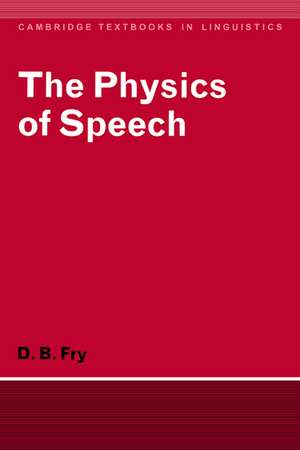
The Physics of Speech: Cambridge Textbooks in Linguistics
Autor D. B. Fryen Limba Engleză Paperback – 7 mar 1979
Observăm în The Physics of Speech o abordare riguros interdisciplinară, care reunește fizica acustică, neurofiziologia și lingvistica teoretică pentru a explica mecanismul complex al comunicării umane. D. B. Fry nu se limitează la o descriere a sunetelor, ci ghidează cititorul prin toate etapele „lanțului vorbirii”: de la unitățile lingvistice abstracte la impulsurile nervoase care coordonează mișcările musculare și, în final, la propagarea undelor sonore în mediu. Subliniem claritatea cu care sunt prezentate principiile fizice de generare a energiei sonore și fenomenul de rezonanță, elemente esențiale pentru înțelegerea modului în care mesajele sunt transmise și ulterior decodate de către receptor.
Această lucrare ocupă un loc central în opera autorului, fiind strâns legată de Acoustic Phonetics. În timp ce volumul menționat anterior funcționează ca o antologie de texte clasice din domeniu, The Physics of Speech reprezintă sinteza didactică a lui Fry, rafinată de-a lungul anilor de predare pentru terapeuți de vorbire și specialiști în comunicații. Cititorii familiarizați cu Elements of Acoustic Phonetics de Peter Ladefoged vor aprecia în acest volum focalizarea pe aspectele fiziologice și pe utilizarea spectrografului sonor, oferind o perspectivă mai tehnică asupra indicilor acustici inerenți limbii engleze. Structura este una academică, dar accesibilă, facilitând tranziția de la conceptele abstracte la analiza aplicată a spectrogramelor, oferind astfel instrumentele necesare pentru cercetarea în fonetică și logopedie.
Din seria Cambridge Textbooks in Linguistics
- 19%
 Preț: 480.69 lei
 - 19%
 Preț: 675.99 lei
 -
 Preț: 344.24 lei
 - 19%
 Preț: 406.99 lei
 -
 Preț: 458.35 lei
 - 19%
 Preț: 410.52 lei
 - 19%
 Preț: 443.56 lei
 - 19%
 Preț: 550.44 lei
 - 19%
 Preț: 444.74 lei
 - 19%
 Preț: 521.88 lei
 - 19%
 Preț: 412.38 lei
 - 19%
 Preț: 412.98 lei
 - 19%
 Preț: 448.50 lei
 - 19%
 Preț: 406.99 lei
 - 11%
 Preț: 471.58 lei
 - 11%
 Preț: 408.57 lei
 -
 Preț: 431.52 lei
 -
 Preț: 465.93 lei
 - 19%
 Preț: 620.38 lei
 - 19%
 Preț: 521.68 lei
 -
 Preț: 361.98 lei
 - 19%
 Preț: 603.47 lei
 - 23%
 Preț: 1008.49 lei
 - 19%
 Preț: 627.55 lei
 - 11%
 Preț: 401.25 lei
 - 19%
 Preț: 425.12 lei
 - 19%
 Preț: 436.23 lei
 - 19%
 Preț: 421.43 lei
 - 19%
 Preț: 484.88 lei
 - 23%
 Preț: 1036.70 lei
 - 11%
 Preț: 401.34 lei
 - 19%
 Preț: 481.27 lei
 -
 Preț: 493.61 lei
 -
 Preț: 460.83 lei
 - 23%
 Preț: 774.72 lei
 - 19%
 Preț: 427.95 lei
 - 19%
 Preț: 444.14 lei
 -
 Preț: 393.73 lei
 - 19%
 Preț: 475.99 lei
 -
 Preț: 500.29 lei
 - 19%
 Preț: 399.13 lei
Preț: 486.22 lei
Carte tipărită la comandă
Livrare economică 08-22 iunie
Specificații
ISBN-10: 0521293790
Pagini: 156
Dimensiuni: 152 x 229 x 9 mm
Greutate: 0.23 kg
Editura: Cambridge University Press
Colecția Cambridge University Press
Seria Cambridge Textbooks in Linguistics
Locul publicării:Cambridge, United Kingdom
V-ar putea interesa
-
 The Phonology of DutchGeert Booij-13%Preț: 328.78 lei376.42 lei
 -
 The Phonology of SwedishTomas Riad-23%Preț: 889.11 lei1152.55 lei
 -
 The Oxford Handbook of Corpus PhonologyJacques Durand-36%Preț: 846.11 lei1329.38 lei
 -
 Introducing Phonetic ScienceMichael AshbyPreț: 288.12 lei
 -
 Preț: 240.77 lei
 -
 Los sonidos del español: Spanish Language editionJosé Ignacio HualdePreț: 391.15 lei
 -
 Handbook of the International Phonetic Association: A Guide to the Use of the International Phonetic AlphabetInternational Phonetic AssociationPreț: 294.92 lei
 -
 Intonational PhonologyD. Robert Ladd-11%Preț: 411.63 lei462.50 lei
 -
 Phonetics: A CoursebookRachael-Anne KnightPreț: 289.95 lei
 -
 -23%Preț: 608.55 lei790.32 lei
 -
 A Historical Phonology of EnglishDonka Minkova-11%Preț: 175.91 lei196.61 lei
 -
 The Sounds of KoreanJiyoung ShinPreț: 256.28 lei
 -
 The Handbook of English PronunciationMarnie Reed-9%Preț: 1176.53 lei1292.89 lei
 -
 You Say PotatoBen Crystal-35%Preț: 44.39 lei68.49 lei
De ce să citești această carte
Recomandăm această carte pentru rigoarea cu care tratează legătura dintre anatomie și fizica sunetului. Este un suport de curs esențial pentru studenții la lingvistică și pentru viitorii terapeuți de vorbire, oferind o bază solidă în analiza acustică fără a necesita cunoștințe avansate de matematică. Cititorul câștigă o înțelegere profundă a modului în care semnalele sonore devin unități de limbaj inteligibile.