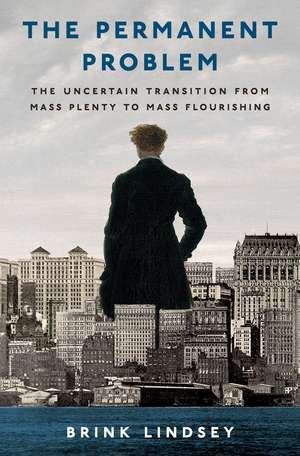
The Permanent Problem: The Uncertain Transition from Mass Plenty to Mass Flourishing
Autor Brink Lindseyen Limba Engleză Hardback – 6 apr 2026
Găsim în The Permanent Problem o perspectivă nouă asupra paradoxului contemporan: de ce, deși trăim în cele mai bogate și libere societăți din istorie, resimțim un sentiment acut de prăbușire? Brink Lindsey propune o teză provocatoare, afirmând că nu ne confruntăm cu un eșec al capitalismului, ci cu dificultățile unei tranziții istorice neterminate de la acumularea de bunuri materiale la „înflorirea umană” autentică. Această ediție publicată de Oxford University Press oferă un cadru metodologic pentru a înțelege de ce realitatea actuală nu se ridică la înălțimea așteptărilor create de succesul economic al secolului trecut.
Autorul structurează analiza în jurul a trei piloni critici: criza incluziunii, a dinamismului și a politicii. Spre deosebire de Permacrisis de Gordon Brown, care se concentrează pe reforme instituționale globale și cooperare internațională pentru a depăși stagnarea, The Permanent Problem mută accentul pe dimensiunea umană și sociologică, argumentând că revitalizarea comunităților locale este esențială pentru stabilitatea politică. De asemenea, lucrarea completează perspectiva oferită de Redefining Prosperity, adăugând o analiză profundă a modului în care eșecul inovației tehnologice — nu doar limitele ecologice — blochează progresul social.
În contextul operei sale, volumul de față extinde temele din The Captured Economy. Dacă în lucrarea anterioară Lindsey analiza mecanismele care generează inegalitatea, aici el explorează consecințele psihologice și culturale ale acestui decalaj. Stilul este precis și metodic, evitând soluțiile radicale în favoarea unei reechilibrări a sistemului actual. Este o lectură densă, dar accesibilă, care transformă pesimismul actual într-un diagnostic clar și o foaie de parcurs pentru viitor.
Preț: 169.01 lei
Preț vechi: 199.76 lei
-15%
Carte disponibilă
Livrare economică 19-24 noiembrie
Livrare express 31 octombrie-06 noiembrie pentru 62.57 lei
Specificații
ISBN-10: 0197803962
Pagini: 248
Dimensiuni: 164 x 239 x 22 mm
Greutate: 0.51 kg
Editura: Oxford University Press
Colecția OUP USA
Locul publicării:New York, United States
De ce să citești această carte
Recomandăm această carte cititorilor interesați de sociologie politică și economie care caută să înțeleagă rădăcinile polarizării și ale nemulțumirii sociale actuale. Brink Lindsey oferă o explicație coerentă pentru criza de identitate a democrațiilor liberale, demonstrând că prosperitatea materială nu este suficientă fără o structură socială care să permită dezvoltarea personală. Veți câștiga o viziune de ansamblu asupra modului în care inovația și comunitatea pot salva modelul capitalist.
Despre autor
Brink Lindsey este vicepreședinte pentru cercetare la Cato Institute și un analist politic de renume, a cărui carieră s-a concentrat pe studiul capitalismului global și al dinamicii economice. Este recunoscut pentru capacitatea sa de a sintetiza concepte complexe în argumente clare, fiind autorul unor lucrări apreciate precum Against the Dead Hand și The Captured Economy. Contribuțiile sale frecvente în publicații precum Wall Street Journal și Financial Times l-au consacrat ca o voce echilibrată în dezbaterile despre inegalitate și progres tehnologic. În prezent, locuiește și activează în proximitatea Washington, D.C.
Descriere
Recenzii
This book has a gloomy title and a lot of gloomy content. Amazingly enough, though, it left me feeling hopeful and optimistic. Brink Lindsey makes a resounding case that we have everything we need to solve our problems-deep as they are-and that doing so doesn't require either economic totalitarianism or anarchy. Read The Permanent Problem, and you'll come away both informed and energized.
Why has unparalleled material and technological progress led to global disappointment instead of mass flourishing? Combining a sweeping command of history with rich insight into our societies and souls, one of today's most original and uncategorizable thinkers offers an arresting answer: without repudiating capitalism, we must redirect it from consumption to connection. In The Permanent Problem, Brink Lindsey charts the path toward a new economy-one based on 'abundance at human scale.'
Humanity today is far wealthier than it has ever been before. Thus, economics needs to shift to a new terrain-from 'how to produce more' to 'how to utilize our resources and skills to live wisely and well.' And here Brink Lindsey is the best pathfinder I know.
The Permanent Problem is worth your time... we need more, not fewer, liberal thinkers to tackle the challenge of imagining new and hopefully better directions for the liberal project.
Some of the smartest people in the policy world are incapable of clearly conveying their ideas. Lindsey is not one of them. He is an exceptional, methodical, well-organized thinker. And, in his case, those skills convey to the written page...Read The Permanent Problem.
Notă biografică
Cuprins
- Chapter 1: "A General Nervous Breakdown"
- Chapter 2: The New Class Divide
- Chapter 3: Into the Acid Bath
- Chapter 4: Lulled by Loss Aversion
- Chapter 5: The Global Fertility Collapse
- Chapter 6: The Performative Turn
- Chapter 7: Declining Returns to Complexity
- Chapter 8: The Promise of Abundance: Capitalism Refocused
- Chapter 9: Abundance at Human Scale: Capitalism Rebalanced
- Chapter 10: What Are Humans For?
- Notes
- Index