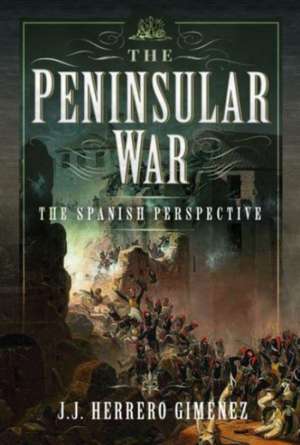
The Peninsular War
Autor J J Herrero Gim nezen Limba Engleză Hardback – 30 noi 2023
Ceea ce aduce nou The Peninsular War în peisajul istoriografiei militare este o schimbare necesară de perspectivă: pentru prima dată, cititorul de limbă engleză are acces la o analiză a campaniei iberice scrisă de un istoric spaniol, J J Herrero Gim nez. Decenii la rând, contribuția Spaniei a fost tratată marginal de istoricii britanici, însă acest volum reechilibrează balanța, demonstrând că înfrângerea lui Napoleon nu a fost doar o victorie a lui Wellington, ci rezultatul unui efort național spaniol imens. Putem afirma că lucrarea nu evită subiectele sensibile, precum înfrângerile catastrofale ale armatei spaniole, dar le plasează într-un context logic: la momentul invaziei, cele mai bune unități spaniole erau blocate în Danemarca sub comandă franceză. Astfel, autorul explorează dificultățile politice și logistice supraomenești de a ridica o armată nouă în timp ce orașe precum Zaragoza erau transformate în ruine în urma unor lupte de stradă sălbatice. Cititorii familiarizați cu The Spanish Ulcer de David Gates vor aprecia modul în care J J Herrero Gim nez completează tabloul strategic cu detalii despre bătăliile de la Tudela și Ocaña, oferind o voce celor care au inventat, practic, conceptul modern de „guerrilla”. Structura narativă urmărește evoluția spiritului de rezistență, de la cetățenii de rând care atacau patrulele izolate, până la momentul în care armatele spaniole au devenit suficient de solide pentru a câștiga bătălii decisive. Este o lectură care demontează mituri și expune realitatea unei țări cu un spirit indomabil, oferind contextul militar și social care a transformat Spania într-un coșmar pentru mareșalii lui Napoleon.
Preț: 210.90 lei
Carte disponibilă
Livrare economică 13-27 noiembrie
Livrare express 30 octombrie-05 noiembrie pentru 36.19 lei
Specificații
ISBN-10: 139904785X
Pagini: 344
Ilustrații: 16 mono illustrations
Dimensiuni: 162 x 237 x 26 mm
Greutate: 0.53 kg
Editura: Pen & Sword Books Ltd
De ce să citești această carte
Această carte este esențială pentru pasionații de istorie militară care doresc să înțeleagă Războiul Peninsular dincolo de perspectiva britanică dominantă. Cititorul câștigă o viziune nuanțată asupra modului în care rezistența populară și reorganizarea armatei spaniole au măcinat resursele lui Napoleon. Este un volum care completează lacunele istorice, oferind detalii despre logistica și bătăliile mai puțin cunoscute care au definit soarta Europei.
Despre autor
J J Herrero Gim nez este un istoric spaniol specializat în perioada napoleoniană, a cărui activitate se concentrează pe recuperarea și analizarea contribuției naționale spaniole în conflictele europene. Prin lucrarea de față, publicată de Pen & Sword Books Ltd, acesta reușește să aducă în atenția publicului internațional surse și perspective iberice care au fost mult timp ignorate în literatura de specialitate anglo-saxonă. Abordarea sa este una riguroasă, bazată pe analiza documentelor de epocă și a contextului politic complex al Spaniei de la începutul secolului al XIX-lea.
Notă biografică
Descriere scurtă
The book does not attempt to minimize the problems the Spanish experienced nor the catastrophic defeats suffered by the Spanish Army, but the reasons for these setbacks are viewed and analyzed from the Spanish viewpoint.
With the finest elements of the Spanish Army serving with the French forces in Denmark, Spain was virtually undefended when Napoleon's armies marched into the Iberian Peninsula. New armies had to be raised virtually from scratch to fight the invader in a country where, as the Duke of Wellington remarked, small armies were beaten and large armies starved. The logistical and political difficulties faced by the Spaniards are fully explored and explained.
It is the big battles, nevertheless, which receive the most attention; both the great battles such as Tudela and Ocaña and the surprising victory at Bailén, and the smaller, lesser-known combats which took place across the Peninsula. The defeats, even destruction, of their armies, did not deter the Spaniards; in fact quite the contrary. Their cities, most notably Zaragoza, defied Napoleon's legions for months in some of the most savage fighting of any conflict as their streets were turned to rubble. Across the country, the ordinary citizens took up arms, attacking isolated French outposts and capturing enemy messengers and patrols - and the term guerrilla warfare came into being. Napoleon's marshals had never encountered such fanaticism and Spain became a posting dreaded by the French soldiers. As the war progressed, the Spanish armies became strong enough to win several battles, contributing decisively to the defeat of Napoleon in conjunction with the magnificent achievements of Sir Arthur Wellesley and his Anglo-Portuguese army.
This unique book will help the reader understand the Spanish vision of the war, dismantling some false myths and exposing the reality of a country with an indomitable spirit that never accepted the new order that Napoleon tried to impose. It is the book that has been missing from the literature of the Peninsular War for far too long.