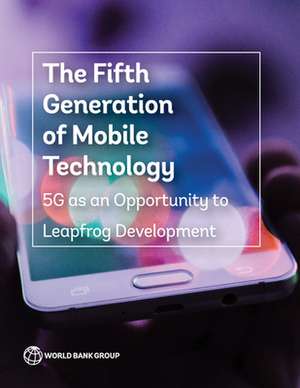
The Path to 5g in the Developing World
Autor World Banken Limba Engleză Paperback – 3 iul 2024
După parcurgerea acestui raport publicat de World Bank, decidenții politici și profesioniștii din sectorul telecomunicațiilor vor fi capabili să fundamenteze strategii naționale de tranziție către 5G, adaptate contextelor economice cu resurse limitate. Notăm cu interes că lucrarea nu tratează tehnologia 5G ca pe un salt izolat, ci ca pe un strat de conectivitate ce trebuie integrat strategic peste infrastructura 4G existentă, asigurând astfel o continuitate sustenabilă a serviciilor. Putem afirma că principala valoare a cărții rezidă în capacitatea de a demonta ideea că 5G este un lux inaccesibil, transformându-l într-un instrument de competitivitate pentru „Industria 4.0”. Analiza este ancorată în realitatea economică dură: în timp ce 5G promite o creștere masivă a PIB-ului global, barierele precum costul terminalelor și al infrastructurii riscă să adâncească falia digitală. Pe linia practică a volumului Handbook on ICT in Developing Countries de Knud Erik Skouby, dar cu focus pe arhitectura de reglementare și planificarea pe termen lung, The Path to 5g in the Developing World oferă un cadru de atenuare a riscurilor. Spre deosebire de The 5G Myth, care adoptă o poziție sceptică față de fezabilitatea tehnologiei, raportul de față rămâne orientat spre soluții, explorând modul în care guvernele pot pregăti ecosistemul pentru o adopție accelerată. Ritmul este unul specific literaturii de specialitate economice — dens în date, dar extrem de structurat pentru a servi drept document de lucru.
Preț: 324.89 lei
Carte disponibilă
Livrare economică 11-25 noiembrie
Specificații
ISBN-10: 1464816042
Pagini: 144
Dimensiuni: 173 x 251 x 10 mm
Greutate: 0.34 kg
Editura: World Bank Publications
V-ar putea interesa
-
 The New Geography of InnovationMehran GulPreț: 123.61 lei
 -
 The Smartphone SolutionMartha Deiros ColladoPreț: 122.38 lei
 -
 4G, LTE-Advanced Pro and The Road to 5GErik Dahlman-8%Preț: 508.74 lei552.97 lei
 -
 -12%Preț: 282.48 lei320.47 lei
 -
 5G and Beyond: Rewiring Telecom RegulationRohit Prasad-31%Preț: 568.34 lei825.19 lei
 -
 -23%Preț: 640.96 lei832.41 lei
 -
 Preț: 343.78 lei
 -
 Fintech for BillionsBhagwan ChowdhryPreț: 112.64 lei
 -
 The Unintended Consequences of TechnologyChris AtegekaPreț: 160.25 lei
 -
 AI First, Human AlwaysSandy CarterPreț: 132.84 lei
 -
 Preț: 142.20 lei
 -
 The Republic of InnovationAndrea Lorenzo CapusselaPreț: 140.60 lei
 -
 What the F*ck is 5G?Kit Eaton-26%Preț: 52.05 lei70.81 lei
 -
 -18%Preț: 994.33 lei1212.60 lei
 -
 5G Outlook – Innovations and ApplicationsRamjee Prasad-20%Preț: 251.25 lei314.06 lei
 -
 Technology Policy Meets the PublicAndrew Jamison-16%Preț: 98.17 lei116.41 lei
 -
 World Of 5g, The (In 5 Volumes)Haibin Lin-18%Preț: 2046.52 lei2495.76 lei
 -
 -18%Preț: 986.57 lei1203.13 lei
 -
 The Year in Tech, 2026Amy WebbPreț: 123.62 lei
De ce să citești această carte
Această carte este esențială pentru specialiștii în politici publice și consultanții în tehnologie care activează în piețe emergente. Cititorul câștigă o perspectivă clară asupra modului în care 5G poate stimula productivitatea muncii și crearea de locuri de muncă. Este un instrument pragmatic care vă va ajuta să navigați prin complexitatea reglementărilor și să evitați investițiile ineficiente în infrastructură.