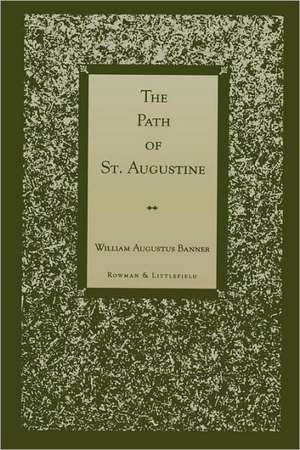
The Path of St. Augustine
Autor William Augustus Banneren Limba Engleză Paperback – 15 aug 1996
Preț: 274.49 lei
Preț vechi: 359.80 lei
-24%
Puncte Express: 412
Carte tipărită la comandă
Livrare economică 07-21 decembrie
Livrare prin curier în România Termenul estimat este afișat lângă disponibilitate.
Transport gratuit de la 400.00 lei Plată online sau ramburs, în funcție de opțiunile comenzii.
Retur gratuit în 14 zile Comandă securizată și suport în română.
Specificații
ISBN-13: 9780847682928
ISBN-10: 0847682927
Pagini: 122
Dimensiuni: 148 x 228 x 12 mm
Greutate: 0.19 kg
Ediția:New.
Editura: Bloomsbury Publishing
Colecția Rowman & Littlefield
Locul publicării:New York, United States
ISBN-10: 0847682927
Pagini: 122
Dimensiuni: 148 x 228 x 12 mm
Greutate: 0.19 kg
Ediția:New.
Editura: Bloomsbury Publishing
Colecția Rowman & Littlefield
Locul publicării:New York, United States
Recenzii
Very useful. The collation and orderly presentation of the principles of Augustine's moral philosophy is something both needed and unavailable. A fine book, an impressive piece of work.
Professor Banner has given a lifetime to thoughtful and loving study of the great saint. Through this excellent book about the Augustinian 'journey of the mind,' we come to see afresh how St. Augustine is well named 'the Teacher of the West,' shaping the ongoing coherence of Western thought, with its dialectical history of freedom and its stupendous ontological optimism.
These are not lessons about 'how to get ahead in the world,' but rather lessons about such things as 'being, truth, and goodness,' about 'justice and culture,' even about 'nature and grace.' Read Professor Banner's lucid and careful exposition of the lessons that were learned by St. Augustine as he followed his own life path, and then ask yourselves if these be not lessons that could be instructive to all of us today.
Banner's concise exposition of Augustine's moral philosophy takes in a surprisingly large range of topics: just war, slavery, the moral limits of coercive authority, freedom of the will, natural justice, the ideal of the philosophical life. . . . elegantly presented and remarkably free of simplification. I recommend his book especially to teachers wanting to help their students situate Augustine in the history of philosophy.
A fine piece of work. In a remarkably concise form, Banner has combined scholarship with philosophical insight to present St. Augustine's vision of the moral life. This is a notable achievement.
Professor Banner has given a lifetime to thoughtful and loving study of the great saint. Through this excellent book about the Augustinian 'journey of the mind,' we come to see afresh how St. Augustine is well named 'the Teacher of the West,' shaping the ongoing coherence of Western thought, with its dialectical history of freedom and its stupendous ontological optimism.
These are not lessons about 'how to get ahead in the world,' but rather lessons about such things as 'being, truth, and goodness,' about 'justice and culture,' even about 'nature and grace.' Read Professor Banner's lucid and careful exposition of the lessons that were learned by St. Augustine as he followed his own life path, and then ask yourselves if these be not lessons that could be instructive to all of us today.
Banner's concise exposition of Augustine's moral philosophy takes in a surprisingly large range of topics: just war, slavery, the moral limits of coercive authority, freedom of the will, natural justice, the ideal of the philosophical life. . . . elegantly presented and remarkably free of simplification. I recommend his book especially to teachers wanting to help their students situate Augustine in the history of philosophy.
A fine piece of work. In a remarkably concise form, Banner has combined scholarship with philosophical insight to present St. Augustine's vision of the moral life. This is a notable achievement.