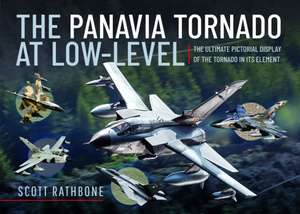
The Panavia Tornado at Low-Level
Autor Scott Rathboneen Limba Engleză Hardback – 4 oct 2024
Structura acestui volum este concepută ca o cronică vizuală și tehnică a uneia dintre cele mai emblematice aeronave ale Războiului Rece, Panavia Tornado. Metodologia autorului Scott Rathbone se bazează pe documentarea evoluției aparatului „în elementul său”, respectiv zborul la joasă înălțime, oferind o perspectivă rară asupra modului în care designul cu geometrie variabilă a servit nevoilor strategice ale RAF și partenerilor NATO timp de 40 de ani. Remarcăm organizarea materialului care urmărește tranziția de la rolul de interdicție nucleară al variantei GR.1 la polivalența modelului GR.4, totul culminând cu zborul istoric din ianuarie 2019 deasupra districtului Lake District. Apreciem rigoarea cu care sunt prezentate schemele de camuflaj și unitățile de elită, inclusiv cele din cadrul Tri-National Tornado Training Establishment. Din punct de vedere istoric, această lucrare extinde cadrul propus de Tornado de Peter Foster cu date noi din perioada târzie a exploatării aeronavei și imagini inedite surprinse de la înălțimi mai mici decât cele la care se aflau observatorii de pe versanți. În timp ce volumul lui Foster se concentrează pe recunoaștere și sistemele TIRRS sau Raptor, The Panavia Tornado at Low-Level prioritizează experiența dinamică a zborului și impactul structural pe care aeronava l-a avut asupra reglementărilor de zbor britanice începând cu 1979. Tonul este unul precis, orientat către detaliul tehnic și istoric, fiind o resursă valoroasă pentru cei interesați de istoria militară aeriană. Comparativ cu titluri precum The Tornado Story de John Christopher, care oferă o privire de ansamblu asupra producției celor 992 de unități, lucrarea de față se distinge prin focalizarea pe specificul operațional al zborului la joasă altitudine, oferind un context vizual superior pentru modeliști și istorici deopotrivă.
Preț: 266.39 lei
Carte disponibilă
Livrare economică 22 mai-05 iunie
Livrare express 07-13 mai pentru 66.34 lei
Specificații
ISBN-10: 1399033042
Pagini: 280
Dimensiuni: 176 x 255 x 30 mm
Greutate: 1.07 kg
Editura: Pen & Sword Books Ltd
De ce să citești această carte
Această ediție este esențială pentru pasionații de aviație militară și modelism, oferind fotografii de o claritate excepțională ce surprind aeronava din unghiuri plonjante, rare în publicațiile standard. Cititorul câștigă o înțelegere profundă a modului în care „Mighty Fin” a dominat spațiul aerian european, beneficiind de un record istoric ce acoperă întreaga carieră a aparatului, de la misiunile de descurajare din Războiul Rece până la retragerea sa din 2019.