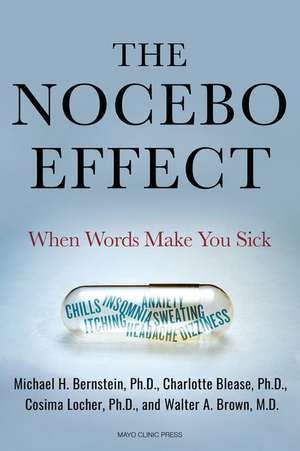
The Nocebo Effect
Autor Michael Bernstein, Charlotte Blease, Cosima Locher, Walter Brownen Limba Engleză Hardback – 19 mar 2024
Structura acestui volum publicat de Mayo Clinic Press este riguros organizată pentru a demonta mecanismele prin care anticiparea unui rău devine realitate clinică. The Nocebo Effect trece dincolo de simpla teorie, analizând modul în care contextul social, media și istoricul personal al pacientului converg în declanșarea unor simptome fizice reale, dar care nu sunt cauzate de substanța farmacologică administrată. Reținem aici o abordare multidisciplinară care pornește de la etimologia termenului — nocere (a face rău) — și ajunge la analize complexe asupra unor fenomene de masă recente. Descoperim în paginile sale o examinare detaliată a modului în care peste 7 miliarde de doze de vaccin COVID-19 au servit drept cel mai mare experiment involuntar privind efectul nocebo, unde raportările de efecte adverse au fost amplificate de fluxurile informaționale. Considerăm esențială trecerea de la exemplele clasice, precum intoleranța la statine, la cazuri de o complexitate aparte, cum este Sindromul Havana, unde simptomatologia angajaților guvernamentali americani este pusă sub lupa psihobiologiei. Comparativ cu literatura existentă, notăm diferențe de focus specifice. Acolo unde Placebos and Nocebos in Headaches de Dimos D. Mitsikostas acoperă nișa strictă a migrenelor și aderenței la tratamentul neurologic, acest volum aprofundează dimensiunea sociologică și impactul comunicării publice asupra sănătății generale. De asemenea, în timp ce Placebo Effects de Fabrizio Benedetti se concentrează pe mecanismele neurobiologice ale beneficiului terapeutic, lucrarea de față prioritizează strategiile clinice de atenuare a efectelor nocive induse prin sugestie, oferind un ghid practic pentru medici și pacienți deopotrivă în gestionarea așteptărilor negative.
Preț: 144.41 lei
Preț vechi: 152.01 lei
-5%
Carte disponibilă
Livrare economică 16-30 noiembrie
Specificații
Pagini: 256
Dimensiuni: 152 x 217 x 20 mm
Greutate: 0.41 kg
Editura: Mayo Clinic Press
V-ar putea interesa
-
 It's Probably NothingNaga Munchetty-5%Preț: 171.43 lei180.45 lei
 -
 ITS PROBABLY NOTHING EXAIIE PBNaga MunchettyPreț: 139.58 lei
 -
 Massachusetts General Hospital Handbook of General Hospital PsychiatryTheodore A. Stern-26%Preț: 518.94 lei704.55 lei
 -
 MeditationsMarcus AureliusPreț: 34.00 lei
 -
 An Exercise in UncertaintyJonathan GluckPreț: 159.74 lei
 -
 How to Read a PaperTrisha M Greenhalgh-5%Preț: 325.29 lei342.40 lei
 -
 Health Behavior - Theory, Research, and Practice Sixth EditionBarbara K. Rimer-5%Preț: 776.78 lei817.66 lei
 -
 Social Anxiety For DummiesLaura Johnson-5%Preț: 112.11 lei118.02 lei
 -
 IBS For DummiesKristina Campbell-5%Preț: 109.06 lei114.80 lei
 -
 -5%Preț: 431.06 lei453.75 lei
 -
 ExposureWim Hof-5%Preț: 235.96 lei248.38 lei
 -
 Safe and SoundStephen W. Porges-5%Preț: 116.23 lei122.34 lei
 -
 UnbreakableVonda WrightPreț: 103.57 leiRecomandat
 -
 It Didn't Start With You WorkbookMark WolynnPreț: 121.05 lei
 -
 WeightlessRocio Salas-Whalen-19%Preț: 110.62 lei136.66 leiRecomandat
 -
 Change Your Brain, Change Your PainDaniel Amen-22%Preț: 151.18 lei194.83 lei
 -
 How To Talk To Absolutely AnyoneMark RhodesPreț: 90.18 lei
De ce să citești această carte
Această lectură este esențială pentru profesioniștii din domeniul sănătății care doresc să înțeleagă de ce pacienții raportează efecte adverse în absența unei cauze farmacologice. Cititorul câștigă o perspectivă științifică asupra modului în care comunicarea clinică poate preveni eșecul terapeutic. Este un instrument valoros pentru a naviga într-o eră a informației medicale excesive, oferind soluții concrete pentru îmbunătățirea relației medic-pacient și a complianței la tratament.
Despre autor
Michael Bernstein, Charlotte Blease, Cosima Locher și Walter Brown sunt cercetători de prestigiu care și-au unit expertiza pentru a fundamenta studiul fenomenelor placebo și nocebo. Michael Bernstein și echipa sa colaborează cu instituții de renume, precum Mayo Clinic, pentru a traduce datele din studiile clinice în practici medicale mai sigure. Charlotte Blease este recunoscută pentru cercetările sale la Harvard Medical School privind etica medicală și psihologia clinică, în timp ce Cosima Locher și Walter Brown aduc contribuții majore în înțelegerea mecanismelor neurobiologice care guvernează percepția simptomelor și răspunsul la tratament.