The Newlyweds: Penguin
Autor Nell Freudenbergeren Limba Engleză Paperback – 7 feb 2013
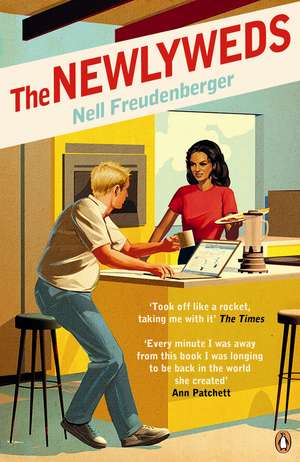
Amina Mazid is twenty-four when she leaves Bangladesh for Rochester, New York, and for George Stillman, the husband who met and wooed her online. It's a twenty-first-century romance that echoes ancient traditions - the arranged marriages of her home country. And though George falls for Amina because she doesn't 'play games', they will both hide a secret, and vital, part of their lives from each other.
A brilliantly observed, wry and yet deeply moving novel about the exhilerations - and complications - of getting, and staying, wed, The Newlyweds is a tour de force - a novel as rich with misunderstandings as it is with unlikely connections.
'Young writers as ambitious - and as good - as Nell Freudenberger give us reason for hope', New York Times Book Review
'Freudenberg has rare humanity, and talent great enough to command not only a vast landscape of imbalance and misunderstanding, but also a tender sphere of tiny intimacy, hidden yearning...A marvellous book', Kiran Desai, winner of the MAN Booker Prize for The Inheritance of Loss
Nell Freudenberger is the author of the novel The Dissident, (longlisted for the Orange Prize), The Lessons and the story collection Lucky Girls, winner of the PEN/Malamud Award and shortlisted for the Orange New Writers' Prize and a New York Times Book Review Notable Book. She was named a New Yorker '20 Under 40' writer and one of Granta's Best Young American Novelists. She lives in Brooklyn, New York.
Din seria Penguin
-
 Preț: 113.72 lei
 -
 Preț: 129.86 lei
 -
 Preț: 137.27 lei
 -
 Preț: 113.35 lei
 -
 Preț: 114.84 lei
 - 26%
 Preț: 42.42 lei
 -
 Preț: 130.19 lei
 -
 Preț: 92.01 lei
 -
 Preț: 122.20 lei
 -
 Preț: 114.07 lei
 -
 Preț: 91.72 lei
 -
 Preț: 113.14 lei
 -
 Preț: 115.22 lei
 -
 Preț: 113.38 lei
 -
 Preț: 113.52 lei
 -
 Preț: 122.01 lei
 -
 Preț: 117.60 lei
 -
 Preț: 76.41 lei
 -
 Preț: 86.92 lei
 - 25%
 Preț: 38.25 lei
Preț: 114.07 lei
Puncte Express: 171
Carte tipărită la comandă
Livrare economică 04-18 decembrie
Livrare prin curier în România Termenul estimat este afișat lângă disponibilitate.
Transport gratuit de la 400.00 lei Plată online sau ramburs, în funcție de opțiunile comenzii.
Retur gratuit în 14 zile Comandă securizată și suport în română.
Specificații
ISBN-13: 9780241962701
ISBN-10: 0241962706
Pagini: 354
Dimensiuni: 128 x 198 x 25 mm
Greutate: 0.25 kg
Editura: Penguin Books
Colecția Penguin
Seria Penguin
Locul publicării:London, United Kingdom
ISBN-10: 0241962706
Pagini: 354
Dimensiuni: 128 x 198 x 25 mm
Greutate: 0.25 kg
Editura: Penguin Books
Colecția Penguin
Seria Penguin
Locul publicării:London, United Kingdom
V-ar putea interesa
-
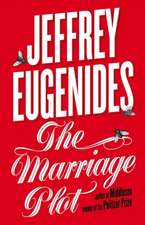 The Marriage PlotJeffrey EugenidesPreț: 93.84 lei
 -
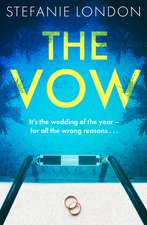 The VowStefanie LondonPreț: 71.22 lei
 -
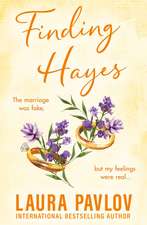 Finding HayesLaura PavlovPreț: 72.45 lei
 -
 The Tradwife's SecretLiane ChildPreț: 72.46 lei
 -
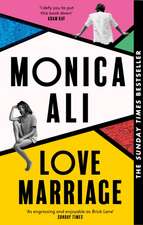 -23%Preț: 57.51 lei74.56 lei
 -
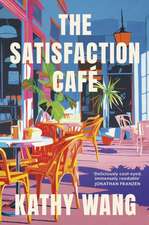 Preț: 157.33 lei
 -
 -26%Preț: 57.62 lei78.24 lei
 -
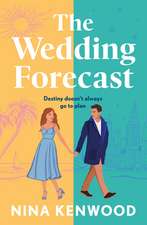 -25%Preț: 54.78 lei72.92 lei
 -
 Always Be My BibiPriyanka Taslim-18%Preț: 58.57 lei71.54 lei
 -
 Preț: 65.50 lei
 -
 I Want EverythingDominic Amerena-19%Preț: 85.19 lei105.72 leiRecomandat
 -
 -18%Preț: 88.20 lei107.77 leiRecomandat
 -
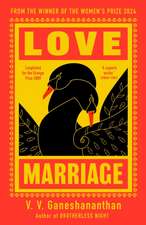 Love Marriage: from the author of 2024 Women's Prize-winning BROTHERLESS NIGHTV.V. Ganeshananthan-26%Preț: 58.56 lei79.22 lei
 -
 Are You Awake?Sarah Crossan-26%Preț: 52.51 lei71.08 lei
 -
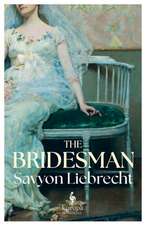 The BridesmanSavyon LiebrechtPreț: 69.67 lei
 -
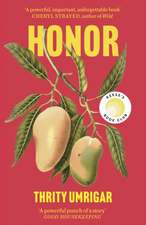 HonorThrity UmrigarPreț: 73.28 lei
 -
 Like FamilyErin WhitePreț: 108.42 lei
 -
 The Startup WifeTahmima AnamPreț: 65.10 lei
 -
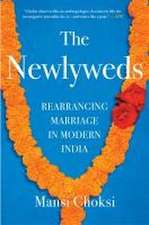 The NewlywedsMansi ChoksiPreț: 98.79 lei
Notă biografică
Nell Freudenberger is the author of the novel The Dissident (longlisted for the Orange Prize) and the story collection Lucky Girls, winner of the PEN/Malamud Award and shortlisted for the Orange New Writers' Prize and a New York Times Book Review Notable Book. She was named a New Yorker '20 Under 40' writer and one of Granta's Best Young American Novelists. She lives in Brooklyn, New York.
Recenzii
Took off like a rocket, taking me with it
A convincing and rather compelling story of a very modern marriage and a real heroine to root for
A wonderful, funny, inventive novel that takes you slowly by surprise the more you read. Highly recommended
The intrigue and small disappointments of marriage are painstakingly captured.
A Fresh and modern look at relationships, told with heart.
A charming and serious tale of marriage, family and identity. Its prose style is intimate, almost conspiratorial... threading its arm around the reader confidently. The writing is clear and spare... yet Freudenberger's investigation into what makes relationships work... is complex and sophisticated... Freudenberger approaches her subject with great sensitivity, a heavy sense of the seriousness of life - and much wry humour.
There are some piercing cultural observations... the chapters zip along with purpose and the novel flits effortlessly between the false intimacy of suburban America and the closely knit gossipy communities of Dhaka
A powerful sense of empathy, of being able to imagine what it is to be soemone else, to feel what someone else feels
Every minute I was away from this book I was longing to be back in the world she created
This classic tale of missed chances, crushing errors of judgment, and scarring sacrifices, all compounded by cultural differences, is perfectly pitched, piercingly funny, and exquisitely heartbreaking
Wise, timely, ripe with humour and complexity, The Newlyweds is one of the most believable love stories of our young century
A convincing and rather compelling story of a very modern marriage and a real heroine to root for
A wonderful, funny, inventive novel that takes you slowly by surprise the more you read. Highly recommended
The intrigue and small disappointments of marriage are painstakingly captured.
A Fresh and modern look at relationships, told with heart.
A charming and serious tale of marriage, family and identity. Its prose style is intimate, almost conspiratorial... threading its arm around the reader confidently. The writing is clear and spare... yet Freudenberger's investigation into what makes relationships work... is complex and sophisticated... Freudenberger approaches her subject with great sensitivity, a heavy sense of the seriousness of life - and much wry humour.
There are some piercing cultural observations... the chapters zip along with purpose and the novel flits effortlessly between the false intimacy of suburban America and the closely knit gossipy communities of Dhaka
A powerful sense of empathy, of being able to imagine what it is to be soemone else, to feel what someone else feels
Every minute I was away from this book I was longing to be back in the world she created
This classic tale of missed chances, crushing errors of judgment, and scarring sacrifices, all compounded by cultural differences, is perfectly pitched, piercingly funny, and exquisitely heartbreaking
Wise, timely, ripe with humour and complexity, The Newlyweds is one of the most believable love stories of our young century