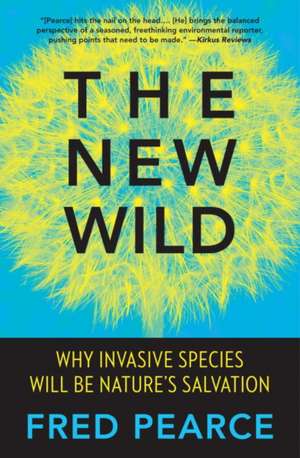
The New Wild
Autor Fred Pearceen Limba Engleză Paperback – 5 apr 2016
Autorul Fred Pearce, un jurnalist de mediu cu o carieră de peste două decenii, propune în The New Wild o schimbare radicală de paradigmă în conservarea naturii. Recunoscută de The Economist drept una dintre cele mai importante apariții ale anului 2015, această lucrare fundamentează o nouă viziune asupra ecologiei, bazată pe observații directe realizate pe șase continente. Putem afirma că cercetarea sa demontează mitul speciilor invadatoare privite exclusiv ca inamici ai ecosistemelor „virgine”, arătând cum intervenția umană a schimbat iremediabil planeta, făcând întoarcerea la o stare naturală preistorică imposibilă. Ne-a atras atenția modul în care Pearce analizează succesul speciilor non-native în locuri precum Golful San Francisco sau Marile Lacuri. Departe de a fi simple „distrugătoare”, multe dintre aceste specii se integrează rapid, ajutând la regenerarea zonelor degradate de poluare sau schimbări climatice. Stilul narativ este unul jurnalistic, dar riguros, axat pe date care contestă cifrele oficiale despre daunele provocate de speciile străine. Cititorii familiarizați cu Rambunctious Garden de Emma Marris vor aprecia modul în care Fred Pearce extinde argumentul pentru o gestionare activă și pragmatică a naturii, în detrimentul conservării pasive. Spre deosebire de abordările tradiționale care pot fi găsite în serii precum Foundations for Deep Ecology 3, acest volum publicat de Beacon Press nu privește „noua ecologie” ca pe o înfrângere, ci ca pe singura șansă de reziliență a biodiversității. Este o lectură esențială pentru studenții de la ecologie și planificarea mediului, oferind un context provocator despre dinamismul naturii într-o eră a transformărilor globale.
Preț: 120.44 lei
Carte disponibilă
Livrare economică 06-20 noiembrie
Specificații
ISBN-10: 0807039551
Pagini: 264
Dimensiuni: 144 x 221 x 22 mm
Greutate: 0.36 kg
Editura: Beacon Press
V-ar putea interesa
-
 The Lie of the LandGuy ShrubsolePreț: 77.84 lei
 -
 FeralGeorge Monbiot-31%Preț: 64.39 lei93.18 lei
 -
 Inheritors of the EarthChris D. Thomas-19%Preț: 74.99 lei93.08 lei
 -
 Every Species is a MasterpieceEdward O. Wilson-20%Preț: 28.44 lei35.46 lei
 -
 -13%Preț: 131.16 lei151.45 lei
 -
 -26%Preț: 56.99 lei77.40 lei
 -
 To Have or To Hold: Nature's Hidden RelationshipsSophie PavellePreț: 144.40 lei
 -
 -25%Preț: 106.89 lei143.17 lei
 -
 Our StoryColin Butfield-21%Preț: 133.36 lei168.13 lei
 -
 Cornerstones: Wild Forces That Can Change Our WorldBenedict Macdonald-27%Preț: 56.19 lei76.91 lei
 -
 -35%Preț: 69.67 lei106.44 lei
 -
 Wild ServiceNick Hayes-25%Preț: 59.44 lei79.75 lei
 -
 Rewilding the SeaCharles Clover-29%Preț: 75.77 lei107.24 lei
 -
 -27%Preț: 68.01 lei92.93 lei
 -
 Keeping the Wild: Against the Domestication of EarthGeorge WuerthnerPreț: 228.99 lei
 -
 RewildingCain BlythePreț: 78.92 lei
 -
 Cry of the WildCharles Foster-19%Preț: 63.54 lei78.63 lei
 -
 Future WildRichard NairnPreț: 122.07 lei
 -
 Cottongrass SummerRoy Dennis-20%Preț: 55.91 lei70.21 lei
 -
 A Land Before Humans, a Land After HumansMark FisherPreț: 89.73 lei
De ce să citești această carte
O perspectivă curajoasă care provoacă dogmele conservării clasice. Citind această carte, veți înțelege de ce speciile invazive ar putea fi, de fapt, salvatorii ecosistemelor afectate de schimbările climatice. Este o resursă valoroasă pentru oricine dorește să înțeleagă noua ecologie a secolului XXI și modul în care natura se adaptează constant presiunii umane, oferind o viziune plină de speranță asupra biodiversității.
Descriere scurtă
A provocative exploration of the new ecology and why most of what we think we know about alien species is wrong
For a long time, veteran environmental journalist Fred Pearce thought in stark terms about invasive species: they were the evil interlopers spoiling pristine natural ecosystems. Most conservationists and environmentalists share this view. But what if the traditional view of ecology is wrong what if true environmentalists should be applauding the invaders?
In "The New Wild," Pearce goes on a journey across six continents to rediscover what conservation in the twenty-first century should be about. Pearce explores ecosystems from remote Pacific islands to the United Kingdom, from San Francisco Bay to the Great Lakes, as he digs into questionable estimates of the cost of invader species and reveals the outdated intellectual sources of our ideas about the balance of nature. Pearce acknowledges that there are horror stories about alien species disrupting ecosystems, but most of the time, the tens of thousands of introduced species usually swiftly die out or settle down and become model eco-citizens. The case for keeping out alien species, he finds, looks increasingly flawed.
As Pearce argues, mainstream environmentalists are right that we need a rewilding of the earth, but they are wrong if they imagine that we can achieve that by reengineering ecosystems. Humans have changed the planet too much, and nature never goes backward. But a growing group of scientists is taking a fresh look at how species interact in the wild. According to these new ecologists, we should applaud the dynamism of alien species and the novel ecosystems they create.
In an era of climate change and widespread ecological damage, it is absolutely crucial that we find ways to help nature regenerate. Embracing the new ecology, Pearce shows us, is our best chance. To be an environmentalist in the twenty-first century means celebrating nature s wildness and capacity for change. "From the Hardcover edition.""