Cantitate/Preț
Produs

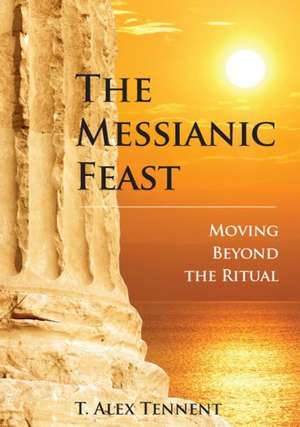
The Messianic Feast

Autor Tennent
en Limba Engleză Paperback – 19 apr 2022

În centrul volumului The Messianic Feast stă o problemă de cronologie biblică și interpretare teologică ce a divizat comentatorii secole la rând: a fost Cina de Taină un Seder de Paște sau a avut loc în ajunul acestuia? Remarcăm modul în care Tennent folosește instrumente de analiză lingvistică aplicate asupra textelor grecești pentru a demonstra că Iisus a fost răstignit pe data de 14 Nisan, în momentul în care mieii erau oferiți ca jertfă, devenind astfel adevăratul Paște. Această ediție, distinsă cu aur la premiile IPPY în 2014, depășește sfera unei simple dezbateri academice despre date calendaristice. Putem afirma că autorul propune o reevaluare radicală a modului în care comunitățile creștine înțeleg și practică Sfânta Împărtășanie. Tennent susține că tradiția actuală a ritualului cu azimă este o moștenire a liturghiei romano-catolice, care s-a îndepărtat de conceptul de „ospăț spiritual” prefigurat în Tabernaclu și în scrierile iudaice vechi. Lucrarea conectează simbolismul Pâinii punerii înainte cu parabolele despre pâine și vin, oferind o perspectivă penticostală asupra împlinirii Sărbătorii Corturilor. Acoperă aceeași arie tematică precum The Lost Supper de Matthew Colvin sau Jesus and the Jewish Roots of the Eucharist de Brant Pitre, dar cu o abordare mult mai critică la adresa tradițiilor instituționalizate. În timp ce Brant Pitre caută să explice rădăcinile iudaice pentru a valida Euharistia tradițională, Tennent utilizează „criminalistica scripturală” pentru a contesta ritualul formal, militând pentru o revenire la comuniunea spirituală directă. Este o lectură densă, de peste 600 de pagini, care îmbină logica riguroasă cu o exegeză provocatoare a Noului Testament.

Citește tot Restrânge

Preț: 21321 lei

Puncte Express: 320

Carte tipărită la comandă

Livrare economică 19 iunie-03 iulie


Specificații

ISBN-13: 9780989765602
ISBN-10: 0989765601
Pagini: 604
Dimensiuni: 175 x 251 x 33 mm
Greutate: 1.04 kg
Editura: Messianic Publishing LLC

De ce să citești această carte

Pentru cititorii interesați de teologie biblică și de rădăcinile iudaice ale creștinismului, această carte oferă o perspectivă nouă asupra Cinei de Taină. Veți câștiga o înțelegere profundă a cronologiei patimilor și a modului în care traducerile din greacă au influențat dogma actuală. Este recomandată celor care doresc să exploreze dincolo de tradițiile protestante sau catolice, căutând sensul spiritual originar al comuniunii mesianice.


Descriere scurtă

"The Messianic Feast" represents a sea change in biblical understanding. First, this work uncovers the true history of the Jewish disconnect that occurred in Rome, which has not previously been properly portrayed. These early Messianic Jews understood that the Messiah was crucified on the 14th day and therefore knew that the Last Supper was not the Passover, contrary to prevailing beliefs today. Second, in proving that the Last Supper was not the Passover, the author does what has not been done before--showing what the scriptures truly mean in their original Greek language, specifically those that seem to portray that the Last Supper was the Passover. This is only the beginning, however, for it also reveals that neither the Messiah nor his early Jewish followers ever wanted or taught the Communion ritual kept by most churches today. By reconnecting the Messiah's Last Supper parables to the long Jewish history of a coming Messianic banquet or feast, amazing new truths suddenly emerge.

Descriere

For too long, God's people have clung to a false conception of "communion." God is not seeking a communion ritual with unleavened bread, but rather a true spiritual communion with every believer, a spiritual feast. The groundbreaking winner of a gold 2014 IPPY award, The Messianic Feast solves the long-held controversy of whether the Last Supper was the Passover or if Christ was crucified on the exact day of Passover (in Jewish law, both cannot be true). But this is just the start, as this truth then opens the door to a much larger one that reveals how the Church came to practice an unleavened-bread ritual communion instead of the true spiritual communion that God desires. This important book also directs attention to other issues intrinsic to our understanding of the Messiah's teachings: It reveals the way to God's true spiritual feast, first pictured in the Tabernacle's Showbread service, then anticipated in Jewish writings as a future messianic banquet and also referenced in the bread and wine parables Jesus brought at the Last Supper. It sheds light on how God wants us to enter into this spiritual feast today, fulfilling the Feast of Tabernacles. It offers proof that the Last Supper teachings by Jesus were not about a ritual communion with unleavened bread, but that the bread and wine (fruit of the vine) in his parables point to the true spiritual communion God desires for all believers. It offers conclusive proof that the Protestant communion ritual with unleavened bread evolved from the Roman Catholic ritual and that neither ritual reflects what the Messiah or his early Jewish disciples taught. It reveals how three Greek language keys were instrumental in unlocking the truth on the age-old controversy mentioned above, as to whether the Last Supper was truly the Jewish Passover as most believe, or if Jesus was crucified on the 14th day when the lambs were offered, as our true Passover. Using logic supported by historical and scriptural forensics, Tennent connects the chronological dots to reveal amazing new truths that have not previously been seen-and raises a scripture-based challenge to many deeply held traditions. For those who love God and wish to be part of His plan, The Messianic Feast is a keystone to truly understanding God's plan in these last days.