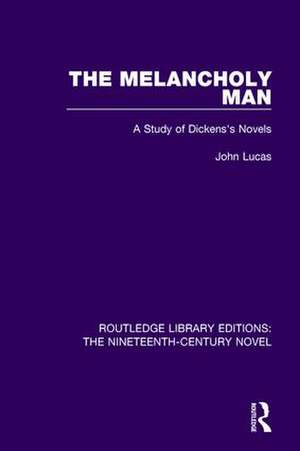
The Melancholy Man: A Study of Dickens's Novels: Routledge Library Editions: The Nineteenth-Century Novel
Autor John Lucasen Limba Engleză Hardback – 18 iul 2016
Din seria Routledge Library Editions: The Nineteenth-Century Novel
-
 Preț: 379.83 lei
 -
 Preț: 389.62 lei
 -
 Preț: 380.69 lei
 -
 Preț: 366.11 lei
 -
 Preț: 268.75 lei
 - 18%
 Preț: 920.55 lei
 -
 Preț: 386.21 lei
 -
 Preț: 424.19 lei
 -
 Preț: 247.47 lei
 -
 Preț: 384.94 lei
 -
 Preț: 405.75 lei
 -
 Preț: 257.26 lei
 -
 Preț: 254.28 lei
 -
 Preț: 381.95 lei
 -
 Preț: 281.34 lei
 -
 Preț: 389.18 lei
 -
 Preț: 398.56 lei
 -
 Preț: 386.21 lei
 -
 Preț: 398.56 lei
 -
 Preț: 386.64 lei
 -
 Preț: 388.77 lei
 -
 Preț: 292.26 lei
 -
 Preț: 394.29 lei
 -
 Preț: 148.86 lei
 -
 Preț: 347.53 lei
 -
 Preț: 398.97 lei
 - 18%
 Preț: 886.61 lei
 -
 Preț: 282.62 lei
 -
 Preț: 393.02 lei
 -
 Preț: 382.34 lei
 -
 Preț: 389.62 lei
 -
 Preț: 381.54 lei
 - 18%
 Preț: 924.39 lei
 -
 Preț: 385.36 lei
 - 15%
 Preț: 423.41 lei
 -
 Preț: 387.49 lei
 -
 Preț: 422.78 lei
 -
 Preț: 398.11 lei
 -
 Preț: 245.77 lei
 -
 Preț: 387.07 lei
 -
 Preț: 389.18 lei
Preț: 1108.14 lei
Preț vechi: 1647.83 lei
-33%
Puncte Express: 1662
Carte indisponibilă temporar
Doresc să fiu notificat când acest titlu va fi disponibil:
Se trimite...
Specificații
ISBN-13: 9781138675551
ISBN-10: 1138675555
Pagini: 396
Ilustrații: 2
Dimensiuni: 156 x 234 x 27 mm
Greutate: 0.89 kg
Ediția:1
Editura: Taylor & Francis
Colecția Routledge
Seria Routledge Library Editions: The Nineteenth-Century Novel
Locul publicării:Oxford, United Kingdom
ISBN-10: 1138675555
Pagini: 396
Ilustrații: 2
Dimensiuni: 156 x 234 x 27 mm
Greutate: 0.89 kg
Ediția:1
Editura: Taylor & Francis
Colecția Routledge
Seria Routledge Library Editions: The Nineteenth-Century Novel
Locul publicării:Oxford, United Kingdom
Cuprins
Introductory Note to the Second Edition; Introduction; 1 The Pickwick Papers 2 Oliver Twist 3 Nicholas Nickleby to Barnaby Rudge 4 From Chuzzlewit to Dombey 5 David Copperfield 6 Bleak House 7 Little Dorrit 8 Great Expectations 9 In Conclusion: Our Mutual Friend; Appendix A: Bleak House and Contradiction; Appendix B: The Illustrations to Dombey and Son; Index
Descriere
First published in 1980, this book surveys Dickens’ growing power to drive deep into the causes of his contemporary conditions. It reveals the importance of nature to Dickens as a rich metaphor of human freedom and potentiality, and emphasises his concern with time and the problems of freedom. The author considers the peculiarity of Dickens being unanimously acclaimed as a great writer considering the difficulty in placing him definitively within the literary tradition. The author argues Dickens was an isolated figure, indifferent to changing fashions and with a strong sense of the dignity of human nature and that this formed the basis of his character and writings.