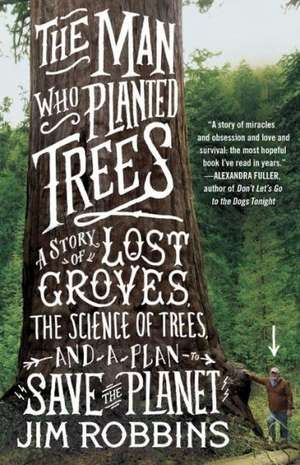
The Man Who Planted Trees
Autor Jim Robbinsen Limba Engleză Paperback – 3 mar 2015
Apreciem rigoarea jurnalistică cu care Jim Robbins, colaborator de lungă durată al publicației New York Times, reușește să transforme o poveste aparent neverosimilă într-o pledoarie științifică urgentă. Autorul fundamentează lucrarea pe parcursul mai multor ani de documentare, verificând viziunile ecologistului David Milarch prin prisma dialogului cu experți în botanică și genetică. Rezultatul este o analiză lucidă a modului în care arborii antici, precum sequoia sau pinii bristlecone, dețin cheia rezilienței biologice în fața încălzirii globale. Putem afirma că volumul The Man Who Planted Trees reușește să echilibreze miracolul biologic cu datele tehnice despre clonarea speciilor milenare. Ritmul narativ este susținut de tranziția de la skepticismul inițial al jurnalistului la înțelegerea profundă a mecanismelor prin care pădurile filtrează apa și aerul. Spre deosebire de Tree Beings de Raymond Huber, care propune o aventură educativă axată pe concepte fundamentale pentru publicul larg, lucrarea lui Robbins este o cronică a obsesiei și a supraviețuirii, ancorată în efortul concret de a crea o „arcă a lui Noe” a geneticii forestiere. De asemenea, dacă Now Is the Time for Trees se concentrează pe mișcarea globală de plantare ca soluție bazată pe natură, Robbins merge la sursa problemei: calitatea și longevitatea materialului genetic pe care îl lăsăm moștenire. Această lucrare continuă interesul autorului pentru mecanismele complexe ale vieții, temă explorată și în The Wonder of Birds, însă aici accentul se mută de la ornitologie către arboricultură și biochimie. Credem că valoarea cărții rezidă în capacitatea de a demonstra că acțiunea individuală, oricât de excentrică ar părea, poate genera schimbări sistemice în conservarea biodiversității.
Preț: 106.29 lei
Carte disponibilă
Livrare economică 09-23 noiembrie
Specificații
ISBN-10: 0812981294
Pagini: 256
Dimensiuni: 164 x 203 x 17 mm
Greutate: 0.27 kg
Editura: Random House
De ce să citești această carte
Recomandăm această carte cititorilor preocupați de ecologie și biotehnologie care caută o perspectivă practică asupra combaterii schimbărilor climatice. Veți descoperi nu doar fascinanta știință a clonării arborilor antici, ci și o poveste inspirațională despre cum perseverența unui singur om poate influența viitorul ecosistemului global. Este o lectură esențială pentru a înțelege de ce salvarea pădurilor vechi este prioritatea zero a secolului XXI.
Despre autor
Jim Robbins este un jurnalist de investigație și scriitor american cu o experiență vastă, cunoscut pentru contribuțiile sale constante în New York Times, unde acoperă subiecte legate de știință și mediu. Autoritatea sa în domeniu este consolidată de lucrări precum A Symphony in the Brain, o analiză a neurofeedback-ului, și The Wonder of Birds. În The Man Who Planted Trees, Robbins își folosește abilitățile de documentare pentru a explora intersecția dintre botanică și supraviețuirea speciei umane, transformând datele științifice complexe în narațiuni accesibile și relevante pentru publicul contemporan.
Descriere scurtă
" When is the best time to plant a tree? Twenty years ago. The second best time? Today. Chinese proverb"
Twenty years ago, David Milarch, a northern Michigan nurseryman with a penchant for hard living, had a vision: angels came to tell him that the earth was in trouble. Its trees were dying, and without them, human life was in jeopardy. The solution, they told him, was to clone the champion trees of the world the largest, the hardiest, the ones that had survived millennia and were most resilient to climate change and create a kind of Noah s ark of tree genetics. Without knowing if the message had any basis in science, or why he d been chosen for this task, Milarch began his mission of cloning the world s great trees. Many scientists and tree experts told him it couldn t be done, but, twenty years later, his team has successfully cloned some of the world s oldest trees among them giant redwoods and sequoias. They have also grown seedlings from the oldest tree in the world, the bristlecone pine Methuselah.
When "New York Times" journalist Jim Robbins came upon Milarch s story, he was fascinated but had his doubts. Yet over several years, listening to Milarch and talking to scientists, he came to realize that there is so much we do not yet know about trees: how they die, how they communicate, the myriad crucial ways they filter water and air and otherwise support life on Earth. It became clear that as the planet changes, trees and forest are essential to assuring its survival.
Praise for "The Man Who Planted Trees"
This is a story of miracles and obsession and love and survival. Told with Jim Robbins s signature clarity and eye for telling detail, "The Man Who Planted Trees" is also the most hopeful book I ve read in years. I kept thinking of the end of Saint Francis s wonderful prayer, And may God bless you with enough foolishness to believe that you can make a difference in the world, so that you can do what others claim cannot be done. Alexandra Fuller, author of "Don t Let s Go to the Dogs Tonight"
Absorbing, eloquent, and loving . . . While Robbins s tone is urgent, it doesn t compromise his crystal-clear science. . . . Even the smallest details here are fascinating. Dominique Browning, "The New York Times Book Review"
The great poet W. S. Merwin once wrote, On the last day of the world I would want to plant a tree. It s good to see, in this lovely volume, that some folks are getting a head start Bill McKibben, author of "Eaarth: Making a Life on a Tough New Planet"
Inspiring . . . Robbins lucidly summarizes the importance and value of trees to planet Earth and all humanity. "The Ecologist"
""
Imagine a world without trees, writes journalist Jim Robbins. It s nearly impossible after reading "The Man Who Planted Trees, " in which Robbins weaves science and spirituality as he explores the bounty these plants offer the planet. "Audubon""