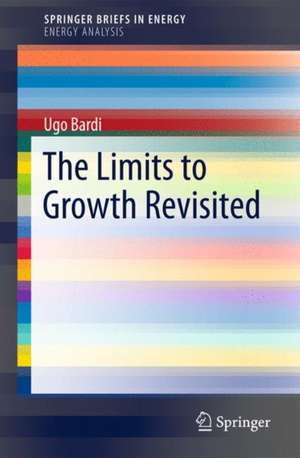
The Limits to Growth Revisited: SpringerBriefs in Energy
Autor Ugo Bardien Limba Engleză Paperback – iun 2011
Notăm cu interes o lacună persistentă în literatura academică de profil: absența unei punți de legătură între modelarea matematică a resurselor și realitatea politică a deciziilor economice globale. The Limits to Growth Revisited vine să umple acest gol, oferind o perspectivă istorică și științifică asupra raportului MIT din 1972, care a prezis colapsul economic sub presiunea creșterii exponențiale pe o planetă finită. Credem că volumul semnat de Ugo Bardi este esențial pentru a înțelege nu doar validitatea predicțiilor inițiale, ci și de ce acestea au fost marginalizate timp de trei decenii. Cartea este structurată riguros în 14 secțiuni, pornind de la fundamentele dinamicii sistemelor și ajungând la dezbaterea politică actuală. Un element distinctiv este capitolul 5, unde autorul folosește vânătoarea de balene din secolul al XIX-lea pentru a ilustra modul în care resursele finite sunt exploatate până la epuizare, oferind o lecție practică despre limitele creșterii. Această abordare analitică este o alternativă excelentă la Reconsidering the Limits to Growth pentru cursurile de managementul resurselor, având avantajul unei sinteze mai compacte și a unei focalizări pe dinamica energetică. În contextul operei sale, volumul face tranziția de la analiza resurselor marine din The Empty Sea către o viziune sistemică asupra colapsului, temă pe care autorul o va dezvolta ulterior în The Seneca Effect. Recomandăm această lucrare pentru tonul său precis și pentru modul în care reușește să explice complexitatea modelării viitorului într-un limbaj accesibil cercetătorilor, fără a sacrifica rigoarea științifică necesară unei publicații Springer.
Din seria SpringerBriefs in Energy
-
 Preț: 365.06 lei
 -
 Preț: 333.81 lei
 -
 Preț: 333.81 lei
 -
 Preț: 361.78 lei
 -
 Preț: 373.99 lei
 -
 Preț: 362.40 lei
 -
 Preț: 462.32 lei
 -
 Preț: 364.08 lei
 -
 Preț: 365.06 lei
 - 15%
 Preț: 445.99 lei
 -
 Preț: 170.92 lei
 -
 Preț: 365.75 lei
 -
 Preț: 364.77 lei
 -
 Preț: 365.51 lei
 -
 Preț: 331.36 lei
 -
 Preț: 363.06 lei
 -
 Preț: 365.51 lei
 -
 Preț: 429.56 lei
 - 25%
 Preț: 299.05 lei
 -
 Preț: 398.77 lei
 -
 Preț: 365.51 lei
 -
 Preț: 367.19 lei
 -
 Preț: 363.38 lei
 -
 Preț: 365.06 lei
 -
 Preț: 364.51 lei
 -
 Preț: 364.57 lei
 - 15%
 Preț: 475.64 lei
 -
 Preț: 460.88 lei
 -
 Preț: 362.88 lei
 -
 Preț: 367.68 lei
 -
 Preț: 363.87 lei
 -
 Preț: 395.89 lei
 - 15%
 Preț: 471.76 lei
 -
 Preț: 401.38 lei
 -
 Preț: 363.38 lei
 -
 Preț: 361.95 lei
 -
 Preț: 361.95 lei
 - 15%
 Preț: 447.83 lei
 -
 Preț: 420.15 lei
 -
 Preț: 366.94 lei
 -
 Preț: 363.38 lei
 -
 Preț: 364.57 lei
 -
 Preț: 362.18 lei
 -
 Preț: 364.51 lei
 - 15%
 Preț: 448.63 lei
 -
 Preț: 461.82 lei
 -
 Preț: 368.30 lei
 -
 Preț: 366.49 lei
 -
 Preț: 463.49 lei
Preț: 502.29 lei
Preț vechi: 590.92 lei
-15%
Carte tipărită la comandă
Livrare economică 05-19 iunie
Specificații
ISBN-10: 1441994157
Pagini: 136
Ilustrații: XIII, 119 p. 22 illus., 6 illus. in color.
Dimensiuni: 155 x 235 x 8 mm
Greutate: 0.22 kg
Ediția:2011
Editura: Springer
Colecția SpringerBriefs in Energy
Seria SpringerBriefs in Energy
Locul publicării:New York, NY, United States
V-ar putea interesa
-
 Why We're Getting PoorerCahal MoranPreț: 118.39 lei
 -
 Making Sense of ChaosJ. Doyne FarmerPreț: 89.41 lei
 -
 Preț: 187.73 lei
 -
 Resilience: Why Things Bounce BackAndrew Zolli-8%Preț: 70.73 lei76.85 lei
 -
 A Liveable Future is PossibleNoam ChomskyPreț: 75.20 lei
 -
 How We Sold Our FutureJens BeckertPreț: 155.30 lei
 -
 The Collapse of Global LiberalismPhilip PilkingtonPreț: 109.56 lei
 -
 The Progress TrapBen CobleyPreț: 158.85 lei
 -
 Capitalism at the LimitUlrich BrandPreț: 152.03 lei
 -
 Thinking in SystemsDonella MeadowsPreț: 116.83 lei
 -
 2052Jorgen RandersPreț: 139.97 lei
 -
 Return to GrowthJon MoynihanPreț: 189.65 lei
 -
 Can We Be Great Again?Jeremy HuntPreț: 182.96 lei
 -
 Slow Down or Die: The Economics of DegrowthTimothée Parrique-20%Preț: 93.03 lei116.53 lei
 -
 The Doom LoopEswar S. PrasadPreț: 176.25 lei
 -
 The Age of ExtractionTim WuPreț: 102.60 lei
 -
 The End of GrowthRichard HeinbergPreț: 106.22 lei
 -
 How to Fall in Love with the FutureRob HopkinsPreț: 151.18 lei
 -
 Stealing the FutureDavid MorrisPreț: 108.28 lei
 -
 Limits to GrowthDennis Meadows-18%Preț: 97.01 lei118.93 lei
Public țintă
ResearchDe ce să citești această carte
Recomandăm această carte cercetătorilor și studenților interesați de sustenabilitate și economie ecologică. Cititorul câștigă o înțelegere profundă a modului în care modelele matematice pot anticipa crizele globale, precum Marea Recesiune. Este un instrument critic pentru a descifra de ce avertismentele științifice sunt adesea ignorate de decidenții politici, oferind totodată metode moderne de reevaluare a limitelor planetare în secolul XXI.
Despre autor
Ugo Bardi este profesor de chimie fizică la Universitatea din Florența și un membru proeminent al Clubului de la Roma. Expertiza sa acoperă managementul resurselor minerale și energia regenerabilă, fiind un nume de referință în cadrul Association for the Study of Peak Oil (ASPO). În calitatea sa de editor șef la Frontiers in Energy Systems and Policy, Bardi îmbină rigoarea academică cu activismul științific, fiind implicat direct în grupul Climalteranti pentru studiul schimbărilor climatice. Opera sa se concentrează pe aplicarea dinamicii sistemelor în economie, oferind perspective critice asupra modului în care societățile gestionează resursele finite.
Cuprins
Textul de pe ultima copertă
- Shows how “The Limits to Growth” is a subject more relevant today than when the book was first published
- Demonstrates how scenario-building using system dynamics models or other methods is an essential tool in understanding possible futures
- Examines the factors that may lead to the rejection of good science when the conclusions are unpleasant
- Separates the reality that the future can never be predicted with certainty from the need to prepare for it