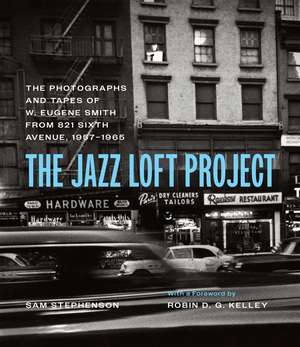
The Jazz Loft Project: Photographs and Tapes of W. Eugene Smith from 821 Sixth Avenue, 1957–1965
Fotograf W. Eugene Smith Autor Sam Stephenson Cuvânt înainte de Robin D. G. Kelleyen Limba Engleză Hardback – 27 iun 2023
Prin The Jazz Loft Project, descoperim o arhivă senzorială care a rămas ascunsă publicului timp de decenii: viața clandestină și vibrantă dintr-un loft dărăpănat din New York, unde W. Eugene Smith s-a refugiat pentru a documenta obsesiv nașterea muzicii. Remarcăm o experiență de lectură imersivă, unde privitorul nu doar observă chipurile unor titani precum Thelonious Monk sau Bill Evans, ci pătrunde în intimitatea procesului lor creativ, marcat de fum de țigară, repetiții nocturne și o atmosferă somnambulică. Această ediție extinsă transformă cele 40.000 de cadre și mii de ore de înregistrări într-o cronică vizuală și textuală a unei epoci de aur.
Pe raftul de artă, alături de William Claxton. Jazzlife, acest album se distinge prin natura sa brută și documentară. În timp ce Claxton caută estetica spectacolului, Smith surprinde „murdăria” creativă și momentele de respiro dintre acorduri, oferind o perspectivă mult mai personală și mai puțin stilizată asupra scenei de jazz. Merită menționat că, spre deosebire de Dream Street — ambițiosul său eseu fotografic despre Pittsburgh care l-a epuizat profesional — The Jazz Loft Project reprezintă o întoarcere spre interior, spre un spațiu claustrofobic, dar eliberator, unde fotoreportajul devine artă pură.
Recomandăm acest volum pentru modul în care Sam Stephenson reușește să integreze mărturiile celor prezenți cu imaginile lui Smith. Nu este doar un album de fotografie, ci o capsulă a timpului care redă sunetul și textura New York-ului dintre 1957 și 1965, totul sub rigoarea editorială a University of Chicago Press.
Preț: 298.46 lei
Carte disponibilă
Livrare economică 07-21 noiembrie
Livrare express 24-30 octombrie pentru 94.04 lei
Specificații
ISBN-10: 0226824845
Pagini: 288
Ilustrații: 225 halftones
Dimensiuni: 241 x 279 x 25 mm
Greutate: 1.68 kg
Ediția:Mărită
Editura: University of Chicago Press
Colecția University of Chicago Press
V-ar putea interesa
-
 Dream Street: W. Eugene Smith's Pittsburgh ProjectW. Eugene SmithPreț: 275.91 lei
 -
 -27%Preț: 66.72 lei91.80 lei
 -
 Jazz in Available LightVeryl OaklandPreț: 433.79 lei
 -
 Preț: 250.77 lei
 -
 Dustin Pitman Walk Wild SideMauricio Padilha-8%Preț: 426.86 lei463.98 lei
 -
 Arbus / Friedlander / WinograndSarah Hermanson Meister-19%Preț: 227.49 lei279.58 lei
 -
 Boom Boom, Boom BoomSimon RobinsonPreț: 189.27 lei
 -
 Endurance & Joy in the East End 1971-87David HoffmanPreț: 299.43 lei
 -
 Dear New YorkBrandon StantonPreț: 287.60 lei
 -
 Patti SmithClaude GassianPreț: 281.27 lei
 -
 New York: Sepp Werkmeister. Photographs 1965 - 1975Ulrich Pohlmann-16%Preț: 98.18 lei117.16 lei
 -
 New York: Portrait of a CityReuel Golden-8%Preț: 466.78 lei507.37 lei
 -
 William ClaxtonJoachim E. Berendt-15%Preț: 688.68 lei810.21 lei
 -
 New York. Portrait of a CityReuel GoldenPreț: 130.50 lei
 -
 John Cohen: Cheap Rents and de KooningJohn Cohen-19%Preț: 113.60 lei139.85 lei
 -
 Tokyo Jazz JointsPhilip ArneillPreț: 328.26 lei
 -
 Manhattan ProjectJan StallerPreț: 329.03 lei
 -
 -18%Preț: 298.48 lei361.98 leiNou
 -
 Band Photographs, 1968-1969: Two-Volume SetElliott Landy-10%Preț: 586.64 lei655.17 lei
De ce să citești această carte
O recomandare esențială pentru pasionații de jazz și fotografie documentară. Cititorul câștigă acces la arhiva secretă a lui W. Eugene Smith, capturată într-un moment de geniu izolat. Este o ocazie rară de a vedea procesul creativ al unor muzicieni legendari prin lentila unuia dintre cei mai mari fotoreporteri ai secolului XX, într-o ediție grafică de excepție care onorează rigoarea vizuală a autorului.
Despre autor
W. Eugene Smith (1918–1978) a fost o figură centrală a fotoreportajului umanist, renumit pentru eseuri vizuale profunde publicate în revista Life. Cariera sa a fost marcată de o etică profesională neînduplecată, de la fotografiile de pe frontul celui de-al Doilea Război Mondial până la documentarea tragică a otrăvirii cu mercur din Minamata, Japonia. Stilul său se caracterizează printr-un contrast puternic și o implicare emoțională totală în subiectele alese. După părăsirea presei comerciale, s-a dedicat unor proiecte independente masive, lăsând în urmă o arhivă colosală care continuă să fie explorată și valorificată de istoricii de artă.
Descriere scurtă
In 1957, Eugene Smith walked away from his longtime job at Life and the home he shared with his wife and four children to move into a dilapidated, five-story loft building at 821 Sixth Avenue in New York City’s wholesale flower district. The loft was the late-night haunt of musicians, including some of the biggest names in jazz—Charles Mingus, Zoot Sims, Bill Evans, and Thelonious Monk among them. Here, from 1957 to 1965, he made nearly 40,000 photographs and approximately 4,000 hours of recordings of musicians. Smith found solace in the chaotic, somnambulistic world of the loft and its artists, and he turned his documentary impulses away from work on his major Pittsburg photo essay and toward his new surroundings.
Smith’s Jazz Loft Project has been legendary in the worlds of art, photography, and music for more than forty years, but until the publication of this book, no one had seen his extraordinary photographs or read any of the firsthand accounts of those who were there and lived to tell the tales.