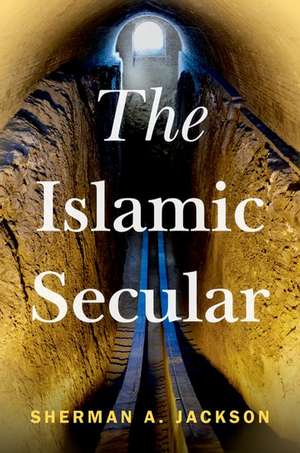
The Islamic Secular
Autor Sherman A. Jacksonen Limba Engleză Hardback – 19 iun 2024
Publicul format din studenți în științe politice, cercetători ai dreptului islamic și practicieni în domeniul relațiilor internaționale va găsi în The Islamic Secular un instrument analitic esențial pentru redefinirea raportului dintre credință și guvernare. Apreciem rigoarea cu care Sherman A. Jackson demontează presupunerea că secularismul în lumea musulmană trebuie să oglindească modelul occidental de „eliberare” a statului de sub autoritatea religioasă. Autorul demonstrează că, în tradiția juridică clasică, deși totul se află sub privirea divină, nu totul este dictat de Shari'ah.
Subliniem distincția fundamentală pe care volumul o face între Shari'ah, ca lege sacră cu jurisdicție limitată, și Islam, ca religie cu orizont nelimitat. Această „secularitate islamică” permite autonomizarea unor domenii precum economia sau știința fără ca acestea să devină „ne-islamice”. Cititorii familiarizați cu Shari`a in the Secular State de Russell Powell vor aprecia modul în care Jackson trece dincolo de contextul specific (cum este cel turc) pentru a oferi o fundamentare teoretică universală bazată pe jurisprudența pre-modernă. Dacă Powell se concentrează pe spațiul liminal al limbajului juridic, Jackson propune o paradigmă în care secularul este un complement, nu un rival al religiei.
Reținem că această lucrare continuă preocupările autorului din Islam and the Blackamerican sau Islam and the Problem of Black Suffering privind poziționarea Islamului în spațiul public modern. Totuși, The Islamic Secular se distinge printr-o densitate teoretică sporită, mutând accentul de pe experiența sociologică spre fundamentele ontologice ale legii. Este o lectură densă, publicată de Oxford University Press, care recalibrează dezbaterea despre statul islamic modern, oferind o alternativă intelectuală la polarizarea dintre teocrație și secularism radical.
Preț: 283.89 lei
Preț vechi: 319.81 lei
-11%
Carte disponibilă
Livrare economică 23 octombrie-03 noiembrie
Livrare express 10-16 octombrie pentru 88.43 lei
Specificații
ISBN-10: 0197661785
Pagini: 544
Dimensiuni: 165 x 226 x 71 mm
Greutate: 0.86 kg
Editura: Oxford University Press
Colecția OUP USA
Locul publicării:New York, United States
De ce să citești această carte
Recomandăm această carte cercetătorilor care doresc să înțeleagă cum poate un stat modern să fie „islamic” fără a fi o teocrație rigidă. Cititorul câștigă o perspectivă clară asupra distincției dintre legea Shari'ah și religia Islam, învățând că politicile de stat pot fi laice în execuție, dar religioase în spirit. Este o resursă crucială pentru depășirea clișeelor despre incompatibilitatea Islamului cu modernitatea politică.
Despre autor
Sherman A. Jackson este profesor asociat de studii arabe și islamice la Universitatea din Michigan. Recunoscut pentru analizele sale profunde asupra Islamului în contextul american și asupra teologiei suferinței, Jackson îmbină expertiza în jurisprudența clasică cu o înțelegere acută a provocărilor contemporane. Opera sa, care include titluri precum Sufism for Non-Sufis?, explorează constant tensiunile dintre tradiția spirituală și presiunile politice ale lumii moderne, fiind considerat una dintre cele mai influente voci ale intelectualismului islamic actual.
Descriere
Recenzii
This is a thought-provoking map of the forgotten history of the metes and bounds of sharīʿa, and a tour through the perpetual space beyond it. Each encounter involves an interpretive endeavor, both inside and beyond Islamic law's jurisdiction. Beyond it, encounters are both religious and secular whenever Muslims ethically seek to solve societal challenges in governance and even law (or anything else), in ways that proceed, according to Dr. Jackson, 'under the conscious awareness of the divine gaze.' True, these encounters require constant deliberation and reconsideration. But they promise better answers in both bounded spaces of Islamic law and expansive spaces of the 'Islamic secular.' It is a tour worth taking.
The book contains a helpful introduction and a clarifying conclusion of the fundamental principles presented here. It also presents an important contribution to Islamic speculative jurisprudence and theology. Library collections in Islamic studies, political science, and other traditions of political theology will benefit from this work. Highly recommended. Advanced undergraduates through faculty; professionals.
The Islamic Secular, a thick, dense, and elaborate monograph by Sherman A. Jackson, Distinguished Professor of Religion at the University of Southern California, is one such book that deserves attention-by both Muslims and others who are interested in the destiny of Islam.
The book is undeniably rich and comprehensive, offering a thorough perspective that prompts Western Islamic scholars and practicing Muslims to think carefully, as it challenges discourses in both groups.
The Islamic Secular presents a thought-provoking and innovative approach in the realm of Islamic studies, aiming to dispel the notion that Islam and secularity are fundamentally opposed to one another. Future research, including that by Jackson and others, may further explore the various connections between Islam and the secular-connections that this groundbreaking work has begun to uncover but has not fully explored.
The extraordinary detail provided and the beautifully critical discussions tell a story of the repositioning of a predominantly Western concept within Islam, offering alternative understandings that dislocate Western-centric assumptions.
This stimulating work, comprising some four hundred pages of closely argued text and more than a hundred pages of notes, makes considerable demands on the reader ... It would serve as an excellent text for advanced studies in Islamic Studies, especially sharīÊ¿a, Social Theory and the relationship between Islam and politics. It draws on many decades of deep thought and research of Islamic law and Islamic history.
The Islamic Secular is a learned and erudite book that deploys a masterful understanding of Islamic legal and theological history to make important interventions in public debates about the place of Islam and Islamic law in the modern state.