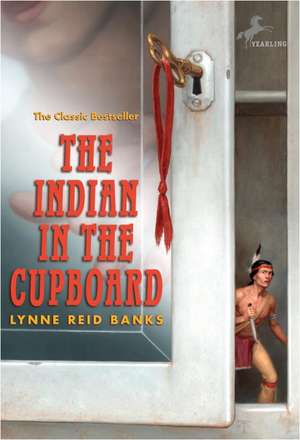
The Indian in the Cupboard: Random House Children's Books
Autor Lynne Reid Banksen Limba Engleză Paperback – 9 feb 2010
Mesajul central pe care îl descoperim printre paginile acestui roman clasic este că prietenia adevărată depășește barierele timpului și ale dimensiunilor, dar aduce cu sine o responsabilitate uriașă față de celălalt. Ne-a atras atenția modul în care Lynne Reid Banks transformă un obiect banal — un soldățel de plastic primit cadou — într-o poartă către o lecție profundă de etică și maturizare. Observăm cum Omri, un băiat obișnuit, trebuie să navigheze dilema morală de a deține controlul asupra vieții micului războinic Little Bear, realizând că magia nu este doar un joc, ci un angajament.
Găsim în această carte un ritm alert, specific literaturii de aventură pentru copii, dar dublat de o sensibilitate aparte față de diferențele culturale. În familia The Magic of Friendship de Subhash Kommuru, regăsim tema puterii transformatoare a tovărășiei, dar cu o temă actuală și provocatoare: impactul acțiunilor noastre asupra celor care depind de noi și riscurile de a trata o ființă vie ca pe o posesie. Stilul autoarei este direct și captivant, reușind să mențină suspansul fără a recurge la artificii inutile.
Această lucrare ocupă un loc central în opera lui Lynne Reid Banks. Dacă în Harry the Poisonous Centipede autoarea explora lumea din perspectiva unei creaturi mici în fața „Hoo-Minilor”, în The Indian in the Cupboard ea inversează perspectiva, punând copilul în rolul gigantului protector. Este o evoluție narativă care pregătește terenul pentru continuări precum The Return of the Indian, unde consecințele magiei devin și mai complexe. Romanul rămâne o lectură esențială pentru categoria 8-12 ani, oferind un echilibru perfect între fantezie și realism emoțional.
Din seria Random House Children's Books
-
 Preț: 42.15 lei
 -
 Preț: 42.96 lei
 -
 Preț: 44.01 lei
 -
 Preț: 50.63 lei
 - 29%
 Preț: 40.85 lei
 -
 Preț: 43.61 lei
 -
 Preț: 37.60 lei
 -
 Preț: 44.73 lei
 -
 Preț: 27.76 lei
 -
 Preț: 35.98 lei
 -
 Preț: 37.22 lei
 -
 Preț: 37.67 lei
 -
 Preț: 44.20 lei
 -
 Preț: 45.34 lei
 -
 Preț: 37.42 lei
 -
 Preț: 50.63 lei
 -
 Preț: 32.25 lei
 -
 Preț: 47.86 lei
 -
 Preț: 37.40 lei
 -
 Preț: 35.94 lei
 -
 Preț: 36.50 lei
 -
 Preț: 37.40 lei
 -
 Preț: 27.33 lei
 -
 Preț: 37.44 lei
 -
 Preț: 38.02 lei
 -
 Preț: 39.44 lei
 -
 Preț: 46.20 lei
 -
 Preț: 43.51 lei
 -
 Preț: 38.53 lei
 -
 Preț: 38.02 lei
 -
 Preț: 49.36 lei
 -
 Preț: 37.60 lei
 -
 Preț: 35.01 lei
 -
 Preț: 38.86 lei
 -
 Preț: 50.64 lei
 -
 Preț: 45.53 lei
 -
 Preț: 47.75 lei
 -
 Preț: 43.25 lei
 -
 Preț: 59.92 lei
 -
 Preț: 27.76 lei
 -
 Preț: 41.63 lei
 -
 Preț: 69.67 lei
 -
 Preț: 70.85 lei
 -
 Preț: 48.95 lei
 -
 Preț: 38.86 lei
 -
 Preț: 43.37 lei
 -
 Preț: 43.43 lei
 -
 Preț: 37.60 lei
 -
 Preț: 27.42 lei
 -
 Preț: 42.96 lei
Preț: 51.70 lei
Carte disponibilă
Livrare economică 30 octombrie-13 noiembrie
Livrare express 15-21 octombrie pentru 24.53 lei
Specificații
ISBN-10: 0375847537
Pagini: 242
Dimensiuni: 131 x 192 x 17 mm
Greutate: 0.16 kg
Editura: Random House
Colecția Random House Children's Books
Seria Random House Children's Books
Locul publicării:New York, NY, United States
V-ar putea interesa
-
 Almost HomeJoan BauerPreț: 62.37 lei
 -
 The Return of the IndianLynne Reid BanksPreț: 50.63 lei
 -
 The Mystery of the CupboardLynne Reid BanksPreț: 57.49 lei
 -
 The Key to the IndianLynne Reid BanksPreț: 57.66 lei
De ce să citești această carte
Recomandăm această carte părinților care doresc să le ofere copiilor o poveste care stimulează imaginația, dar și simțul responsabilității. Cititorul câștigă o perspectivă empatică asupra istoriei și a relațiilor interumane. Este un punct de plecare excelent pentru discuții despre cum ne purtăm cu cei diferiți de noi, totul ambalat într-o aventură magică ce a captivat generații întregi de tineri cititori din întreaga lume.
Despre autor
Lynne Reid Banks (născută în 1929) este o renumită scriitoare britanică, a cărei carieră prolifică cuprinde peste 45 de cărți pentru copii și adulți. Succesul său internațional a fost consolidat de The Indian in the Cupboard, vândut în peste 10 milioane de exemplare și adaptat într-un film de succes. Banks este cunoscută pentru capacitatea de a crea lumi fantastice ancorate în realități emoționale puternice, fie că scrie despre aventurile unui centiped în Harry the Poisonous Centipede sau despre biografia familiei Brontë. Stilul său versatil și atenția pentru detaliul istoric i-au adus numeroase distincții literare de prestigiu.
Recenzii
"Best novel of the year (1981)."--"The New York Times".
Rebecca Caudill Young Reader's Book Award, California Young Reader Medal, Pacific Northwest Young Readers Choice Award, A Virginia Young Readers Award.
"From the Hardcover edition."
Notă biografică
Descriere
Descriere scurtă
"It's Omri's birthday, but all he gets from his best friend, Patrick, is a little plastic Indian brave. Trying to hide his disappointment, Omri puts the Indian in a metal cupboard and locks the door with a mysterious skeletonkey that once belonged to his great-grandmother. Little does Omri know that by turning the key, he will transform his ordinary plastic Indian into a real live man from an altogether different time and place Omri and the tiny warrior called Little Bear could hardly be more different, yet soon the two forge a very special friendship. Will Omri be able to keep Little Bear without anyone finding out and taking his precious Indian from him?"
Extras
Birthday Presents
It was not that Omri didn't appreciate Patrick's birthday present to him. Far from it. He was really very grateful--sort of. It was, without a doubt, very kind of Patrick to give Omri anything at all, let alone a secondhand plastic Indian that he himself had finished with.
The trouble was, though, that Omri was getting a little fed up with small plastic figures, of which he had loads. Biscuit tinsful, probably three or four if they were all put away at the same time, which they never were because most of the time they were scattered about in the bathroom, the loft, the kitchen, the breakfast room, not to mention Omri's bedroom and the garden. The compost heap was full of soldiers which, over several autumns, had been raked up with the leaves by Omri's mother, who was rather careless about such things.
Omri and Patrick had spent many hours together playing with their joint collections of plastic toys. But now they'd had about enough of them, at least for the moment, and that was why, when Patrick brought his present to school on Omri's birthday, Omri was disappointed. He tried not to show it, but he was.
"Do you really like him?" asked Patrick as Omri stood silently with the Indian in his hand.
"Yes, he's fantastic," said Omri in only a slightly flattish voice. "I haven't got an Indian."
"I know."
"I haven't got any cowboys either."
"Nor have I. That's why I couldn't play anything with him."
Omri opened his mouth to say, "I won't be able to either," but, thinking that might hurt Patrick's feelings, he said nothing, put the Indian in his pocket, and forgot about it.
After school there was a family tea, and all the excitement of his presents from his parents and his two older brothers. He got his dearest wish--a skateboard complete with kickboard and kryptonic wheels from his mum and dad, and from his eldest brother, Adiel, a helmet. Gillon, his other brother, hadn't bought him anything because he had no money (his pocket money had been stopped some time ago in connection with a very unfortunate accident involving their father's bicycle). So when Gillon's turn came to give Omri a present, Omri was very surprised when a large parcel was put before him, untidily wrapped in brown paper and string.
"What is it?"
"Have a look. I found it in the alley."
The alley was a narrow passage that ran along the bottom of the garden where the dustbins stood. The three boys used to play there sometimes, and occasionally found treasures that other--perhaps richer--neighbors had thrown away. So Omri was quite excitedas he tore off the paper.
Inside was a small white metal cupboard with a mirror in the door, the kind you see over the basin in old-fashioned bathrooms.
You might suppose Omri would get another disappointment about this because the cupboard was fairly plain and, except for a shelf, completely empty, but oddly enough he was very pleased with it. He loved cupboards of any sort because of the fun of keeping things in them. He was not a very tidy boy in general, but he did like arranging things in cupboards and drawers and then opening them later and finding them just as he'd left them.
"I do wish it locked," he said.
"You might say thank you before you start complaining," said Gillon.
"It's got a keyhole," said their mother. "And I've got a whole boxful of keys. Why don't you try all the smaller ones and see if any of them fit?"
Most of the keys were much too big, but there were half a dozen that were about the right size. All but one of these were very ordinary. The unordinary one was the most interesting key in the whole collection, small with a complicated lock part and a fancytop. A narrow strip of red satin ribbon was looped through one of its curly openings. Omri saved that key to the last.
None of the others fitted, and at last he picked up the curly-topped key and carefully put it in the keyhole on the cupboard door, just below the knob. He did hope very much that it would turn, and regretted wasting his birthday-cake-cutting wish on something so silly (or rather, unlikely) as that he might pass his spelling test next day, which it would take real magic to bring about as he hadn't even looked at the words since they'd been given out four days ago. Now he closed his eyes and unwished the test pass and wished instead that this little twisty key would turn Gillon's present into a secret cupboard.
The key turned smoothly in the lock. The door wouldn't open.
"Hey! Mum! I've found one!"
"Have you, darling? Which one?" His mother came to look. "Oh that one! How very odd. That was the key to my grandmother's jewel box, that she got from Florence. It was made of red leather and it fell to bits at last, but she kept the key and gave it tome. She was most terribly poor when she died, poor old sweetie, and kept crying because she had nothing to leave me, so in the end I said I'd rather have this little key than all the jewels in the world. I threaded it on that bit of ribbon--it was much longer then--and hung it around my neck and told her I'd always wear it and remember her. And I did for a long time. But then the ribbon broke and I nearly lost it."
"You could have got a chain for it," said Omri.
She looked at him. "You're right," she said. "I should have done just that. But I didn't. And now it's your cupboard key. Please don't lose it, Omri, will you?"
Omri put the cupboard on his bedside table, and opening it, looked inside thoughtfully. What would he put in it? "It's supposed to be for medicines," said Gillon. "You could keep your nose drops in it."
"No! That's just wasting it. Besides, I haven't any other medicines."
"Why don't you pop this in?" his mother suggested, and opened her hand. In it was Patrick's Indian. "I found it when I was putting your trousers in the washing machine."
Omri carefully stood the Indian on the shelf.
"Are you going to shut the door?" asked his mother.
"Yes. And lock it." He did this and then kissed his mother and she turned the light out and he lay down on his side looking at the cupboard. He felt very content. Just as he was dropping off to sleep his eyes snapped open. He had thought he heard a little noise . . . but no. All was quiet. His eyes closed again.
In the morning there was no doubt about it. The noise actually woke him.
He lay perfectly still in the dawn light staring at the cupboard, from which was now coming a most extraordinary series of sounds. A pattering; a tapping; a scrabbling; and--surely?--a high-pitched noise like--well, almost like a tiny voice. To be truthful, Omri was petrified. Who wouldn't be? Undoubtedly there was something alive in that cupboard. At last, he put out his hand and touched it. He pulled very carefully. The door was shut tight. But as he pulled, the cupboard moved, just slightly.The noise from inside instantly stopped. He lay still for a long time, wondering. Had he imagined it? The noise did not start again. At last he cautiously turned the key and opened the cupboard door.
The Indian was gone.
From the Trade Paperback edition.