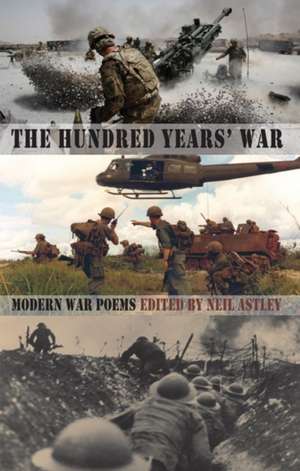
The Hundred Years' War
Editat de Neil Astleyen Limba Engleză Paperback – 17 iun 2014
Considerăm că The Hundred Years' War, editată de Neil Astley, reprezintă un instrument pedagogic și istoric esențial, demonstrând aplicabilitatea poeziei ca document de arhivă vie. Spre deosebire de o simplă colecție de versuri, această antologie de 608 pagini funcționează ca o cronică multilingvă a violenței organizate din ultimul secol. Apreciem în mod deosebit structura cronologică riguroasă care permite cititorului să confrunte experiențele simultane ale inamicilor: de exemplu, în toamna anului 1944, textul ne poartă prin Revolta din Varșovia, marșurile forțate din Ungaria trăite de Miklos Radnoti și bombardamentele din Londra descrise de Dylan Thomas. Această abordare extinde cadrul propus de The New Oxford Book of War Poetry de Jon Stallworthy cu date noi și o deschidere geografică mult mai largă către conflictele postcoloniale și cele din Orientul Mijlociu. În timp ce antologia lui Stallworthy se concentrează pe o perspectivă clasică, adesea anglocentrică, volumul publicat de Bloodaxe Books aduce în prim-plan voci din Vietnam, America Centrală sau Balcani, oferind o viziune globală asupra „teatrelor de război”. Stilul antologiei este marcat de o onestitate brutală, eliminând glorificarea în favoarea mărturiei directe. Suntem de părere că forța acestui volum rezidă în capacitatea sa de a juxtapune poezia de front cu cea a „frontului de acasă”, creând o imagine caleidoscopică a suferinței umane. Este o resursă academică valoroasă pentru studiul literaturii comparate și al istoriei secolului XX, oferind contextul necesar pentru a înțelege cum trauma colectivă a fost procesată lingvistic de-a lungul a zece decenii de conflict neîntrerupt.
Preț: 88.23 lei
Preț vechi: 100.75 lei
-12%
Carte disponibilă
Livrare economică 03-10 noiembrie
Specificații
ISBN-10: 1780371004
Pagini: 608
Dimensiuni: 139 x 218 x 38 mm
Greutate: 0.82 kg
Ediția:New.
Editura: Bloodaxe Books
V-ar putea interesa
-
 -18%Preț: 1487.13 lei1823.03 lei
 -
 Land of Three RiversNeil Astley-19%Preț: 180.32 lei222.89 lei
 -
 The Irish Poet and the Natural WorldAndrew CarpenterPreț: 217.86 lei
 -
 Berryman's Fate: A Centenary Celebration in VersePhilip ColemanPreț: 116.01 lei
 -
 Little WitnessConnie RobertsPreț: 100.91 lei
 -
 Heavy Bear Who Goes with MeBrendan Kennelly-17%Preț: 89.97 lei108.57 lei
 -
 Staying AliveNeil Astley-14%Preț: 85.19 lei99.06 lei
 -
 Preț: 57.12 lei
 -
 Being AliveNeil AstleyPreț: 85.35 lei
 -
 Earth ShatteringNeil AstleyPreț: 142.77 lei
 -
 Being HumanNeil AstleyPreț: 83.56 lei
 -
 Essential Poems from the Staying Alive TrilogyNeil Astley-20%Preț: 68.75 lei85.63 lei
 -
 In PersonNeil Astley-12%Preț: 102.32 lei116.55 lei
 -
 FuturesTheodoros ChiotisPreț: 108.39 lei
De ce să citești această carte
Recomandăm această antologie celor care doresc să înțeleagă istoria ultimului secol dincolo de datele statistice. Cititorul câștigă o perspectivă rară asupra umanității în condiții extreme, accesând voci de pe ambele părți ale baricadei. Este o lectură fundamentală pentru studenții la litere și istorie, oferind o hartă emoțională a conflictelor globale, de la Primul Război Mondial până la amenințările nucleare și terorismul contemporan.