Cantitate/Preț
Produs

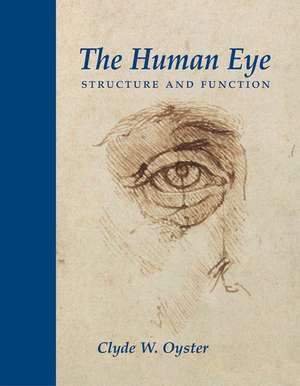
The Human Eye: Structure and Function

Autor Clyde W. Oyster
en Limba Engleză Paperback – 15 iun 1999

Observăm în The Human Eye o rigoare academică ce transformă studiul vederii dintr-o simplă descriere anatomică într-o analiză funcțională dinamică. Volumul debutează prin stabilirea unui protocol de corelare între structura fizică și mecanismele de procesare a imaginii, utilizând problemele funcționale drept ghid pentru identificarea celor mai relevante caracteristici ale anatomiei oculare. Apreciem în mod deosebit integrarea unor casete clinice care detaliază algoritmi de intervenție chirurgicală și metode experimentale, oferind o punte necesară între teoria preclinică și practica oftalmologică.

Această ediție revizuită, publicată sub egida Oxford University Press, excelează prin claritatea celor 575 de ilustrații care susțin un text dens de peste 700 de pagini. Autorul Clyde W. Oyster nu se limitează la stadiul actual al cunoașterii, ci plasează ochiul uman într-un context evolutiv vast, de la dezvoltarea in utero până la procesele degenerative ale senescenței. Ne-a atras atenția includerea unor „viniete” istorice care documentează evoluția ideilor despre vedere, oferind o perspectivă umanistă asupra științei.

The Human Eye reprezintă o alternativă aprofundată la Animal Eyes de Michael F. Land pentru rezidenți și cercetători. În timp ce lucrarea lui Land se concentrează pe diversitatea sistemelor optice în regnul animal, volumul de față are avantajul unei focalizări clinice asupra ochiului uman, fiind mult mai util pentru cei care urmăresc înțelegerea patologiilor și a intervențiilor chirurgicale specifice speciei noastre. Totodată, spre deosebire de abordarea narativă din The Eye and I, The Human Eye păstrează un ton clinic și o structură sistematică, esențială pentru studiul academic.

Citește tot Restrânge

Preț: 134909 lei

Preț vechi: 163492 lei
-17%

Puncte Express: 2024

Carte tipărită la comandă

Livrare economică 28 mai-03 iunie


Specificații

ISBN-13: 9780878936441
ISBN-10: 0878936440
Pagini: 766
Ilustrații: 575 illustrations
Dimensiuni: 279 x 213 x 33 mm
Greutate: 1.75 kg
Ediția:Revised
Editura: Oxford University Press
Colecția OUP USA
Locul publicării:New York, United States

De ce să citești această carte

Această lucrare este esențială pentru studenții la optometrie, rezidenții în oftalmologie și cercetătorii în neuroștiințe care caută o înțelegere profundă a mecanismelor vizuale. Cititorul câștigă o viziune integrată asupra ochiului, învățând nu doar unde se află o structură, ci și cum funcționează aceasta în context clinic. Este un instrument de referință care explică fundamentul anatomic al intervențiilor chirurgicale moderne.


Despre autor

Clyde W. Oyster este un cercetător și autor respectat în domeniul științelor vizuale, cunoscut pentru capacitatea sa de a sintetiza informații complexe din anatomie și fiziologie. Expertiza sa se reflectă în structura acestui manual publicat de Oxford University Press, unde pune accent pe relația dintre formă și funcție. Prin contribuția sa la această ediție revizuită, Oyster facilitează accesul viitorilor practicieni la o bază solidă de cunoștințe teoretice, ancorate în realitățile clinice ale oftalmologiei contemporane.


Descriere

Published by Sinauer Associates, an imprint of Oxford University Press. We are a highly visual species. Most of our information about the world comes to us through our eyes and most of our cultural and intellectual heritage is stored and transmitted as words and images to which our vision gives access and meaning. Knowing more about our eyes and vision is, therefore, one path to better understanding ourselves. And, as it happens, the human eye is a fairly representative vertebrate eye; knowing more about it tells us much about the eyes of other animals and about how they view the world and us.In more practical terms, a better understanding of the human eye allows us to intervene more intelligently and purposefully as we attempt to correct, modify, or ameliorate disorders of the eye brought on by trauma, disease, or senescence.Understanding the eye requires an exploration of the relationship between its structure and its function--that is, a consideration not only of how the eye and its parts are constructed, but also of what they do and how they work. Thus, this book considers both the structure and the function of the human eye and how they are related, often using functional issues as a guide to the most meaningful and important features of the anatomy. Limited use of technical terms from the various disciplines that relate to the eye, definitions of terms as they are used, a glossary, and suggestions for additional reading are all included to make the text accessible to readers for whom the subject is new. Boxes interspersed throughout the text discuss methods used to study the structure of the eye and surgical procedures used to alter its structure in beneficial ways.In addition to the main theme of structure and function, several subthemes make the general point, in different ways, that the eye and our understanding of it are dynamic and changing. Change on a geological timescale is represented by the evolutionary history of eyes generally and the human eye's place among the diversity of eyes in the animal kingdom; these issues are discussed in the Prologue. Change within a human lifetime begins with a chapter about the early stages of development in utero, continues throughout the book with the developmental histories of different parts of the eye, and concludes, in the Epilogue, with accounts of postnatal growth, maturation, and senescence. Change throughout human history in the way we have understood our eyes is another story, fragments of which are contained in a series of "vignettes" about some of the people and ideas that have influenced human thought about the eye over the past several thousand years.The Human Eye: Structure and Function appeals to a wide audience, including all scientists who are interested in the eye and in vision; optometrists and ophthalmologists; and optometry students and ophthalmology residents.

Recenzii

This is an elegant and immensely satisfying book on the anatomy and functioning of the human eye. Its breadth and depth make it appropriate for both vision practitioners and upper undergraduates and graduate students interested in vision research. This is a landmark book on the eye which belongs in every biological, optometric and ophthalmological library."

Notă biografică

Clyde W. Oyster is Professor Emeritus in the Department of Physiological Optics of the School of Optometry at The University of Alabama at Birmingham.