Cantitate/Preț
Produs

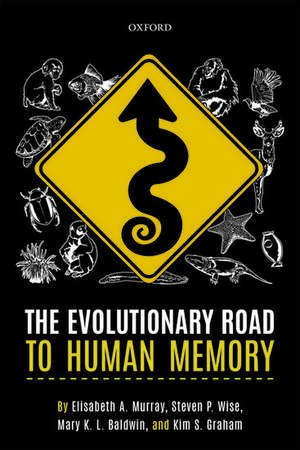
The Evolutionary Road to Human Memory

Autor Elisabeth A. Murray, Steven P. Wise, Mary K. L. Baldwin, Kim S. Graham
en Limba Engleză Paperback – 10 dec 2019

Această monografie, publicată de OUP OXFORD, propune o incursiune cronologică în biologia memoriei, demontând ideea că facultățile noastre cognitive sunt izolate de restul regnului animal. Remarcăm modul în care autorii, coordonați de Elisabeth A. Murray, reușesc să identifice o linie directă de descendență între primele vertebrate și Homo sapiens, arătând cum fiecare arie cerebrală nou apărută în cursul evoluției a servit unui avantaj adaptativ specific. Ne-a atras atenția în mod deosebit analiza momentului în care memoria a încetat să fie doar un instrument de supraviețuire imediată și a devenit, prin apariția memoriei autobiografice, fundamentul imaginației și al culturii umane.

Textul completează perspectiva oferită de The Evolution of Memory Systems, o lucrare anterioară a autoarei Elisabeth A. Murray. În timp ce volumul precedent se concentra pe distincția tehnică dintre memoria declarativă și cea procedurală în context clinic, The Evolutionary Road to Human Memory extinde cadrul narativ către o perspectivă istorică și ecologică mult mai vastă. De asemenea, lucrarea aduce un plus de rigoare neuroștiințifică față de abordările din What Is Adaptive about Adaptive Memory?, care se bazează mai mult pe deducții comportamentale. Autorii explică aici mecanismul fizic — modificările structurale ale creierului — care a permis stocarea experiențelor complexe. Stilul este precis, dar lipsit de jargonul excesiv care ar putea îndepărta un cititor neavizat, făcând din acest parcurs evolutiv o lectură logică și captivantă despre cum am ajuns să ne putem povesti propria viață.

Citește tot Restrânge

Preț: 20196 lei

Preț vechi: 27502 lei
-27%

Puncte Express: 303

Carte disponibilă

Livrare economică 07-12 mai


Specificații

ISBN-13: 9780198828051
ISBN-10: 0198828055
Pagini: 224
Dimensiuni: 155 x 229 x 11 mm
Greutate: 0.37 kg
Editura: OUP OXFORD
Colecția OUP Oxford
Locul publicării:Oxford, United Kingdom

De ce să citești această carte

Această carte este esențială pentru cei care doresc să înțeleagă nu doar ce ne amintim, ci de ce creierul nostru a dezvoltat aceste mecanisme. Cititorul va câștiga o perspectivă biologică clară asupra modului în care memoria ne-a modelat specia, transformând instinctele de bază în capacitatea complexă de a crea cultură și de a planifica viitorul. Este o recomandare excelentă pentru studenții la neuroștiințe și psihologie, dar și pentru pasionații de antropologie.


Despre autor

Elisabeth A. Murray este o figură centrală în neuroștiința contemporană, recunoscută pentru cercetările sale asupra lobului temporal medial și a rolului acestuia în procesele cognitive. Alături de coautorii Steven P. Wise, Mary K. L. Baldwin și Kim S. Graham, ea explorează intersecția dintre evoluția biologică și funcțiile executive ale creierului. Activitatea sa academică este marcată de o dorință constantă de a unifica datele din experimentele pe animale cu observațiile clinice umane. În această lucrare, Murray și echipa sa distilează decenii de cercetare de laborator într-o sinteză accesibilă despre originile memoriei umane.


Descriere

We tend to think about memory in terms of the human experience, neglecting the fact that we can trace a direct line of descent from the earliest vertebrates to modern humans. But the evolutionary history that we share with other vertebrates has left a mark on modern memory, complemented by unique forms of memory that emerged in humans. This book tells an intriguing story about how evolution shaped human memory. It explains how a series of now-extinct ancestral species adapted to life in their world, in their time and place. As they did, new brain areas appeared, each of which supported an innovative form of memory that helped them gain an advantage in life. Through inheritance and modification across millions of years, these evolutionary developments created several kinds of memory that influence the human mind today. Then, during human evolution, yet another new kind of memory emerged: about ourselves and others. This evolutionary innovation ignited human imagination; empowered us to remember and talk about a personal past; and enabled the sharing of knowledge about our world, our culture, and ourselves. Through these developments, our long journey along the evolutionary road to human memory made it possible for every individual, day upon day, to add new pages to the story of a life: the remarkably rich record of experiences and knowledge that make up a human mind.Written in an engaging and accessible style, The Evolutionary Road to Human Memory will be enjoyable reading for anyone interested in the human mind.

Recenzii

Murray and colleagues here attempt to popularize a claim that specific traits of human memory can be traced to evolutionary forebears.

Notă biografică

Elisabeth A. (Betsy) Murray was raised with her three brothers in Syracuse, New York. She received a B.S. in Biology from Bucknell University in Lewisburg, Pennsylvania and a Ph.D. in Physiology from the University of Texas Medical Branch at Galveston, Texas. Dr. Murray is an elected Fellow of the Association for Psychological Science, of the American Psychological Association, and of the American Association for the Advancement of Science. She currently heads the Laboratory of Neuropsychology at the National Institute of Mental Health.Steven P. Wise received a B.A. in Biology from Dartmouth College and a Ph.D. from Washington University (St. Louis) in Biology (Neural Science). After a brief period of postdoctoral study, he had a 30-year career in neurophysiology at the National Institute of Mental Health, where he headed the Laboratory of Neurophysiology.Mary K. L. Baldwin received a B.Sc. in Neuroscience and a Ph.D. in Psychology from Vanderbilt University. For the last six years, she has been working as a postdoctoral fellow and assistant project scientist at the Center for Neuroscience and Psychology Department at the University of California, Davis.Kim S. Graham received a B.Sc. in Biological Sciences from Edinburgh University, followed by a Ph.D. from Cambridge University in Psychology. She subsequently worked as a research scientist at the MRC Cognition and Brain Sciences for 12 years, prior to moving to Cardiff University in 2007, where she held the position of Professor of Cognitive Neuroscience. She was appointed Pro Vice-Chancellor for Research, Innovation, and Enterprise at Cardiff University in 2018.