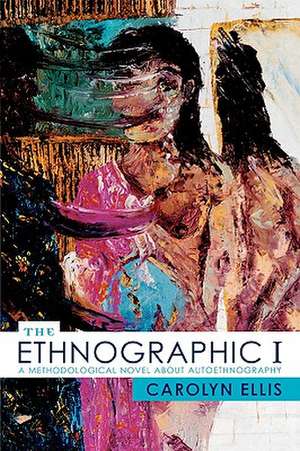
The Ethnographic I: A Methodological Novel about Autoethnography: Ethnographic Alternatives Book Series, cartea 13
Autor Carolyn Ellisen Limba Engleză Paperback – 27 dec 2003
Observăm în The Ethnographic I o abordare radicală a manualului academic, volumul fiind conceput sub forma unui roman metodologic. Această structură narativă ne permite să urmărim dinamica unui curs universitar fictiv, unde Carolyn Ellis ghidează studenții prin complexitatea cercetării autoetnografice. Spre deosebire de textele tehnice rigide, descoperim aici o împletire între sfatul metodologic și poveștile personale, oferind o perspectivă imersivă asupra modului în care experiența subiectivă devine material de cercetare sociologică.
Considerăm că progresia capitolelor reflectă fidel etapele unei investigații reale. Primele sesiuni de curs se concentrează pe definirea proiectelor și utilizarea interviurilor, evoluând spre capitolele 5 și 6, unde sunt analizate problemele spinoase ale memoriei, adevărului și scrierii vulnerabile. Includerea unor „interludii” cu colaboratori precum Arthur P. Bochner adaugă profunzime teoretică, explorând autoetnografia ca mod de viață. Cartea completează perspectiva oferită de Essentials of Autoethnography de Christopher N. Poulos, adăugând acea dimensiune literară și emoțională care lipsește deseori din ghidurile pur procedurale.
În contextul operei sale, acest volum ocupă un loc central, făcând legătura între aplicațiile practice din Music Autoethnographies și sinteza teoretică din Handbook of Autoethnography. The Ethnographic I reușește să demonstreze că cercetarea calitativă nu este doar o colectare de date, ci un proces de introspecție și scriere creativă, esențial pentru înțelegerea culturii prin prisma sinelui.
Preț: 342.65 lei
Preț vechi: 494.69 lei
-31%
Carte tipărită la comandă
Livrare economică 06-20 iunie
Specificații
ISBN-10: 0759100519
Pagini: 448
Dimensiuni: 148 x 226 x 26 mm
Greutate: 0.64 kg
Ediția:New.
Editura: Bloomsbury Publishing
Colecția AltaMira Press
Seria Ethnographic Alternatives Book Series
Locul publicării:New York, United States
De ce să citești această carte
Această lucrare este esențială pentru studenții și cercetătorii din științele sociale care doresc să depășească barierele scrierii academice convenționale. Cititorul câștigă o înțelegere profundă a eticii și tehnicilor narative necesare pentru a transforma experiența personală în cercetare validă. Este recomandată celor care caută un model de „vulnerabilitate analitică” și vor să învețe cum să navigheze între rigoarea etnografică și libertatea literară.
Despre autor
Carolyn Ellis este profesor de comunicare și sociologie la University of South Florida și este recunoscută la nivel internațional ca figură centrală în dezvoltarea autoetnografiei. Opera sa explorează intersecția dintre literatură, estetică și științe sociale, fiind autoarea unor volume de referință precum „Final Negotiations”. A fost distinsă cu premii prestigioase, inclusiv premiul H.L. „Bud” Goodall, Jr. și Nick Trujillo în 2023, consolidându-și statutul de mentor pentru generații de etnografi care integrează reflexivitatea și emoția în munca lor academică.
Descriere
Cuprins
2 Preface
3 Class 1: Introductions and Interruptions
4 Class 2: The Call of Autoethnographic Stories
5 Class 3: Autoethnography in Interview Research
6 Class 4: Autoethnographic Projects: Putting Self into Research
7 Class 5: Writing Field Notes, Interviews, and Stories: Issues of Memory and Truth
8 Class 6: Writing Therapeutically, Vulnerably, Evocatively, and Ethically
9 Class Interludes: Living Autoethnography: Life Informs Work Informs Life (with Arthur P. Bochner)
10 Class 7: Writing as Inquiry
11 Friendship Interlude: Artful Autoethnography (with Karen Scott-Hoy)
12 Class 8: Autoethnographic Forms of Writing
13 Class 9: Final Projects
14 Class 10: Evaluating and Publishing Autoethnography
15 Community Interlude: Taking Autoethnogrpahic Research to a Domestic Abuse Shelter
16 Participant Interludes: Autoethnographic Conversations about Autoethnography
17 Author Interlude: Writing a Methodological Novel: Thinking Like an Ethnographer, Writing Like a Novelist
18 Appendix 1: Suggested Syllabus and Readings for Autoethnography Class
19 Appendix 2: Chart of Impressionistice and Realist Ethnography
20 Appendix 3: Guidelines for Writing Personal Narrative Papers
21 Appendix 4: Editing Personal Narratives
22 Bibliography
23 Index
24 About the Author
Recenzii
This is a masterful book that tells a compelling tale about a master class in ethnography taught by a master teacher and scholar on the subject. Carolyn Ellis, in a stroke of genius, adopts the form of a novel to write an imaginative, emotionally rich, and methodologically layered account of teaching the one course that everyone in our field wishes they could take from the one person they wish they could take it with. And now, with this wonderful book, we can. It is not just the story form and truly original voice that separates this text from any competition. It is the undeniable fact that chapter-by-chapter readers gain the knowledge and skills that will help them become personal ethnographers as well as invites them into ongoing scholarly conversations that frequently question as much as advocate them. By the time I finished The Ethnographic I, the wisdom of using fiction to show us what goes on in her course-and in the complex and often conflicted lives of students and teachers constructingit-was abundantly clear. What better way to teach methods than by working them into and through the lives of those who use them? For all of these good reasons, this book is a genuine page turner and will undoubtedly have profound influences on how w
WOW! Carolyn Ellis's book has accomplished an extraordinarily difficult feat-a textbook that superbly covers contemporary issues for qualitative researchers and tells a story. She has, indeed, written a methodological novel. It is engaging and educational-a treasure I will be sharing with my graduate methods seminar because I want them to have the experience of Carolyn's teaching, her autoethnography, and her invitation to join the larger community of qualitative researchers. Wow!
The Ethnographic I serves as a useful text to engage the issues that autoethnography raises both as genre and alternative discourses for authoring self and others.
Ellis's work reflects the increasingly significant role of personal narrative in post-modern ethnography, a significance that encompasses such subjective texts as memoirs, anecdotes, and confessions. . . Ellis's work. . . offers a reference point for what no doubt will be many future "genre bending" contributions.