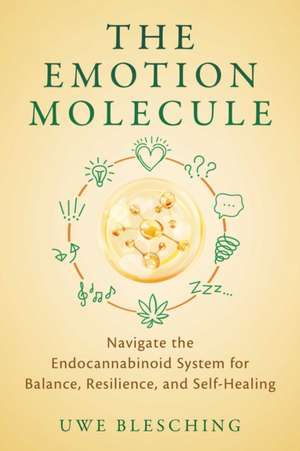
The Emotion Molecule: Navigate the Endocannabinoid System for Balance, Resilience, and Self-Healing
Autor Uwe Bleschingen Limba Engleză Paperback – 11 mar 2027
• Explains how emotions relate to physiological and cognitive patterns, offering practical methods for intentional emotion regulation
• Describes how the endocannabinoid system (ECS)—and its emotion molecule, anandamide—shapes emotional processing and how to navigate it intentionally
• Includes an encyclopedia of nearly three dozen emotions, detailing health impacts, related beliefs, and somatic interventions
What if there was a road map to your emotions built into your biology and nervous system? Medical researcher Uwe Blesching, an authority on the intersection between the endocannabinoid system (ECS) and mind-body health, provides this map by blending cutting-edge neuroscience and psychology with practical methods to cultivate emotional awareness and strengthen your personal agency.
Blesching outlines how tapping into our endocannabinoid system reveals the impact of underlying beliefs and choices on our emotional experiences. Through the process of emotional authorship, we can learn to recognize and reframe our beliefs to shift our emotional reactivity. He integrates these insights with body-based strategies to support you in navigating and regulating your ECS, including somatic practices, breathwork, and reflective exercises.
Through the exploration of 21 emotions—including anger, anxiety, fear, and sadness as well as happier states of mind such as courage, gratitude, joy, and trust—and the author’s easy-to-use practical techniques, readers will learn to identify common beliefs and behaviors to build healthy relationships with their emotions to support psychological balance, physiological resilience, and self-directed healing.
Preț: 116.39 lei
Preț vechi: 222.17 lei
-48% Precomandă
Puncte Express: 175
Carte nepublicată încă
Livrare prin curier în România Precomanda se expediază când titlul devine disponibil.
Transport gratuit de la 400.00 lei Plată online sau ramburs, în funcție de opțiunile comenzii.
Retur gratuit în 14 zile Comandă securizată și suport în română.
Doresc să fiu notificat când acest titlu va fi disponibil:
Se trimite...
Specificații
ISBN-13: 9798888504048
Pagini: 384
Ilustrații: 23 b&w illustrations
Dimensiuni: 152 x 229 mm
Greutate: 0.36 kg
Editura: Inner Traditions/Bear & Company
Colecția Healing Arts Press
Pagini: 384
Ilustrații: 23 b&w illustrations
Dimensiuni: 152 x 229 mm
Greutate: 0.36 kg
Editura: Inner Traditions/Bear & Company
Colecția Healing Arts Press
Notă biografică
UWE BLESCHING, PhD, is a medical writer and researcher specializing in endocannabinoid medicine and mind-body healing. He is the author of The Cannabis Health Index, Breaking the Cycle of Opioid Addiction, and Cannabis for Chronic Pain and serves as chief science officer of CannaKeys, a platform that makes cannabinoid science accessible to clinicians and patients. He is based in Berkeley, California.
Extras
1
What Is the Emotion Molecule?
In this chapter, you’ll explore scientific insights that explain how emotions develop and influence both your body and mind. You’ll see how neurology, psychology, and the endocannabinoid system (ECS) work together to shape emotional experience—and how this understanding can be applied in everyday life. By the end, you’ll have a clearer sense of how to work with your body’s natural systems to shift emotional patterns, navigate inner conflict, and build resilience.
NEUROLOGY
Mapping the Brain’s Role in Emotional Processing
Neurology reveals the brain’s intricate involvement in emotional experiences. Different brain regions play unique roles, such as the amygdala, which processes fear and threat, and the prefrontal cortex, which regulates emotions, enabling thoughtful responses rather than impulsive reactions. Studies on neuroplasticity (the brain’s ability to rewire itself) highlight how repeated emotional experiences shape neural pathways. The popular adage “Synapses that fire together, wire together” emphasizes that every time you choose compassion over anger or courage over fear, you reinforce those emotional responses, making them easier to access in the future.
Practical Takeaway: Recognize that every small emotional shift—whether it’s choosing to take a calming breath during stress or reframing a thought—contributes to rewiring your brain. Over time, these small shifts lead to long-term emotional growth.
Cellular and Molecular Insights—The Chemistry Behind Feelings
Zooming in on the cellular level, emotions involve intricate communication between neurons, neurotransmitters, and other signaling molecules. Serotonin, dopamine, and oxytocin are key players that influence states of happiness, pleasure, and trust. For example, oxytocin, often called the “bonding hormone,” is released during acts of connection, like hugging a loved one or having a meaningful conversation.
Practical Relevance: You can intentionally stimulate oxytocin release by seeking connection through social interactions, volunteer work, or spending time with pets. Similarly, regular exercise increases dopamine levels, which can uplift mood and motivation. Understanding this biological flexibility empowers you to take deliberate actions to align your emotional states with your goals.
Psychology and Psychiatry—The Mind-Emotion Connection
Psychological research shows that thought patterns, past experiences, and behaviors shape emotions. Tools like cognitive-behavioral therapy (CBT) help reframe negative thought patterns, while mindfulness practices promote nonjudgmental observation of emotions, reducing emotional overwhelm. For example, CBT can help someone with social anxiety reframe a limiting belief, like If I speak, I’ll embarrass myself, into a more constructive thought, such as I can contribute meaningfully even if I make mistakes.
Practical Application: Use cognitive reframing when you encounter limiting beliefs tied to an emotion. If you feel fear of failure, challenge that belief by recalling past experiences when failure led to growth.
THE EXPANDED ENDOCANNABINOID SYSTEM
A Gateway to Emotional and Physiological Balance
The ECS is one of the most revolutionary discoveries in emotional science, offering profound insights into how biology and conscious awareness intertwine. It was first identified in the late 1980s during research on THC—the psychoactive compound in cannabis—when scientists uncovered a sophisticated network of receptors, endocannabinoids (naturally occurring molecules similar to those found in cannabis), and enzymes that work together to maintain the body’s internal balance, or homeostasis. The ECS acts as a master regulator, fine-tuning emotional, cognitive, and physical responses to external and internal stimuli.
Key Components of the ECS
• CB1 receptors: Primarily located in the brain and central nervous system, CB1 receptors regulate key processes like stress, emotional regulation, pain, memory, and motivation.
• CB2 receptors: Found in the immune system and peripheral tissues, CB2 receptors reduce inflammation and contribute to physical and emotional well-being.
• Endocannabinoids (e.g., anandamide): Often referred to as the “bliss molecule,” anandamide binds to receptors to modulate stress, mood, resilience, and overall emotional stability.
Together, these components create an integrated system that regulates neural, immune, and hormonal functions across the body.
Introducing the Endocannabinoidome (eCBome)
Recent advances in research have broadened the scope of the ECS into what is known as the endocannabinoidome (eCBome). This expanded framework includes signaling pathways that interact with other biological systems, such as the gut microbiome, the endocrine system, and the lipidome. Together, the ECS and the eCBome provide a more comprehensive understanding of how emotions and physiology are interconnected.
Practical Relevance of the eCBome—The eCBome helps explain why holistic practices, such as nutrition, mindfulness, and exercise, are effective at enhancing emotional well-being. By engaging with these practices, you’re stimulating not just the classical ECS but also the broader network that fine-tunes emotional and physical responses. For example, certain foods (e.g., those rich in omega-3 fatty acids) support healthy endocannabinoid activity, while regular exercise promotes anandamide release—a natural mood enhancer.
Practical Tip: Consistently incorporate ECS-supporting habits, like mindful breathing, physical movement, and anti-inflammatory diets, to foster sustained emotional balance and resilience.
The ECS and Neuroplasticity: How Biology Supports Emotional Growth
One of the most fascinating roles of the ECS is its involvement in synaptic pruning and neuroplasticity—the brain’s ability to reorganize and rewire itself by strengthening useful neural pathways and eliminating those that no longer serve us. This mechanism is crucial for creating long-term emotional change.
When you engage in conscious emotional work—such as reframing limiting beliefs or practicing self-compassion—the ECS helps determine which neural pathways should be reinforced or pruned. For instance, if you consistently challenge a belief like I’m not good enough and replace it with I’m learning and growing, the ECS ensures that the new, supportive pathways are strengthened while the limiting ones gradually fade.
Practical Takeaway: Every time you choose a healthier emotional response or belief, you’re working with the ECS to create long-term shifts in your emotional landscape.
The ECS and the HPA Axis: Fine-Tuning Stress Responses
The ECS also interacts with the hypothalamus-pituitary-adrenal (HPA) axis, which governs the body’s stress response. When faced with a stressor, the HPA axis triggers the release of cortisol, a hormone designed to help you respond to challenges. The ECS acts as a modulator, ensuring that this response is proportional and that cortisol levels return to normal once the threat has passed.
Without proper ECS regulation, the body can remain in a chronic stress state, leading to burnout, anxiety, and emotional imbalance. By supporting ECS health, you can improve your ability to recover from stress and maintain emotional equilibrium.
Practical Tip: Incorporate stress-reducing activities, such as meditation and nature walks, to help regulate your ECS and prevent the long-term effects of stress.
The ECS as a Hub for Emotional Regulation and Cognitive Flexibility
The ECS doesn’t work in isolation—it interacts with at least twenty other signaling systems, including those that regulate serotonin (happiness), dopamine (motivation), and oxytocin (bonding). This interconnected network fosters cognitive flexibility, allowing you to adapt your thought patterns, reframe challenges, and respond creatively to changing circumstances.
For example, the ECS helps someone stuck in a limiting belief, such as I’ll always fail to gradually consider alternatives, such as Failure is part of growth, and I learn from each setback. This flexibility is crucial for breaking rigid emotional patterns and fostering resilience.
The ECS and Resolving Conflicting Beliefs: How Your Body Helps You Find Clarity
When you hold two opposing beliefs, like I need to succeed and Success shouldn’t harm my health, it creates inner tension—what we call cognitive dissonance. You feel pulled in two directions, and this conflict can cause stress, self-doubt, or procrastination. But this isn’t just “in your head.” It’s a biological process where your brain and body react to the tension, and the ECS helps you navigate this response.
1. Reducing Emotional Overload with ECS Support—When cognitive dissonance triggers stress, the HPA axis releases cortisol (the stress hormone). The ECS modulates this stress response by acting like a “dimmer switch,” calming overactive signals through CB1 receptors in the brain’s amygdala (which processes fear) and prefrontal cortex (which governs rational thinking). This helps reduce the overwhelming emotional noise so you can pause, reflect, and engage your higher reasoning skills.
Think of it like this: If your emotions were a loud room full of competing voices, the ECS turns down the volume, allowing the most important voice—your conscious mind—to be heard.
Example: Imagine you believe If I ask for help, I’ll look weak but you’re also starting to feel burnt out and realize you can’t handle everything alone. At first, the conflict might cause anxiety or resistance. But as the ECS calms your body’s stress response, you have the emotional breathing room to question whether this belief is truly serving you.
2. Rewiring the Brain Through Synaptic Pruning—Here’s where the magic of neuroplasticity comes in. The ECS plays a key role in synaptic pruning—a process where your brain trims away old, unhelpful neural connections and strengthens new ones. When you challenge a belief like Asking for help means I’m weak and replace it with Asking for help shows strength and wisdom, you’re essentially training your brain to build new pathways.
The more you practice the new belief, the stronger it becomes, while the old belief gradually loses its grip. The ECS supports this rewiring by helping the brain decide which neural connections to keep and which to prune away.
Example: Let’s say you challenge your old belief by taking a small action—asking a coworker for help on a project. If the experience is positive, it reinforces the new belief—Asking for help improves my outcomes. Over time, with repeated practice, this belief becomes the default, and the old belief about weakness fades.
Practical Takeaway: The ECS provides biological support for both calming emotional conflict and rewiring your brain. But conscious effort—like reflecting on your beliefs, challenging them, and taking action—is what drives lasting change. Together, the ECS and your conscious mind create a powerful feedback loop for emotional clarity and long-term growth.
Cuprins
INTRODUCTION
Your Emotional Adventure Awaits
PART ONE
Foundational Elements of Emotional Authorship
1 What Is the Emotion Molecule?
What Your Brain, Body, and Mind Reveal
2 Developing Conscious Awareness
3 Choose Your Own Adventure
Shaping Your Reality
4 Belief and the Body
5 The Power of Narrative
PART TWO
Charting the Course—Your Emotional Atlas
6 Navigating the Emotional Landscape
7 The Emotions
Anger
Anxiety
Courage
Depression
Envy
Fear
Gratitude
Grief
Guilt
Happiness
Hate
Jealousy
Joy
Loneliness
Love
Pain
Sadness
Shame
Trust
Vulnerability
Worth of Self
CONCLUSION
Becoming the Author of Your Emotional Life
Acknowledgments
APPENDIX
A Conversation with AI
Co-Creation, Curiosity, and Caution
Resources
Index
Recenzii
“Blesching takes one of the body’s most overlooked and understudied signaling systems and shows how the same molecules behind your runner’s ‘high’ quietly shape everyday feelings such as calm, fear, and joy. It’s the rare science book that leaves you understanding not just what you feel but why your biology feels it that way.”
“Our thoughts and moods are shaped by molecules and receptors we cannot see. In a world overwhelmed by external noise, The Emotion Molecule offers a path back to the subtle inner signals we too often ignore. More than a scientific guide, this book is an invitation to reconnect with ourselves and become more conscious authors of our lives.”
“We all spend our lives trying to answer two fundamental questions: Why do I feel this way, and what can I do to feel better? In this book, Blesching thoughtfully explores both. He helps readers better understand difficult emotions—fear, anxiety, anger, grief, and more—and offers practical tools for finding their way back to balance. He also provides insights into how we can better support the people we love. One of the book’s greatest strengths is the way it connects the science of the endocannabinoid system with the deeply human experience of emotion. Whether your path to understanding comes through physiology, spirituality, or somewhere in between, you’ll find something here that will deepen your understanding of yourself and others. Excellent book!”
“Uwe Blesching has written a fascinating book that engages us in exploring the complex and varied landscape of emotions. We are invited to delve into what we decide will be most valuable and beneficial to us. We can jump in and out of various parts of the book by reading sections focusing on specific emotions that seem most interesting and attractive to us. The approach of the book is intellectually rigorous and evocative. The value and beauty of assuming authorship of our emotions are a key theme throughout. Most readers will find hope and excitement.”
“The Emotion Molecule bridges the science of the endocannabinoid system, epigenetics, and emotional well-being, empowering readers to understand how their thoughts and experiences influence health. In a world burdened by anxiety and fear, this insightful book offers a practical path to resilience, balance, and homeostasis through consciousness, clarity, and purpose.”
“There can never be enough variations of language to provide pathways to healing and to awakening body–mind self-awareness, and The Emotion Molecule is a unique entry point. Blesching, a longstanding healer and theoretician of medical systems, brings his experience and insight to this new model.”
Descriere
A guide to transforming emotions with neuroscience and somatic tools for growth and self-discovery