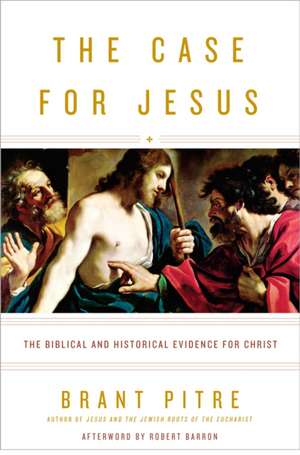
The Case for Jesus
Autor Brant Pitreen Limba Engleză Hardback – 2 feb 2016
Subliniem relevanța imediată a volumului The Case for Jesus pentru studenții la teologie și cercetătorii care navighează prin dezbaterile contemporane despre „Isus cel istoric”. Într-o epocă în care mediul academic și discursul public pun frecvent sub semnul întrebării autenticitatea scrierilor biblice, Brant Pitre propune o reevaluare riguroasă a surselor primare. Notăm cu interes modul în care autorul demontează ipoteza anonimatului Evangheliilor, apelând nu doar la tradiția patristică, ci și la structura biografică a textelor antice. Reținem că argumentația centrală nu este una pur dogmatică, ci se ancorează în analiza critică a manuscriselor și a contextului iudaic al celui de-al Doilea Templu. Cititorii familiarizați cu Evidence That Demands a Verdict Bible Study Guide de Josh McDowell vor aprecia modul în care Brant Pitre aduce o perspectivă academică mai specifică, concentrată pe exegeza biblică și pe rădăcinile evreiești ale credinței. În timp ce McDowell oferă un compendiu vast de apologetică, Pitre alege o abordare mai focalizată, menită să demonstreze că divinitatea lui Isus nu este o invenție târzie a Bisericii, ci o prezență constantă în toate cele patru Evanghelii. Această lucrare continuă direcția începută în Jesus and the Jewish Roots of the Eucharist, unde autorul explora legătura dintre tradițiile pascale și Cina cea de Taină, și completează viziunea sa din Paul, a New Covenant Jew despre identitatea iudaică a primelor figuri creștine. Stilul este precis, academic, dar accesibil, oferind o structură logică ce invită la o lectură analitică a Noului Testament.
Preț: 155.01 lei
Carte disponibilă
Livrare economică 17 noiembrie-01 decembrie
Specificații
ISBN-10: 0770435483
Pagini: 256
Dimensiuni: 141 x 218 x 30 mm
Greutate: 0.38 kg
Editura: Prh Christian Publishing
V-ar putea interesa
-
 Reaching OutHenri J. M. NouwenPreț: 90.71 lei
 -
 Jesã°s de NazaretPope Benedict XviPreț: 136.26 lei
 -
 -22%Preț: 180.65 lei230.91 lei
 -
 Paul, a New Covenant JewBrant PitrePreț: 231.52 lei
 -
 Jesus and the Last SupperBrant PitrePreț: 284.07 lei
 -
 Woke: A Guide to Social JusticeTitania McGrath-25%Preț: 70.34 lei93.87 lei
 -
 Great MysteriesAndrew M. Greeley-16%Preț: 87.55 lei104.40 lei
 -
 A Catholic Introduction to the BibleJohn BergsmaPreț: 387.47 lei
 -
 Black and HumanDon L. DavisPreț: 120.75 lei
 -
 Preț: 119.66 lei
 -
 Preț: 92.75 lei
 -
 Preț: 93.96 lei
 -
 -11%Preț: 49.84 lei56.14 lei
 -
 The Power of Christ in BaptismMR John Kingsley AlleyPreț: 42.83 lei
 -
 Preț: 37.07 lei
 -
 Top 10 Bible DoctrinesNyberg Jr, Dr J. RonaldPreț: 67.06 lei
 -
 Preț: 70.09 lei
 -
 SterbenFranz-Josef BormannPreț: 233.85 lei
 -
 Grosse Gott - singsch Du im Wind?Regine SchindlerPreț: 107.77 lei
De ce să citești această carte
Recomandăm această carte oricărui cititor interesat de fundamentele istorice ale creștinismului. Este un instrument esențial pentru a înțelege de ce Evangheliile sunt considerate biografii antice fidele și nu simple folcloruri. Câștigați o perspectivă clară asupra profețiilor mesianice și a dovezilor manuscrise, primind argumente concrete pentru a susține istoricitatea figurii lui Isus în fața criticismului modern.
Despre autor
Brant Pitre este profesor de Sfântă Scriptură la Seminarul Notre Dame din New Orleans, Louisiana. Doctoratul său și activitatea academică sunt dedicate explorării rădăcinilor iudaice ale creștinismului și exegezei biblice. Este un autor prolific, cunoscut pentru capacitatea de a sintetiza cercetarea istorică complexă în lucrări accesibile publicului larg, precum Jesus and the Jewish Roots of the Eucharist sau Jesus the Bridegroom. Expertiza sa în limbile biblice și în literatura iudaică antică îl poziționează ca o voce autoritară în studiile Noului Testament, reușind să conecteze teologia catolică de rigoarea istorică.
Descriere
For well over a hundred years now, many scholars have questioned the historical truth of the Gospels, claiming that they were originally anonymous. Others have even argued that Jesus of Nazareth did not think he was God and never claimed to be divine.
In "The Case for Jesus," Dr. Brant Pitre, the bestselling author of "Jesus and the Jewish Roots of the Eucharist," goes back to the sources the biblical and historical evidence for Christ in order to answer several key questions, including:
Were the four Gospels really anonymous?
Are the Gospels folklore? Or are they biographies?
Were the four Gospels written too late to be reliable?
What about the so-called Lost Gospels, such as Q and the Gospel of Thomas?
Did Jesus claim to be God?
Is Jesus divine in all four Gospels? Or only in John?
Did Jesus fulfill the Jewish prophecies of the Messiah?
Why was Jesus crucified?
What is the evidence for the Resurrection?
As "The Case for Jesus" will show, recent discoveries in New Testament scholarship, as well as neglected evidence from ancient manuscripts and the early church fathers, together have the potential to pull the rug out from under a century of skepticism toward the traditional Gospels. Above all, Pitre shows how the divine claims of Jesus of Nazareth can only be understood by putting them in their ancient Jewish context."