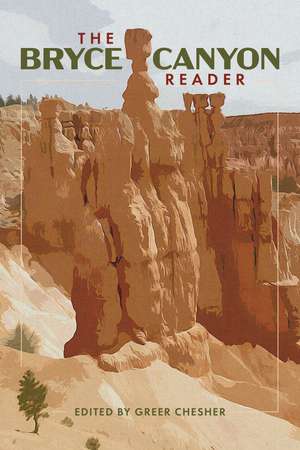
The Bryce Canyon Reader: National Park Readers
Editat de Greer Chesheren Limba Engleză Paperback – 18 dec 2026
Beneath Bryce Canyon’s crockery rim, slender hoodoos blaze red and gold while bats wheel through dusk and a vast desert sky unfurls its stars. The Bryce Canyon Reader invites visitors, scholars, and armchair travelers alike to experience this singular landscape through the words and images of those who know it best.
Award-winning author Greer Chesher has gathered an extraordinary chorus of Indigenous elders, explorers, scientists, artists, and modern observers whose writings reveal Bryce’s layered geology, ecology, and human history. Twelve contributions from seven affiliated tribes offer perspectives rooted in generations of connection, while early travelers and contemporary voices trace the park’s enduring allure. Artwork recalls a time before cameras, and Chesher’s introductions frame each section with insight and context. The newest volume in the Press’s National Park Readers series is both a guide and a meditation, illuminating the canyon’s visible wonders and its hidden stories.
Preț: 141.79 lei
Precomandă
Puncte Express: 213
Carte nepublicată încă
Livrare prin curier în România Precomanda se expediază când titlul devine disponibil.
Transport gratuit de la 400.00 lei Plată online sau ramburs, în funcție de opțiunile comenzii.
Retur gratuit în 14 zile Comandă securizată și suport în română.
Doresc să fiu notificat când acest titlu va fi disponibil:
Se trimite...
Specificații
ISBN-13: 9781647692902
ISBN-10: 1647692903
Pagini: 296
Ilustrații: 29 illus., 2 maps
Dimensiuni: 152 x 229 mm
Ediția:First Edition
Editura: University of Utah Press
Colecția University of Utah Press
Seria National Park Readers
ISBN-10: 1647692903
Pagini: 296
Ilustrații: 29 illus., 2 maps
Dimensiuni: 152 x 229 mm
Ediția:First Edition
Editura: University of Utah Press
Colecția University of Utah Press
Seria National Park Readers
Recenzii
“A rich assortment of perspectives on a spectacular, mesmerizing landscape, these interwoven stories of Bryce Canyon are as layered and multifaceted as the canyon itself.”—Kathryn Wilder, author of Desert Chrome and The Last Cows
Notă biografică
Greer K. Chesher is the author of Bryce Canyon: The Desert’s Hoodoo Heart; Bryce Canyon National Park: Impressions; and the Utah Book Award–winning Heart of the Desert Wild: Grand Staircase—Escalante National Monument. She is a former ranger for the National Park Service.
Extras
A breeze, almost imperceptibly, blows along the rim of Bryce Canyon. Below, in the drowsy slumber of a late summer afternoon, row upon row of hoodoos stand like terracotta warriors in a Chinese emperor’s tomb. Not a sound breaks the silence; raven wheels overhead, yellow-bellied marmot peeks from a cliff-edge perch while the sun pours down on the last living branch of a 1,600-year-old bristlecone pine, the essence of minimalism.
Although it may not look it, Bryce Canyon is a world in motion. Daily, from seemingly immutable cliffs rocks tumble, ancient and immovable hoodoos shed skin, and high-angled slopes elbow downhill. Underfoot the very soil ripples as unseen microorganisms tunnel gossamer fingers. The silent forest bustles as mule deer, prairie dog, coyote, hawk, and snake partner in life’s dynamic and complex dance. Bryce began, lives, and will fade away in motion.
Sixty million years ago, the land that would become Bryce embraced a large inland lake near sea level much like today’s Lake Michigan. Over the next ten million years the lake imbibed what vibrant rivers offered: silt, clay, mud. During droughts, howling deserts blew across the lake’s dry bed. Sediments stacked and hardened into alternating limestones, mudstones, and sandstones now known as the Pink Cliffs or Claron Formation.
Fifteen million years ago deep geologic forces heaved the Colorado Plateau, an area roughly the size of Utah but centered on the Four Corners, more than two miles (three kilometers) above sea level. The massive plateau cracked and splintered, leaving smaller plateaus (called the High Plateaus) jumbled at differing elevations. The elegant Claron capped three of these plateaus: the Markagunt, where Cedar Breaks National Monument’s pottery cliffs radiate evening sun; the Aquarius, from which Powell Point, seen opposite Bryce, erodes; and the Paunsaugunt, where the delicate hoodoos of Bryce Canyon emerge.
During uplift the Claron also split into a network of minute fractures. Into these joints rain and snow fell, and a shape-shifting force stronger than rock began its inventive work. Summer’s thunderous monsoons widened small rifts into deep canyons and rainfall’s gentle power hewed columns from thin canyon walls. In winter, snowmelt seeped into tiny crevices, froze, and expanded with enough pressure to pop noses from hoodoos. Bryce Canyon remains a world primed, a realm of stacked potential where every raindrop creates.
Fanciful forms take shape as erosion sculpts the Claron’s interbedded layers: sandstones wear most quickly leaving thin necks; mudstones, more resistant, persist; and limestone endures as bulging waistlines and protruding ribs. Hoodoo watching at Bryce brings to mind poodles, gorillas, queens in crinoline, dinosaur heads, and, hey—is that Elvis? Hoodoos blaze with color when minerals deposited in the Claron’s sediments mix with oxygen; iron rusts and manganese waxes blue. Thus hoodoos blush russet, cinnamon, and the most delicate coral; others effloresce violet, lavender, and columbine while untinted limestone burns a creamy white. Bryce’s myriad colors blend like the soft shades of a naturally dyed Navajo rug—the soft pink of cactus fruit, the warm ivory of natural wool, the bisque of onionskin.
Just as water seeps into myriad pores and fractures thick as a lizard’s toenail, so life percolates into every niche, colonizing redrock cliffs, defying unstable slopes, wiggling between sand grains. A diverse and lively biotic community animates Bryce.
From the park’s highest point at 9,115 feet (2,778 meters) to its lowest at 6,620 feet (2,018 m) life stacks on life. Plants and animals adapted to Bryce Canyon’s lower elevations overcame long ago challenges posed by intense heat and cold, limited nutrients, miniscule precipitation, and loose footing to weave an interactive and unique ecosystem. Scraggly Utah juniper and piñon twist from barren hillsides sprouting “berries” and nuts appreciated by scrub and pinyon jays. Tree and side-blotched lizards hunt inattentive insects while whipsnakes and garter snakes seek wayward rodents.
Above, in the plateau’s mid-elevation ponderosa forests, Merriam’s turkeys nibble acorns catered by Gambel oak. Pronghorn, the fastest animal in North America, sprint up to seventy miles-per-hour across upland meadows. Nearby mule deer and occasional elk browse forest edges as invisible mountain lions watch. Be warned: Uinta chipmunks and golden-mantled ground squirrels feel it their personal duty to greet every visitor, but don’t be tempted to feed them: they didn’t get those roly-poly bellies from pine nuts!
Bryce Canyon meadows harbor one of the few protected colonies of rare Utah prairie dogs in the world. After years of shooting and poisoning, prairie dog numbers plummeted until even the Bryce colonies disappeared. In the 1970s, the State of Utah reintroduced these rare dogs (actually rodents) to the national park’s protection and, by 1995, 200 adults rallied in several colonies. But that year, sylvatic plague devastated the colony—only eleven dogs survived. Plague, a serious disease for both humans and rodents, is a non-native organism unintentionally imported 200 years ago with European rats. Mammals native to the United States have no natural resistance to exotic diseases. Today, 300 Utah prairie dogs romp through the meadows of Bryce, but the next epidemic could seriously reduce their numbers. For your safety and theirs, please don’t venture into prairie dog meadows.
[end of excerpt]
Although it may not look it, Bryce Canyon is a world in motion. Daily, from seemingly immutable cliffs rocks tumble, ancient and immovable hoodoos shed skin, and high-angled slopes elbow downhill. Underfoot the very soil ripples as unseen microorganisms tunnel gossamer fingers. The silent forest bustles as mule deer, prairie dog, coyote, hawk, and snake partner in life’s dynamic and complex dance. Bryce began, lives, and will fade away in motion.
Sixty million years ago, the land that would become Bryce embraced a large inland lake near sea level much like today’s Lake Michigan. Over the next ten million years the lake imbibed what vibrant rivers offered: silt, clay, mud. During droughts, howling deserts blew across the lake’s dry bed. Sediments stacked and hardened into alternating limestones, mudstones, and sandstones now known as the Pink Cliffs or Claron Formation.
Fifteen million years ago deep geologic forces heaved the Colorado Plateau, an area roughly the size of Utah but centered on the Four Corners, more than two miles (three kilometers) above sea level. The massive plateau cracked and splintered, leaving smaller plateaus (called the High Plateaus) jumbled at differing elevations. The elegant Claron capped three of these plateaus: the Markagunt, where Cedar Breaks National Monument’s pottery cliffs radiate evening sun; the Aquarius, from which Powell Point, seen opposite Bryce, erodes; and the Paunsaugunt, where the delicate hoodoos of Bryce Canyon emerge.
During uplift the Claron also split into a network of minute fractures. Into these joints rain and snow fell, and a shape-shifting force stronger than rock began its inventive work. Summer’s thunderous monsoons widened small rifts into deep canyons and rainfall’s gentle power hewed columns from thin canyon walls. In winter, snowmelt seeped into tiny crevices, froze, and expanded with enough pressure to pop noses from hoodoos. Bryce Canyon remains a world primed, a realm of stacked potential where every raindrop creates.
Fanciful forms take shape as erosion sculpts the Claron’s interbedded layers: sandstones wear most quickly leaving thin necks; mudstones, more resistant, persist; and limestone endures as bulging waistlines and protruding ribs. Hoodoo watching at Bryce brings to mind poodles, gorillas, queens in crinoline, dinosaur heads, and, hey—is that Elvis? Hoodoos blaze with color when minerals deposited in the Claron’s sediments mix with oxygen; iron rusts and manganese waxes blue. Thus hoodoos blush russet, cinnamon, and the most delicate coral; others effloresce violet, lavender, and columbine while untinted limestone burns a creamy white. Bryce’s myriad colors blend like the soft shades of a naturally dyed Navajo rug—the soft pink of cactus fruit, the warm ivory of natural wool, the bisque of onionskin.
Just as water seeps into myriad pores and fractures thick as a lizard’s toenail, so life percolates into every niche, colonizing redrock cliffs, defying unstable slopes, wiggling between sand grains. A diverse and lively biotic community animates Bryce.
From the park’s highest point at 9,115 feet (2,778 meters) to its lowest at 6,620 feet (2,018 m) life stacks on life. Plants and animals adapted to Bryce Canyon’s lower elevations overcame long ago challenges posed by intense heat and cold, limited nutrients, miniscule precipitation, and loose footing to weave an interactive and unique ecosystem. Scraggly Utah juniper and piñon twist from barren hillsides sprouting “berries” and nuts appreciated by scrub and pinyon jays. Tree and side-blotched lizards hunt inattentive insects while whipsnakes and garter snakes seek wayward rodents.
Above, in the plateau’s mid-elevation ponderosa forests, Merriam’s turkeys nibble acorns catered by Gambel oak. Pronghorn, the fastest animal in North America, sprint up to seventy miles-per-hour across upland meadows. Nearby mule deer and occasional elk browse forest edges as invisible mountain lions watch. Be warned: Uinta chipmunks and golden-mantled ground squirrels feel it their personal duty to greet every visitor, but don’t be tempted to feed them: they didn’t get those roly-poly bellies from pine nuts!
Bryce Canyon meadows harbor one of the few protected colonies of rare Utah prairie dogs in the world. After years of shooting and poisoning, prairie dog numbers plummeted until even the Bryce colonies disappeared. In the 1970s, the State of Utah reintroduced these rare dogs (actually rodents) to the national park’s protection and, by 1995, 200 adults rallied in several colonies. But that year, sylvatic plague devastated the colony—only eleven dogs survived. Plague, a serious disease for both humans and rodents, is a non-native organism unintentionally imported 200 years ago with European rats. Mammals native to the United States have no natural resistance to exotic diseases. Today, 300 Utah prairie dogs romp through the meadows of Bryce, but the next epidemic could seriously reduce their numbers. For your safety and theirs, please don’t venture into prairie dog meadows.
[end of excerpt]
Cuprins
Bryce Canyon Impressions
Greer K. Chesher
We Are Still Here
Glendora Homer
Part I. Invisible Geographies: Bryce Canyon, 1860–1900
Greer K. Chesher
1. This is a Place of Reverence (2016)
Timothy C. Begay
2. Military Reconnaissance in Southern Utah (1866)
James Andress and Franklin Benjamin Woolley, Edited by C. Gregory Crampton
3. Climbing the Paunsaugunt Plateau (1870)
John Wesley Powell
4. Diary of Almon Harris Thompson in Bryce (1873)
Almon Harris Thompson
5. Earliest Known Non-Indigenous Descriptions of Bryce Canyon (1875)
G. M. Wheeler, G. K. Gilbert, T. C. Bailey, Clarence E. Dutton
6. Reconsider the Map (2024)
Jim Enote
7. Among My Memories (1937)
John H. Davies with Shelley Dawson Davies
8. A Brief Sketch of the Life of Ebenezer Bryce (1830–1913)
Layton J. Ott with Maurice Cope
9. A Life Not of Their Choice: The Kaibab Paiute after “Discovery” (1976)
Richard W. Stoffle and Michael J. Evans
10. This Place, Here, Was Our Sacred Ground (2016)
Ernestine Lehi
Part II. Layered Chorographies: Bryce Canyon, ca. 1915–Present
Greer K. Chesher
11. You're Native for a Purpose (2016)
Mary Lee Longhair
12. Scenic Wonders of Southern Utah (1916)
J. J. Dill, A.K.A. J. W. Humphrey
13. The Temples of the Gods (1917)
Arthur W. Stevens
14. The Temple of the Gods (1918)
Le Roy Jeffers
15. Utah's New Wonderland: Bryce Canyon, One of Nature's Masterpieces in Sculpture and Coloring (1918)
Oliver J. Grimes
16. This Is Our Heaven (2016)
Leigh Kuwanwisiwma
17. Stephen Mather: The National Park Service, Bryce, and Art (2024)
Alan Petersen
18. The Rock Is the Camera (2018)
Charley Bulletts
19. Proclamation--Bryce Canyon National Monument (1923)
Warren G. Harding
20. Bryce Canyon and Scenic Southern Utah (1924)
Congressman Louis C. Cramton
21. Pahute Indian Home Lands (1933)
William R. Palmer
22. Bryce Canyon in Storm (1930)
Maurice Cope
23. We Are a Very Proud Tribe (2016)
Alvin J. Longhair
24. Nature Carves Fantasies in Bryce Canyon (1958)
William Belknap Jr.
25. Passing on Tradition and Culture (2016)
Charley Bulletts
Part III. Inner Topographies: Art, Science, Spirit
Greer K. Chesher
26. Feeding the Mountain (2016)
Brenda Drye
27. Highway 12 (2005)
Christian Probasco
28. 100 Years of Bryce Canyon National Park and 100 Million Years of Time--Including Dinosaurs! (2023)
Tut Tran
29. Behind the Rim: The Missing Animals of Bryce (2000)
Greer K. Chesher
30. My People Were Very Spiritual (2016)
Valantinus Parashonts
31. Fabric Art (1926)
H. R. Mallinson and Co. and Walter Mitschke
32. Bryce Canyon: Under the Rim (undated)
Joan Coles
33. Mountain Sheep Dance (2016)
Clarence “Beans” John
34. Canyons, Colours, and Birds: An Interview with Olivier Messiaen (1979)
Olivier Messiaen and Harriet Watts
35. Bryce Canyon Translation: Ansel Adams, Max Ernst, and the Representation of a Most Unique National Park (2026)
James R. Swensen
36. Reconnect Back to Our Ancestors (2016)
Octavius Seowtewa
37. A Western Journal (1938)
Thomas Wolfe
38. What Used to Be: A Personal Experience (1975)
Everett L. Huizenga
39. We Are Still Here (2023)
Joe Weber
Acknowledgments
Bryce Canyon Timeline
Notes
Further Reading
Bibliography
Greer K. Chesher
We Are Still Here
Glendora Homer
Part I. Invisible Geographies: Bryce Canyon, 1860–1900
Greer K. Chesher
1. This is a Place of Reverence (2016)
Timothy C. Begay
2. Military Reconnaissance in Southern Utah (1866)
James Andress and Franklin Benjamin Woolley, Edited by C. Gregory Crampton
3. Climbing the Paunsaugunt Plateau (1870)
John Wesley Powell
4. Diary of Almon Harris Thompson in Bryce (1873)
Almon Harris Thompson
5. Earliest Known Non-Indigenous Descriptions of Bryce Canyon (1875)
G. M. Wheeler, G. K. Gilbert, T. C. Bailey, Clarence E. Dutton
6. Reconsider the Map (2024)
Jim Enote
7. Among My Memories (1937)
John H. Davies with Shelley Dawson Davies
8. A Brief Sketch of the Life of Ebenezer Bryce (1830–1913)
Layton J. Ott with Maurice Cope
9. A Life Not of Their Choice: The Kaibab Paiute after “Discovery” (1976)
Richard W. Stoffle and Michael J. Evans
10. This Place, Here, Was Our Sacred Ground (2016)
Ernestine Lehi
Part II. Layered Chorographies: Bryce Canyon, ca. 1915–Present
Greer K. Chesher
11. You're Native for a Purpose (2016)
Mary Lee Longhair
12. Scenic Wonders of Southern Utah (1916)
J. J. Dill, A.K.A. J. W. Humphrey
13. The Temples of the Gods (1917)
Arthur W. Stevens
14. The Temple of the Gods (1918)
Le Roy Jeffers
15. Utah's New Wonderland: Bryce Canyon, One of Nature's Masterpieces in Sculpture and Coloring (1918)
Oliver J. Grimes
16. This Is Our Heaven (2016)
Leigh Kuwanwisiwma
17. Stephen Mather: The National Park Service, Bryce, and Art (2024)
Alan Petersen
18. The Rock Is the Camera (2018)
Charley Bulletts
19. Proclamation--Bryce Canyon National Monument (1923)
Warren G. Harding
20. Bryce Canyon and Scenic Southern Utah (1924)
Congressman Louis C. Cramton
21. Pahute Indian Home Lands (1933)
William R. Palmer
22. Bryce Canyon in Storm (1930)
Maurice Cope
23. We Are a Very Proud Tribe (2016)
Alvin J. Longhair
24. Nature Carves Fantasies in Bryce Canyon (1958)
William Belknap Jr.
25. Passing on Tradition and Culture (2016)
Charley Bulletts
Part III. Inner Topographies: Art, Science, Spirit
Greer K. Chesher
26. Feeding the Mountain (2016)
Brenda Drye
27. Highway 12 (2005)
Christian Probasco
28. 100 Years of Bryce Canyon National Park and 100 Million Years of Time--Including Dinosaurs! (2023)
Tut Tran
29. Behind the Rim: The Missing Animals of Bryce (2000)
Greer K. Chesher
30. My People Were Very Spiritual (2016)
Valantinus Parashonts
31. Fabric Art (1926)
H. R. Mallinson and Co. and Walter Mitschke
32. Bryce Canyon: Under the Rim (undated)
Joan Coles
33. Mountain Sheep Dance (2016)
Clarence “Beans” John
34. Canyons, Colours, and Birds: An Interview with Olivier Messiaen (1979)
Olivier Messiaen and Harriet Watts
35. Bryce Canyon Translation: Ansel Adams, Max Ernst, and the Representation of a Most Unique National Park (2026)
James R. Swensen
36. Reconnect Back to Our Ancestors (2016)
Octavius Seowtewa
37. A Western Journal (1938)
Thomas Wolfe
38. What Used to Be: A Personal Experience (1975)
Everett L. Huizenga
39. We Are Still Here (2023)
Joe Weber
Acknowledgments
Bryce Canyon Timeline
Notes
Further Reading
Bibliography