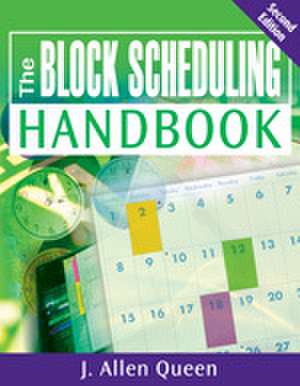
The Block Scheduling Handbook
Autor J. Allen Queenen Limba Engleză Electronic book text – 27 ian 2013
Preț: 221.89 lei
Puncte Express: 333
Indisponibil temporar
Doresc să fiu notificat când acest titlu va fi disponibil:
Se trimite...
Specificații
ISBN-13: 9781452210636
ISBN-10: 1452210632
Pagini: 288
Dimensiuni: 216 x 279 mm
Ediția:Second Edition
Editura: SAGE Publications
Colecția Corwin
Locul publicării:Thousand Oaks, United States
ISBN-10: 1452210632
Pagini: 288
Dimensiuni: 216 x 279 mm
Ediția:Second Edition
Editura: SAGE Publications
Colecția Corwin
Locul publicării:Thousand Oaks, United States
V-ar putea interesa
-
 Real Talk for Real TeachersRafe EsquithPreț: 147.33 lei
 -
 Higher Order Thinking SkillsR Bruce WilliamsPreț: 203.35 lei
 -
 You Can Do ThisRobyn R JacksonPreț: 110.80 lei
 -
 Collaborative Learning TechniquesElizabeth F BarkleyPreț: 338.86 lei
 -
 High-Payoff StrategiesJody SpiroPreț: 158.05 lei
 -
 Quick Answers for Busy TeachersAnnette BreauxPreț: 193.57 lei
 -
 The Handbook of ESP NiPBrian PaltridgePreț: 424.89 lei
 -
 Creating Cultures of ThinkingRon RitchhartPreț: 186.34 lei
 -
 Looking Forward to Monday MorningDiane HodgesPreț: 269.13 lei
 -
 Teaching Around the 4mat(r) CycleBernice McCarthyPreț: 212.79 lei
 -
 Preț: 249.31 lei
 -
 Motivating Learners in the ClassroomGavin ReidPreț: 399.79 lei
 -
 Becoming an Emotionally Intelligent TeacherWilliam PowellPreț: 274.71 lei
 -
 -17%Preț: 178.27 lei214.36 lei
 -
 Working with ParaprofessionalsJulie SausenPreț: 125.74 lei
 -
 The Power of Our Words 2nd EdPaula DentonPreț: 258.65 lei
 -
 Scrum - A Pocket GuideGunter Verheyen-20%Preț: 130.85 lei163.56 lei
Recenzii
"The
research-based
principles
espoused
in
this
handbook
helped
transform
our
upper
school
into
a
true
college
preparatory
institution.
This
complete
how-to
book
provides
valuable,
concrete
ideas
for
subject
area
teachers
while
supporting
administrative
efforts
to
maximize
opportunities
using
block
scheduling.
I
highly
recommend
this
book
if
your
school
is
initiating,
adapting,
or
question
the
block
scheduling
approach.
This
book
will
reinvigorate
your
efforts
to
truly
impact
student
learning."
"Should be required reading for every high school administrator and educators in general. By highlighting research-based best practices, the author has put forth cutting-edge strategies that will not only improve student achievement, but also provide teachers with 21st-century skills to differentiate instruction."
"A wonderful guide for school leaders as they create a contemporary schedule for middle and high school students to take advantage of a variety of curricular offerings. This second edition is comprehensive, with numerous subject-centered examples and detailed specifics for those desiring to move to more advanced designs. It is no wonder why Queen is often referred to as the father of the new block schedule."
"An excellent step-by-step guide to all the stages of improving instruction on the block schedule at any level. As a guest faculty member at our university in China, Dr. Queen used the text to train numerous doctoral students, school principals, and classroom teachers in this scheduling practice. The new edition is even more advanced, with excellent designs and detailed activities in a variety of subject areas."
"This is the complete, step-by-step guide for administrators and teachers interested in all stages of going to or improving instruction on the block. Building on its predecessor as well as the author’s international and national reputation and experience, this edition includes numerous subject-centered examples and detailed specifics for those interested in moving to more advanced designs. If you have one book on block scheduling in your library, it should be this one."
"Should be required reading for every high school administrator and educators in general. By highlighting research-based best practices, the author has put forth cutting-edge strategies that will not only improve student achievement, but also provide teachers with 21st-century skills to differentiate instruction."
"A wonderful guide for school leaders as they create a contemporary schedule for middle and high school students to take advantage of a variety of curricular offerings. This second edition is comprehensive, with numerous subject-centered examples and detailed specifics for those desiring to move to more advanced designs. It is no wonder why Queen is often referred to as the father of the new block schedule."
"An excellent step-by-step guide to all the stages of improving instruction on the block schedule at any level. As a guest faculty member at our university in China, Dr. Queen used the text to train numerous doctoral students, school principals, and classroom teachers in this scheduling practice. The new edition is even more advanced, with excellent designs and detailed activities in a variety of subject areas."
"This is the complete, step-by-step guide for administrators and teachers interested in all stages of going to or improving instruction on the block. Building on its predecessor as well as the author’s international and national reputation and experience, this edition includes numerous subject-centered examples and detailed specifics for those interested in moving to more advanced designs. If you have one book on block scheduling in your library, it should be this one."
Cuprins
Dedication
and
Acknowledgments
About the Author
1. The Current Status of Block Scheduling
2. Block Scheduling and the High School
3. Developmental Aspects of Growth and Behavior
Physical Development From Early Childhood
Through Adolescence
Cognitive Growth
Characteristics of Piaget's Stages of Cognitive Development
Schemata and the Process of Assimilation, Accomodation, and Equilibration
The Sensori-Motor Period
The Period of Preoperational Thought
The Period of Concrete Operations
The Period of Formal Operations
Cognitive Theory and Block Instruction
Personality Development
Erikson's Stages of Personality Development
Implications of Erikson's Theory for Block Instruction
4. Building the Block Culture in the School
5. Selecting the Best Fit
The 4´4 Block Schedule Model
The A/B Block Schedule Model
The Modified Block
New Lesson Designs for the Block
6. Block Scheduling in the Middle School
The Middle School Defined
Characteristics of the Middle School
Team Teaching Interdisciplinary Teaming
Block Classes or Periods
Advisory Programs
Benefits of the Block Schedule in the Middle School
Shortfalls of the Traditional Schedule
The Flexible/Alternate/Navigate (FAN) Models
Advantages of Modified Schedules in the Middle School
Teaching in the Block in the Middle School
Summary
7. The Elementary School on the Block
Historical Events Impacting the Elementary School
National Initiatives
America 2000
Part 1: For Today's Students, Better, More Accountable Schools
Part 2: For Tomorrow's Students, a New Generation of American Schools
Part 3: For the Rest of Us (Yesterday's Students and Today's Workforce), a Nation of Students
Part 4: Communities Where Learning Can Happen
Goals 2000: Educate America Act
A State Example: The Elementary Curriculum in North Carolina
Technology
English Language Arts
Mathematics
Science
Social Studies
Fine Arts: Dance
Fine Arts: Music
Fine Arts: Theater
Fine Arts: Visual Arts
Organizational Patterns
Disadvantages of Graded Arrangement
Alternative Possibilities for Scheduling
4-Blocks Model for Elementary Education
Parallel Block Scheduling
Summary
8. Aligning Standards and Course Content
Models for Use of Instructional Time
Limiting Content
Notes to Remember
Assigning Outside Content
Integrating Content: C-Clustering
Curriculum Alignment and Instructional Pacing
Curriculum Alignment Phase 1
Curriculum Alignment Phase 2
Instructional Pacing Phase 1
Instructional Pacing Phase 2
9. Sample of Curriculum Alignment and Pacing
10. Effective Instructional Strategies for Block Scheduling
Cooperative Learning
The Case Method
Socratic Seminar
Synectics
Concept Attainment
Inquiry Method
Simulations
Recommendations for Improving Block Scheduling for the Future
11. Teacher-Directed Instruction
Direct Instruction as a Teaching Model
Direct Instruction as a Continuum of Teaching Behaviors
Summary
Our Mr. Jefferson: A Sample Teacher-Directed Lesson
12. Discovery and Inquiry
Discovery Learning
History and Research
Promises and Pitfalls
Summary
The Inquiry Training Model
History and Research
Promises and Pitfalls
Summary
Building the Tower: A Sample Discovery Method Activity
13. Simulations and Role Play
Simulations
Forms for the Simulation Model
Rationale for Appropriate Use
Lesson Design
History and Research
Promises and Pitfalls
Summary
Gifted and Talented Simulation: A Sample Lesson Using Simulation
14. Cooperative Learning
History and Research
Promises and Pitfalls
The Case Method
Summary
Building the Perfect School: A Cooperative Staff Development Activity
15. Synectics
History and Research
Gordon's Stages of Creativity
Promises and Pitfalls
Summary
To Kill a Mockingbird: A Syectics Sample Lesson
16. Socratic Seminar
Group Discussion and Student Participation
What Happened: A Socratic Seminar
17. Instructional Assessment
Methods of Instructional Evaluation
Presassessment
Formative Assessment
Summative Assessment
Assessment of Student Acheivement
Portfolio
Unit Evaluation
Lesson Evaluation
A Positive Classroom Climate Through Instruction
18. Program Evaluation and Student Assessment
Reasons for Evaluation
Defining Program Evaluation
Instructional Evaluation
Summary
Evaluation Resource 1: Block Schedule Teacher Survey
Evaluation Resource 2: Teacher Survey: High School Instruction
19. A Guide to Traditional and Authentic Assessment
Writing and Evaluating Test Items
Parts of a Test Item
Categorizing Items on Cognitive Levels
Evaluating Test Items
Using Authentic Assessment for Student Evaluation
The Trouble With Tests Is...
What Is Authentic Assessment?
Brain Growth, Brain Enrichment, and Attention
Effective Implementation of Authentic Assessment
Multiple Intelligences and Authentic Assessment
Types of Authentic Assessment
References, Recommended Readings
Internet Resources
Index
About the Author
1. The Current Status of Block Scheduling
2. Block Scheduling and the High School
3. Developmental Aspects of Growth and Behavior
Physical Development From Early Childhood
Through Adolescence
Cognitive Growth
Characteristics of Piaget's Stages of Cognitive Development
Schemata and the Process of Assimilation, Accomodation, and Equilibration
The Sensori-Motor Period
The Period of Preoperational Thought
The Period of Concrete Operations
The Period of Formal Operations
Cognitive Theory and Block Instruction
Personality Development
Erikson's Stages of Personality Development
Implications of Erikson's Theory for Block Instruction
4. Building the Block Culture in the School
5. Selecting the Best Fit
The 4´4 Block Schedule Model
The A/B Block Schedule Model
The Modified Block
New Lesson Designs for the Block
6. Block Scheduling in the Middle School
The Middle School Defined
Characteristics of the Middle School
Team Teaching Interdisciplinary Teaming
Block Classes or Periods
Advisory Programs
Benefits of the Block Schedule in the Middle School
Shortfalls of the Traditional Schedule
The Flexible/Alternate/Navigate (FAN) Models
Advantages of Modified Schedules in the Middle School
Teaching in the Block in the Middle School
Summary
7. The Elementary School on the Block
Historical Events Impacting the Elementary School
National Initiatives
America 2000
Part 1: For Today's Students, Better, More Accountable Schools
Part 2: For Tomorrow's Students, a New Generation of American Schools
Part 3: For the Rest of Us (Yesterday's Students and Today's Workforce), a Nation of Students
Part 4: Communities Where Learning Can Happen
Goals 2000: Educate America Act
A State Example: The Elementary Curriculum in North Carolina
Technology
English Language Arts
Mathematics
Science
Social Studies
Fine Arts: Dance
Fine Arts: Music
Fine Arts: Theater
Fine Arts: Visual Arts
Organizational Patterns
Disadvantages of Graded Arrangement
Alternative Possibilities for Scheduling
4-Blocks Model for Elementary Education
Parallel Block Scheduling
Summary
8. Aligning Standards and Course Content
Models for Use of Instructional Time
Limiting Content
Notes to Remember
Assigning Outside Content
Integrating Content: C-Clustering
Curriculum Alignment and Instructional Pacing
Curriculum Alignment Phase 1
Curriculum Alignment Phase 2
Instructional Pacing Phase 1
Instructional Pacing Phase 2
9. Sample of Curriculum Alignment and Pacing
10. Effective Instructional Strategies for Block Scheduling
Cooperative Learning
The Case Method
Socratic Seminar
Synectics
Concept Attainment
Inquiry Method
Simulations
Recommendations for Improving Block Scheduling for the Future
11. Teacher-Directed Instruction
Direct Instruction as a Teaching Model
Direct Instruction as a Continuum of Teaching Behaviors
Summary
Our Mr. Jefferson: A Sample Teacher-Directed Lesson
12. Discovery and Inquiry
Discovery Learning
History and Research
Promises and Pitfalls
Summary
The Inquiry Training Model
History and Research
Promises and Pitfalls
Summary
Building the Tower: A Sample Discovery Method Activity
13. Simulations and Role Play
Simulations
Forms for the Simulation Model
Rationale for Appropriate Use
Lesson Design
History and Research
Promises and Pitfalls
Summary
Gifted and Talented Simulation: A Sample Lesson Using Simulation
14. Cooperative Learning
History and Research
Promises and Pitfalls
The Case Method
Summary
Building the Perfect School: A Cooperative Staff Development Activity
15. Synectics
History and Research
Gordon's Stages of Creativity
Promises and Pitfalls
Summary
To Kill a Mockingbird: A Syectics Sample Lesson
16. Socratic Seminar
Group Discussion and Student Participation
What Happened: A Socratic Seminar
17. Instructional Assessment
Methods of Instructional Evaluation
Presassessment
Formative Assessment
Summative Assessment
Assessment of Student Acheivement
Portfolio
Unit Evaluation
Lesson Evaluation
A Positive Classroom Climate Through Instruction
18. Program Evaluation and Student Assessment
Reasons for Evaluation
Defining Program Evaluation
Instructional Evaluation
Summary
Evaluation Resource 1: Block Schedule Teacher Survey
Evaluation Resource 2: Teacher Survey: High School Instruction
19. A Guide to Traditional and Authentic Assessment
Writing and Evaluating Test Items
Parts of a Test Item
Categorizing Items on Cognitive Levels
Evaluating Test Items
Using Authentic Assessment for Student Evaluation
The Trouble With Tests Is...
What Is Authentic Assessment?
Brain Growth, Brain Enrichment, and Attention
Effective Implementation of Authentic Assessment
Multiple Intelligences and Authentic Assessment
Types of Authentic Assessment
References, Recommended Readings
Internet Resources
Index
Descriere
A
comprehensive,
step-by-step,
ready-to-use
handbook
with
all
the
models,
forms,
and
templates
needed
to
get
block
scheduling
programs
up
and
running
Notă biografică
J. Allen Queen is professor and former chair of the Department of Educational Leadership at The University of North Carolina at Charlotte. A former classroom teacher, principal, college administrator, and university professor, he works with teachers and principals in the areas of managing priorities, time management, and stress reduction. Queen has written over 30 books and 70 articles, including The Frazzled Teacher¿s Wellness Plan (Corwin Press 2004), The Block Scheduling Handbook (Corwin Press 2002), and books on karate and fitness for young readers. He has appeared on radio and television programs, including ABC¿s World News Now, and has been a consultant to over 160 schools and districts in 36 states and 3 foreign countries in the areas of classroom discipline, school safety, block scheduling, and time management.