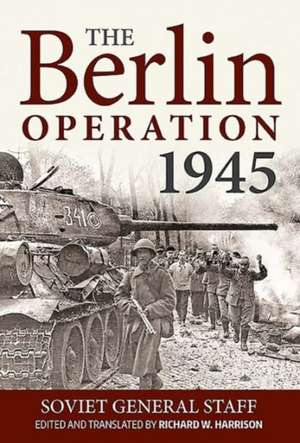
The Berlin Operation, 1945
Autor Soviet General Staff, Richard Harrisonen Limba Engleză Hardback – 30 mar 2016
NIVEL DE STUDIU: Master și referință profesională pentru istorici militari și strategi. The Berlin Operation, 1945 reprezintă o resursă primară de o valoare documentară excepțională, fiind redactată inițial de Soviet General Staff ca un instrument de analiză internă pentru generalizarea experienței de război. Ne-a atras atenția rigoarea tehnică a textului, care evită narativul literar în favoarea unei disecții metodice a planificării și execuției militare. Lucrarea nu se limitează la cronica evenimentelor, ci oferă detalii specifice despre sprijinul de artilerie, logistică și geniu, elemente adesea ignorate în lucrările comerciale. Suntem de părere că structura în trei părți facilitează o înțelegere profundă a complexității logistice a Stavkăi. Prima secțiune analizează pregătirile de luptă, a doua urmărește dificultățile întâmpinate la Seelow Heights și pe axa Dresda, iar ultima parte oferă o privire rară asupra luptelor de gherilă urbană la nivel de unități mici. Comparabil cu Belorussia 1944 din seria Soviet (Russian) Study of War în ceea ce privește precizia datelor brute, acest volum este însă actualizat prin notele de subsol și comentariile editoriale ale lui Richard Harrison, care pun în context cifrele și deciziile sovietice față de realitatea de pe teren. Spre deosebire de abordarea mai narativă din Berlin de Prit Buttar, acest volum prioritizează doctrina și analiza de stat major, fiind indispensabil pentru cei care studiază arta operativă.
Preț: 402.35 lei
Preț vechi: 437.34 lei
-8%
Carte disponibilă
Livrare economică 18 mai-01 iunie
Livrare express 02-08 mai pentru 44.85 lei
Specificații
ISBN-10: 1910777668
Pagini: 472
Dimensiuni: 168 x 246 x 28 mm
Greutate: 0.68 kg
Editura: HELION & COMPANY
V-ar putea interesa
-
 We Who Are Alive and Remain: Untold Stories from the Band of BrothersMarcus BrothertonPreț: 131.73 lei
 -
 The Battle of BritainMichael BowyerPreț: 120.77 lei
 -
 The Monuments MenRobert M EdselPreț: 119.24 lei
 -
 Schweinfurt-Regensburg Mission: The American Raids on 17 August 1943Martin MiddlebrookPreț: 118.45 lei
 -
 Leaders of the Storm TroopsMichael Miller-8%Preț: 407.83 lei443.29 lei
 -
 Phoenix: A Complete History of the Luftwaffe 1918-1945Richard Meredith-19%Preț: 488.71 lei603.35 lei
 -
 The Battle of KurskRichard HarrisonPreț: 331.87 lei
De ce să citești această carte
Recomandăm această carte cercetătorilor care doresc să acceseze perspectiva oficială a comandamentului sovietic asupra căderii Berlinului. Cititorul câștigă o înțelegere tehnică a modului în care a fost orchestrată logistica și tactica urbană în 1945. Este un instrument esențial pentru a separa mitul de realitatea administrativă și militară a Armatei Roșii, oferind date concrete despre efective și decizii strategice.