Cantitate/Preț
Produs

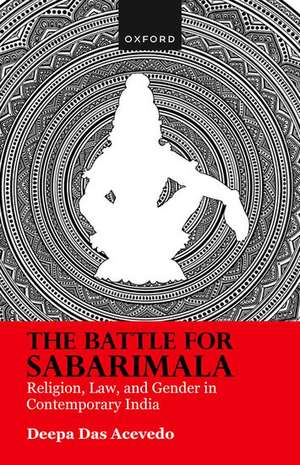
The Battle for Sabarimala: Religion, Law, and Gender in Contemporary India

Autor Deepa Das Acevedo
en Limba Engleză Hardback – 19 iun 2024

Bazându-ne pe analiza riguroasă a arhivelor media și a documentelor juridice, suntem de părere că The Battle for Sabarimala reprezintă o contribuție esențială la înțelegerea tensiunilor dintre tradiția religioasă și drepturile constituționale în India modernă. Observăm cum Deepa Das Acevedo utilizează instrumentele antropologiei juridice pentru a deconstrui disputa privind accesul femeilor cu vârste între zece și cincizeci de ani în templul hindus de la Sabarimala, un conflict care a culminat cu decizia istorică a Curții Supreme din 2018.

Apreciem în mod deosebit structura de „etnografie constituțională” a lucrării. Aceasta nu se limitează la analiza textelor de lege, ci coboară în stradă pentru a documenta mișcarea „Women’s Wall” și reacțiile diasporei, oferind o perspectivă rară asupra modului în care cetățenii interacționează cu deciziile înaltelor instanțe. Cititorii familiarizați cu Gender, Freedom of Religion and Progressive Constitutionalism de Sumit Sonkar vor aprecia modul în care volumul de față aduce nou o dimensiune istorică profundă, trasând legături între guvernarea precolonială din secolul al XVIII-lea și provocările birocratice contemporane amplificate de pandemie.

În contextul operei sale, Deepa Das Acevedo demonstrează o continuitate în preocuparea pentru reglementări și dinamici instituționale. Dacă în Beyond the Algorithm analiza realitățile muncii de tip „gig”, aici aplică aceeași atenție la detaliu asupra Doctrinei Practicilor Esențiale. Ritmul narațiunii este susținut de o scriitură accesibilă, punctată de un umor discret, reușind să transforme un subiect juridic arid într-o lectură captivantă despre identitate și modernitate.

Citește tot Restrânge

Preț: 32413 lei

Preț vechi: 40857 lei
-21%

Puncte Express: 486

Carte disponibilă

Livrare economică 03-09 septembrie

Livrare prin curier în România Termenul estimat este afișat lângă disponibilitate.
Transport gratuit de la 40000 lei Plată online sau ramburs, în funcție de opțiunile comenzii.
Retur gratuit în 14 zile Comandă securizată și suport în română.

Specificații

ISBN-13: 9789391050139
ISBN-10: 9391050131
Pagini: 272
Dimensiuni: 147 x 222 x 19 mm
Greutate: 0.45 kg
Editura: OUP OXFORD
Colecția OUP Oxford
Locul publicării:Oxford, United Kingdom

De ce să citești această carte

Recomandăm această carte cercetătorilor în drept comparat, antropologie și studii religioase, dar și celor interesați de mișcările sociale din Asia de Sud. Cititorul câștigă o înțelegere nuanțată a modului în care religia și statul negociază spațiul public într-o democrație seculară complexă. Este un studiu de caz fascinant despre cum o tradiție veche de secole este recalibrată prin lentila egalității de gen și a intervenției judiciare.


Despre autor

Deepa Das Acevedo este o specialistă recunoscută în antropologie juridică, cu o activitate academică ce explorează intersecția dintre reglementările legale și realitățile sociale. Expertiza sa acoperă domenii diverse, de la economia muncii în era digitală, reflectată în volumul Beyond the Algorithm, până la protecția locului de muncă în mediul universitar, subiect tratat în The War on Tenure. În prezentul volum publicat de OUP Oxford, Acevedo își folosește experiența în cercetarea calitativă pentru a analiza complexitatea sistemului juridic indian și impactul acestuia asupra libertății religioase.


Descriere

The Battle for Sabarimala tells the story of one of contemporary India's most contentious disputes--a long running struggle over women's access to the Hindu temple at Sabarimala. In 2018, the Indian Supreme Court ruled that the temple, which had traditionally excluded women aged ten to fifty because their presence offended the presiding deity, had to open its doors to all Hindus. The decision in Indian Young Lawyers Association (IYLA) rocked the nation. Protests were launched around India, and throughout the diaspora, a record-setting human chain called the 'Women's Wall' was coordinated, and dozens of petitions were filed asking the Supreme Court to reverse its landmark opinion. Most significantly, the IYLA opinion led the Court to openly reconsider the Essential Practices Doctrine that has been a mainstay of Indian religious freedom jurisprudence since 1954.In this monograph-length study of the dispute, legal anthropologist Deepa Das Acevedo draws on ethnographic fieldwork, legal analysis, and media archives to tell a multifaceted narrative about the 'ban on women'. Reaching as far back as the eighteenth century, when the relationship between temple deities and the government was transformed by an ambitious precolonial ruler, and coming up to the litigation delays caused by the coronavirus pandemic, Das Acevedo reveals the complexities of the dispute and the constitutional framework that defines it. That framework, Das Acevedo argues, reflects two distinct conceptions of religion-state relations, both of which have emerged at various stages in the--still unresolved--battle for Sabarimala.

Recenzii

Written in an accessible style, with ample doses of wit and humour and a keen attentiveness to the workings of legal and bureaucratic processes, this book is classified as a 'constitutional ethnography' (p. 10) by the author. It allows the reader to move with ease between readings of legal adjudications, public scandals, personal anecdotes and accounts of temple management practices and, thus, demonstrates the immense possibilities of interdisciplinary scholarship. Beyond everything else, Acevedo is firmly committed to the power of storytelling, and her call to both anthropologists and lawyers is to tell 'better stories' so that they are 'more widely heard'(p. 15). This is a call worth paying heed to.

Notă biografică

Deepa Das Acevedo is an Associate Professor at Emory University School of Law and a Trustee (Class of '24) of the Law and Society Association. She received her JD and PhD in Anthropology from the University of Chicago. Her scholarly writing on India has appeared in journals including American Journal of Comparative Law, Modern Asian Studies, and International Journal of Constitutional Law, while her public writing has appeared in Economic & Political Weekly, Scroll, and Foreign Affairs, among others.