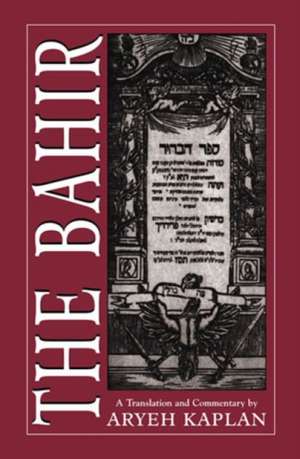
The Bahir
Autor Rabbi Nehunia Ben HaKanaen Limba Engleză Hardback – 7 iul 1977
În peisajul studiilor iudaice, The Bahir vine să completeze o lacună esențială în înțelegerea tranziției de la misticismul oral la cel scris, oferind acces la ceea ce mulți consideră a fi fundamentul structural al Cabalei clasice. Până la apariția The Wisdom of the Zohar – An Anthology of Texts, acest volum a reprezentat principala sursă de autoritate în domeniu, fiind citat de toți marii învățați, de la Ramban la discipolii școlii din Safed. Remarcăm în această ediție o prezentare riguroasă a unui text care, deși restrâns ca dimensiune (aproximativ 12.000 de cuvinte), a recalibrat cosmologia mistică prin introducerea conceptului celor Zece Sefirot.
Considerăm că acest volum este indispensabil pentru înțelegerea ierarhiei spirituale iudaice. Spre deosebire de Sefer Yetzirah, care se concentrează pe procesul de formare prin litere și numere ca instrucțiuni meditative, The Bahir dezvoltă o perspectivă mai amplă asupra naturii divinității și a relației sale cu lumea materială prin prisma antropomorfismului simbolic și a legilor etice. Descoperim aici primele mențiuni sistematice despre reîncarnare (Gilgul) și despre Tzimtzum, oferind un context teologic pe care alte texte din aceeași perioadă îl tratează doar tangențial. Completează perspectiva oferită de The Sepher Bahir de Nehunya Ben Hakanah, adăugând o analiză mai profundă a legăturii dintre simbolistica alfabetului ebraic și Cele Treizeci și Două de Căi ale Înțelepciunii. Tonul este unul academic, dar fidel spiritului mistic, păstrând complexitatea metaforelor care, după cum spunea Rabbi Moshe Cordevero, pot „orbi” prin intensitatea înțelesurilor lor.
Preț: 485.34 lei
Preț vechi: 570.98 lei
-15%
Carte tipărită la comandă
Livrare economică 27 iunie-11 iulie
Specificații
ISBN-10: 1568213832
Pagini: 272
Dimensiuni: 158 x 236 x 26 mm
Greutate: 0.57 kg
Editura: Rowman & Littlefield
De ce să citești această carte
Această ediție a The Bahir este esențială pentru studenții și cercetătorii istoriei religiilor care doresc să exploreze rădăcinile Cabalei. Cititorul câștigă o înțelegere directă a conceptelor de Sefirot și Gilgul, fundamentale pentru misticismul european medieval. Este o resursă primară care transformă studiul teoretic într-o experiență de analiză textuală profundă, fiind pilonul pe care s-a construit ulterior întregul sistem al Zoharului.
Despre autor
Rabbi Nehunia Ben HaKana este o figură centrală a perioadei Tanaim (secolul I e.n.), fiind recunoscut în tradiția iudaică drept unul dintre primii maeștri ai misticismului. Deși contextul istoric al scrierii The Bahir este legat de școala cabalistică din Provence din secolul al XII-lea, tradiția îi atribuie acestuia paternitatea textului, reflectând o linie de transmitere a înțelepciunii esoterice care coboară până în antichitate. Nehunia este cunoscut și pentru rugăciunea „Ana B'Koach”, opera sa fiind marcată de o căutare a luminii divine și a structurilor cosmice care guvernează universul, elemente ce definesc fundamentul Cabalei.