Cantitate/Preț
Produs

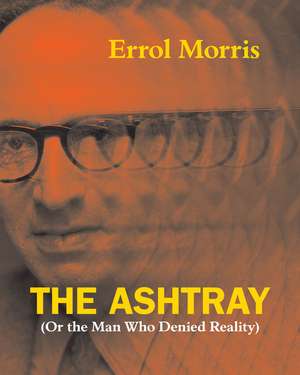
The Ashtray: (Or the Man Who Denied Reality)

Autor Errol Morris
en Limba Engleză Paperback – 17 feb 2023

Această monografie semnată de Errol Morris reprezintă o incursiune tăioasă și neconvențională în epistemologie, pornind de la un conflict personal care a marcat istoria filosofiei științei. Găsim în această lucrare o respingere sistematică a relativismului promovat de Thomas Kuhn, autorul celebrei teorii a schimbărilor de paradigmă. Morris, cunoscut pentru rigoarea investigativă din documentarele sale premiate, își folosește aici experiența de cercetător pentru a demonta ceea ce el consideră a fi erorile fundamentale ale lui Kuhn, propunând în schimb o viziune ancorată în realitatea obiectivă.

Descoperim o structură narativă ce îmbină memoriile cu analiza filosofică pură. În capitole precum „The Leap into the Dark” sau „The Contest of Interpretation”, autorul explorează relația dintre limbaj și fapte, argumentând că adevărul nu este o construcție socială maleabilă, ci o corespondență directă cu lumea. Această abordare reprezintă o alternativă necesară la Truth about Postmodernism de C Norris pentru cursurile de filosofie contemporană, cu avantajul unei perspective mult mai personale și vizuale, susținută de cele peste 80 de ilustrații și planșe color.

Apreciem modul în care Morris își extinde preocuparea pentru adevărul istoric — vizibilă în lucrări anterioare precum The Ballad of Abu Ghraib sau Standard Operating Procedure — spre fundamentul teoretic al cunoașterii. Dacă în filmele sale investigația vizează fapte concrete din teatrele de război sau sistemul judiciar, în acest volum el atacă însăși ideea că realitatea ar fi inaccesibilă. Stilul este precis, polemic și lipsit de ambiguitățile academice pe care autorul le reproșează adversarilor săi intelectuali.

Citește tot Restrânge

Preț: 14451 lei

Puncte Express: 217

Carte disponibilă

Livrare economică 08-22 mai
Livrare express 23-29 aprilie pentru 6956 lei


Specificații

ISBN-13: 9780226922690
ISBN-10: 0226922693
Pagini: 192
Ilustrații: 49 color plates, 39 halftones
Dimensiuni: 203 x 254 x 25 mm
Greutate: 0.71 kg
Editura: University of Chicago Press
Colecția University of Chicago Press

De ce să citești această carte

Recomandăm această carte cititorilor pasionați de filosofie și istoria ideilor care caută un contraargument solid la relativismul postmodern. Errol Morris oferă o pledoarie rară pentru importanța adevărului obiectiv într-o eră a „faptelor alternative”. Veți câștiga o înțelegere mai profundă a modului în care ideile filosofice ne influențează percepția asupra realității, totul prezentat într-un format grafic excepțional de către University of Chicago Press.


Despre autor

Errol Morris este un regizor de talie mondială, distins cu Premiul Oscar pentru documentarul „The Fog of War”. Cariera sa este definită de o căutare neobosită a adevărului, fiind autorul unor lucrări de referință precum „Believing Is Seeing”, unde explorează misterele fotografiei. Fost student la filosofie sub îndrumarea lui Thomas Kuhn, Morris a transpus rigoarea interogativă din cinematografie în spațiul literar, publicând volume de non-ficțiune care investighează punctele de intersecție dintre istorie, moralitate și certitudine. Lucrările sale sunt studiate pentru modul inovator în care redefinesc genul documentar.


Descriere scurtă

Filmmaker Errol Morris offers his perspective on the world and his powerful belief in the necessity of truth. 

In 1972, philosopher of science Thomas Kuhn threw an ashtray at Errol Morris. This book is the result.
 
At the time, Morris was a graduate student. Now we know him as one of the most celebrated and restlessly probing filmmakers of our time, the creator of such classics of documentary investigation as The Thin Blue Line and The Fog of War. Kuhn, meanwhile, was—and, posthumously, remains—a star in his field, the author of The Structure of Scientific Revolutions, a landmark book that has sold well over a million copies and introduced the concept of “paradigm shifts” to the larger culture. And Morris thought the idea was bunk.
 
The Ashtray tells why—and in doing so, it makes a powerful case for Morris’s way of viewing the world, and the centrality to that view of a fundamental conception of the necessity of truth. “For me,” Morris writes, “truth is about the relationship between language and the world: a correspondence idea of truth.” He has no patience for philosophical systems that aim for internal coherence and disdain the world itself. Morris is after bigger game: he wants to establish as clearly as possible what we know and can say about the world, reality, history, our actions and interactions. It’s the fundamental desire that animates his filmmaking, whether he’s probing Robert McNamara about Vietnam or the oddball owner of a pet cemetery. Truth may be slippery, but that doesn’t mean we have to grease its path of escape through philosophical evasions. Rather, Morris argues powerfully, it is our duty to do everything we can to establish and support it.
 
In a time when truth feels ever more embattled, under siege from political lies and virtual lives alike, The Ashtray is a bracing reminder of its value, delivered by a figure who has, over decades, uniquely earned our trust through his commitment to truth. No Morris fan should miss it.

Notă biografică

Errol Morris is a director of films, primarily documentaries, including The Thin Blue Line; Gates of Heaven; Fast, Cheap, and Out of Control; and The Fog of War, which won the Academy Award for Best Documentary Feature for 2003.
 

Cuprins

List of Illustrations
Preface

Introduction

1: The Ultimatum
2: Shifting Paradigms
3: A Parliament of Fears
4: Listen, Old Man, What in Hell’s Gone Wrong Here?
5: Revolutions, Real and Imagined
6: The Leap into the Dark
7: The Furniture of the World
8: Avatars of Progress
9: The Contest of Interpretation

Epilogue
 
Acknowledgments
Cast of Characters
Bibliography
Index

Recenzii

“A scrappy continuation of Morris's disagreement with Kuhn and an explanation of why he thinks Kuhn’s ideas, which bear a certain resemblance to Berkeley’s, are so pernicious.  . . . The Ashtray strikes me as an unlikely source for reaching a better understanding of Kuhn.; Morris dislikes him too much and can’t be trusted not to stack the deck against him. He ignores, for example, the excellent arguments against Whiggishness as a form of propaganda used to justify the historical dominance of Westerners over the rest of the world. But the book is a marvelous tool for the better understanding of Errol Morris, who is both a great artist and a fascinating individual in his own right.”
 

"Oscar-winning filmmaker Morris was once a graduate student under philosopher Thomas Kuhn, author of The Structure of Scientific Revolutions, and this intimate analysis of flaws in that 1962 treatise is driven by Morris's smart, conversational tone. . . . Throughout the heady discussion, Kuhn's cantankerous personality is revealed: he once threw an ashtray at Morris, who is responding--albeit 45 years later--by lobbing this combative tome into the academic and practical world."
 

“The documentarian Errol Morris gives us The Ashtray, a semi-autobiographical tale of the supremely influential The Structure of Scientific Revolutions by Thomas S. Kuhn. A spellbinding intellectual adventure into the limits, fragility, and infirmity of human reason. Morris’s tale is picaresque. Anecdotes, cameos, interviews, historical digressions, sly side notes, and striking illustrations hang off a central spine that recounts critical episodes in the history of analytic philosophy.”
 

“What is it about philosophers? A more fissiparous bunch it would be hard to find: if they aren’t threatening each other with pokers, they are flinging ashtrays at each other’s heads. . . . The Ashtray is passionate, polemical and defiantly written in chatty, accessible language with copious amusing footnotes. Frequently scabrous, Morris acknowledges that it could be seen as a vendetta, and freely admits that it is, as he views Kuhn’s idea of the social construction of knowledge as pernicious and disturbing. As befits a man whose life has been dedicated to documentary films, Morris sets great store by the existence of an objective truth, and this book is his passionate defence of that truth. . . . I found this all rather enjoyable. If you want an opinionated, impolite page-turner picking a fight with half of the modern philosophy of science, this is definitely the book for you.”
 

"Many readers will know Errol Morris for his superb films that have won an Academy Award and other high honors. He has given us a book of the same quality and importance. It is a sustained argument in defense of Truth and Reality. At the same time, it is the story of a life in passionate pursuit of these vital ideas, not as distant abstractions but as things that actually exist in the world and demand our respect. It is about time! In an era of false news in our media, pseudo facts in politics, and political correctness in academe, no cause is more urgent than the cause of Truth and Reality."
 

"A compelling send-up of contemporary relativism about truth and epistemology by the distinguished film-maker and writer Errol Morris. He bases it on his own personal interactions with Thomas Kuhn, one of its most influential practitioners. But there is a little bit of everything in the book. Interviews with philosophers and scientists are intertwined with stories from many of my own favorite authors (Lewis Carroll, Russell, Borges), and discussions of notions such as reference, natural kind, paradigm, and incommensurability. Throughout we find, as we have come to expect from him, Morris's commitment to find out the truth. This time about truth itself."

"A wonderful read, combining memoir, epistemological reflection, the ethnography of academic philosophy -and confession of faith. The Ashtray will provoke and stimulate any serious reader, but it will provide particular insights for anyone familiar with Morris's important films."
 

"Errol Morris is a remarkable documentary film maker. He pursues his craft in the conviction that there is truth to be found and that creative and determined efforts will uncover it. In this extraordinary book, Morris explores his animating philosophical commitments about truth, reality, and knowledge. He presents his outlook in sharp opposition to ideas about relativism and incommensurability that he associates with Thomas Kuhn’s profoundly influential The Structure of Scientific Revolutions. Morris's book is entertaining and engaging, but above all else it offers us a compelling exploration of the value of truth."

"This book is brilliant, thought-provoking, sometimes infuriating, and nearly always convincing. Everyone interested in the fate of truth and knowledge in these postmodern, alternative fact times should read it."

"Is truth real or is it a matter of opinion? That is the question Errol Morris ponders in this fascinating book. His argument for the reality of truth is compelling, informative, and lively. And there's another powerful lesson in it that goes far beyond the seemingly abstract philosophical issues: We escape the bubble of relativism precisely when we reach out to other human beings, when we care about something more than the 'little me,' when we offer the world our love--as Morris has done with his inspiring films, and now with this book."