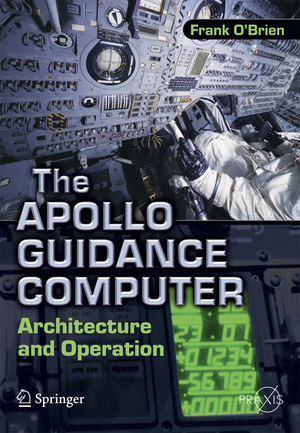
The Apollo Guidance Computer: Springer Praxis Books
Autor Frank O'Brienen Limba Engleză Paperback – 12 iul 2010
Recomandăm The Apollo Guidance Computer ca fiind resursa definitivă pentru înțelegerea modului în care un sistem de calcul considerat astăzi „primitiv” a orchestrat aselenizarea. Cititorul va putea deconstrui mecanismele interne ale AGC (Apollo Guidance Computer), de la arhitectura hardware și formatul specific al instrucțiunilor, până la complexitatea programelor de zbor utilizate de astronauți. Credem că valoarea acestui volum rezidă în capacitatea de a explica cum ingineria anilor '60 a reușit să integreze funcții avansate de procesare în timp real într-un volum compact și cu un consum redus de energie, într-o eră în care computerele ocupau camere întregi. Ca și David A. Mindell în Digital Apollo, autorul distilează experiență reală în principii acționabile, oferind o perspectivă tehnică asupra interacțiunii dintre om și mașină. În timp ce alte lucrări se concentrează pe narațiunea istorică, Frank O'Brien propune o progresie riguroasă: pornește de la organizarea fizică a mașinii, trece prin programele executive și rutinele de fundal, și ajunge la studiile de caz ale misiunilor reale. Reținem capitolul dedicat interfeței DSKY (Display and Keyboard), care explică modul în care astronauții comunicau efectiv cu sistemul digital în condiții critice. Publicată în prestigioasa serie Springer Praxis Books, lucrarea se distinge de titlurile anterioare ale autorului, precum Fundamentals of Investment, care vizau sectorul financiar, demonstrând versatilitatea sa ca istoric și expert în sisteme complexe. Cartea reprezintă o punte între informatică, inginerie electrică și aeronautică, fiind esențială pentru oricine dorește să înțeleagă fundamentul informaticii moderne prin prisma celei mai ambițioase misiuni a umanității.
Din seria Springer Praxis Books
-
 Preț: 216.42 lei
 -
 Preț: 212.55 lei
 -
 Preț: 261.25 lei
 -
 Preț: 208.76 lei
 -
 Preț: 324.12 lei
 -
 Preț: 323.74 lei
 -
 Preț: 266.34 lei
 -
 Preț: 222.12 lei
 -
 Preț: 377.73 lei
 -
 Preț: 310.41 lei
 - 15%
 Preț: 679.99 lei
 - 18%
 Preț: 911.62 lei
 -
 Preț: 163.67 lei
 - 18%
 Preț: 1048.03 lei
 -
 Preț: 250.46 lei
 -
 Preț: 507.31 lei
 -
 Preț: 219.27 lei
 -
 Preț: 319.85 lei
 -
 Preț: 216.72 lei
 -
 Preț: 330.21 lei
 -
 Preț: 159.75 lei
 -
 Preț: 333.61 lei
 -
 Preț: 326.81 lei
 - 18%
 Preț: 1256.95 lei
 - 18%
 Preț: 990.74 lei
 -
 Preț: 217.88 lei
 - 18%
 Preț: 1290.02 lei
 -
 Preț: 253.62 lei
 -
 Preț: 361.34 lei
 -
 Preț: 264.68 lei
 - 18%
 Preț: 972.77 lei
 - 15%
 Preț: 632.63 lei
 -
 Preț: 238.35 lei
 -
 Preț: 205.97 lei
 -
 Preț: 299.26 lei
 -
 Preț: 229.65 lei
 -
 Preț: 220.59 lei
 -
 Preț: 224.69 lei
 -
 Preț: 223.52 lei
 -
 Preț: 260.26 lei
 -
 Preț: 226.93 lei
 -
 Preț: 322.04 lei
 -
 Preț: 227.17 lei
 -
 Preț: 289.78 lei
 -
 Preț: 106.06 lei
 - 18%
 Preț: 1178.23 lei
 -
 Preț: 320.75 lei
 - 27%
 Preț: 1140.79 lei
 - 18%
 Preț: 998.77 lei
Preț: 332.66 lei
Carte disponibilă
Livrare economică 14-28 noiembrie
Livrare express 03-07 noiembrie pentru 133.67 lei
Specificații
ISBN-10: 1441908765
Pagini: 460
Ilustrații: XVIII, 440 p. 30 illus.
Dimensiuni: 168 x 240 x 25 mm
Greutate: 0.78 kg
Ediția:2010
Editura: Praxis
Colecția Springer Praxis Books
Seria Springer Praxis Books
Locul publicării:New York, NY, United States
V-ar putea interesa
-
 A Man on the MoonAndrew Chaikin-17%Preț: 80.33 lei96.27 lei
 -
 Gemini and Mercury RemasteredAndy SaundersPreț: 408.99 lei
 -
 ChallengerAdam HigginbothamPreț: 88.69 lei
 -
 Digital ApolloDavid A. Mindell-16%Preț: 201.60 lei241.35 lei
 -
 Shoot for the MoonJames DonovanPreț: 143.26 lei
 -
 Computer Architecture: A Quantitative ApproachJohn L. Hennessy-39%Preț: 539.22 lei882.55 lei
 -
 Margaret and the MoonDean RobbinsPreț: 52.57 lei
 -
 The Complete Book of SpacecraftMichael H. Gorn-19%Preț: 183.52 lei227.29 lei
 -
 Apollo 7 in Photographs: The Apollo Photo ArchiveJ. L. PickeringPreț: 363.70 lei
 -
 Sunburst and Luminary: An Apollo MemoirDon EylesPreț: 119.81 lei
 -
 Apollo to the MoonTeasel E Muir-HarmonyPreț: 226.11 lei
 -
 -25%Preț: 86.96 lei115.88 lei
 -
 Journey to the MoonEldon C HallPreț: 423.47 lei
 -
 Introduction to Computer Organization: ARM EditionRobert G. Plantz-35%Preț: 303.72 lei468.10 lei
 -
 Computer ArchitectureCharles Fox-35%Preț: 303.05 lei467.47 lei
 -
 Preț: 234.49 lei
 -
 Preț: 235.28 lei
 -
 Preț: 234.81 lei
 -
 Once Upon a Time in SpaceJames BluemelPreț: 215.96 lei
Public țintă
Popular/generalDe ce să citești această carte
Această carte se adresează inginerilor software, pasionaților de istoria tehnologiei și studenților la informatică. Cititorul câștigă o înțelegere profundă a modului în care au fost inventate sistemele de operare în timp real și designul logic modern. Este un motiv concret pentru a studia cum limitele hardware severe pot fi depășite prin ingeniozitate software, oferind lecții valoroase despre eficiență și robustețe în programare.
Despre autor
Frank O'Brien este un cercetător și istoric de prestigiu, a cărui expertiză în programul Apollo este recunoscută la nivel mondial. De peste un deceniu, acesta contribuie cu eseuri tehnice pentru Apollo Lunar Surface Journal și Apollo Flight Journal, considerate referințele canonice pentru misiunile lunare. A activat ca consultant pentru Cradle of Aviation Museum, pregătind simulatoarele modulului lunar pentru expunere, și susține regulat conferințe pentru organizații de elită precum NASA și IEEE. Deși are o carieră solidă și în managementul investițiilor, pasiunea sa pentru ingineria aerospațială l-a consacrat ca autoritatea principală în arhitectura computerului Apollo.
Descriere scurtă
This is the first book to fully describe the Apollo guidance computer’s architecture, instruction format and programs used by the astronauts. As a comprehensive account, it will span the disciplines of computer science, electrical and aerospace engineering. However, it will also be accessible to the ‘space enthusiast’. In short, the intention is for this to be the definitive account of the Apollo guidance computer.
Frank O’Brien’s interest in the Apollo program began as a serious amateur historian. About 12 years ago, he began performing research and writing essays for the Apollo Lunar Surface Journal, and the Apollo Flight Journal. Much of this work centered on his primary interests, the Apollo Guidance Computer (AGC) and the Lunar Module. These Journals are generally considered the canonical online reference on the flights to the Moon. He was then asked to assist the curatorial staff in the creation of the Cradle of Aviation Museum, on Long Island, New York, where he helped prepare the Lunar Module simulator, a LM procedure trainer and an Apollo space suit for display. He regularly lectures on the Apollo computer and related topics to diverse groups, from NASA's computer engineering conferences, the IEEE/ACM, computer festivals and university student groups.
Cuprins
Recenzii
“This exceedingly valuable work will give present day Computer Science students the background to understand how the dramatic breakthroughs in Logical Design, Computer Architecture, Computer Language Interpreters and Real-Time Executive Software was invented, and how it worked in practice. … This excellent reference will form a model for teaching and learning historical Computer Architectures and Software so that future Computer Scientists can understand and learn the original ideas that today guide their field.” (Ira Laefsky, Amazon, September, 2010)