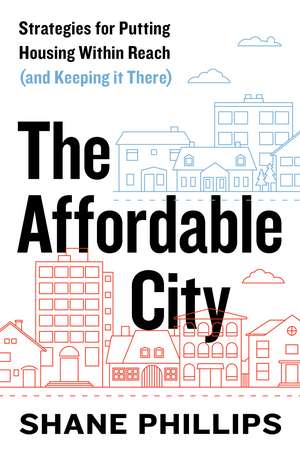
The Affordable City: Strategies for Putting Housing Within Reach (and Keeping it There)
Autor Shane Phillipsen Limba Engleză Paperback – 15 sep 2020
În contextul crizelor locative din marile metropole, The Affordable City se distinge prin aplicabilitatea practică imediată a propunerilor sale, oferind un set de instrumente concrete pentru planificatorii urbani și factorii de decizie. Reținem abordarea pragmatică a lui Shane Phillips, care depășește dezbaterea ideologică tradițională ce opune protecția chiriașilor necesității de a construi masiv. Autorul demonstrează că o soluție viabilă nu poate fi singulară, ci trebuie să integreze simultan cei „Trei S”: Supply (Ofertă), Stability (Stabilitate) și Subsidy (Subvenție).
Structura volumului reflectă o progresie logică, pornind de la 14 principii fundamentale — cum ar fi centrarea pe grupurile vulnerabile și reforma instituțională — către politici specifice de „upzoning” și stimulente economice. Remarcăm modul în care autorul analizează tensiunea dintre creșterea valorii proprietăților și accesibilitatea financiară, oferind peste 50 de recomandări adaptabile nevoilor comunitare locale.
Cititorii familiarizați cu The Urban Housing Crisis de Arlene Zarembka vor aprecia modul în care volumul de față actualizează analiza sintezei între finanțare și ofertă, aducând o perspectivă mai tehnică asupra mecanismelor de reglementare urbană. În timp ce lucrările anterioare ale lui Shane Phillips, precum CEO Assessment and Selection, s-au concentrat pe managementul carierei și leadership executiv, această lucrare marchează o specializare profundă în domeniul politicilor publice și planificării urbane, păstrând însă rigoarea analitică și focalizarea pe rezultate măsurabile. Este o resursă esențială pentru înțelegerea modului în care reglementările locale influențează direct reziliența comunităților urbane moderne.
Preț: 233.24 lei
Carte disponibilă
Livrare economică 16-30 noiembrie
Livrare express 30 octombrie-05 noiembrie pentru 42.86 lei
Specificații
ISBN-10: 1642831336
Pagini: 280
Dimensiuni: 152 x 229 x 15 mm
Greutate: 0.43 kg
Editura: Island Press
Colecția Island Press
V-ar putea interesa
-
 Big CapitalAnna Minton-32%Preț: 63.01 lei92.11 lei
 -
 The Affordable Housing ReaderElizabeth MuellerPreț: 379.91 lei
 -
 No Place Like Home: The Missing Key to Our Housing CrisisJessica Barrett-24%Preț: 142.66 lei188.41 lei
 -
 Preț: 107.57 lei
 -
 The Shoup Doctrine: Essays Celebrating Donald Shoup and Parking ReformsDaniel Baldwin HessPreț: 354.90 lei
 -
 Escaping the Housing TrapCharles L MarohnPreț: 158.08 lei
 -
 Best Offer WinsMarisa KashinoPreț: 108.52 lei
 -
 Preț: 315.00 lei
 -
 Preț: 271.86 lei
 -
 -22%Preț: 43.71 lei55.79 lei
 -
 In Defense of HousingPeter MarcusePreț: 143.81 lei
 -
 Feeling at HomeAlva GotbyPreț: 113.82 lei
 -
 Against LandlordsNick BanoPreț: 84.45 lei
 -
 Preț: 122.79 lei
 -
 Dual Cities: Social Housing in London & New YorkKarakusevic PaulPreț: 406.22 lei
De ce să citești această carte
Această carte este un ghid esențial pentru profesioniștii din administrația publică și planificarea urbană care caută soluții dincolo de teorie. Cititorul câștigă o viziune integrată asupra crizei locuințelor, învățând cum să echilibreze drepturile chiriașilor cu expansiunea imobiliară. Este recomandată celor care doresc să implementeze politici de „upzoning” și subvenții eficiente, oferind un model de bune practici pentru orașe mai echitabile și accesibile.
Despre autor
Shane Phillips este un expert în politici publice și planificare urbană, recunoscut pentru capacitatea sa de a sintetiza probleme economice complexe în soluții de guvernanță aplicabile. Deși bibliografia sa include lucrări dedicate managementului resurselor umane și selecției de cadre executive, cum este volumul CEO Assessment and Selection, activitatea sa recentă s-a orientat spre rezolvarea crizelor locative din marile centre urbane americane. Prin The Affordable City, Phillips se poziționează ca o voce influentă în mediul academic și administrativ, promovând reforme instituționale care să asigure stabilitatea socială și dezvoltarea economică durabilă în orașele contemporane.
Descriere scurtă
Shane Phillips believes that effectively tackling the housing crisis requires that cities support both tenant protections and housing abundance. He offers readers more than 50 policy recommendations, beginning with a set of principles and general recommendations that should apply to all housing policy. The remaining recommendations are organized by what he calls the Three S’s of Supply, Stability, and Subsidy. Phillips makes a moral and economic case for why each is essential and recommendations for making them work together.
There is no single solution to the housing crisis—it will require a comprehensive approach backed by strong, diverse coalitions. The Affordable City is an essential tool for professionals and advocates working to improve affordability and increase community resilience through local action.
Notă biografică
Cuprins
Part I: Principles and General Recommendations
1. Pursue the Three S’s (Supply, Stability, and Subsidy) Simultaneously
2. Take Action Now
3. Focus on Institutional Reform
4. Adapt Solutions to the Needs of Your Community
5. Center Voices of, and Outcomes for, the Disenfranchised and Most Vulnerable
6. Use a Mix of Mandates and Incentives
7. Know What You’re Asking For
8. Pick One: Rising Home Values or Housing Affordability
9. Don’t Reward Idle Money
10. Don’t Coddle Landlords
11. Track Everything
12. Strive for Objective, Consistent Rules
13. Expand the Conversation around Gentrification
14. Align Local Votes with Presidential and Midterm Elections
Part II: Policies
Supply: Why Housing Matters
15. Upzone a Lot (Upzoning: High Capacity)
16. Upzone Many Places at Once (Upzoning: Geographically Distributed)
17. Focus Upzones in Accessible and High-Opportunity Areas (Upzoning: Targeted)
18. Find the Upzoning Sweet Spot: Not Too Big, Not Too Small (Upzoning: Rightsized)
19. Allow Housing in Commercial Zones (Mixed-Use Zoning)
20. Make It Expensive to Reduce the Supply of Homes (Home Sharing)
21. Eliminate Density Limits in Most Places (Density Limits)
22. Eliminate Parking Requirements Everywhere (Parking Minimums)
23. Let Renters Decide What They Value (Micro-units)
24. Make Development Approvals “By Right” (By-Right Development)
25. Speed Up the Entitlement Process (Faster Approvals)
26. Explore Other Ways to Bring Down Development Costs (Input Costs)
27. Promote Counter-cyclical Home Building (Counter-cyclical Development)
Stability: Why Tenant Protections and Rental Housing Preservation Matter
28. Place Moderate Restrictions on Rent Increases for Nearly All Housing (Anti-Gouging)
29. Place Stronger Restrictions on Rent Increases for Older Housing (Rent Stabilization)
30. Be Careful with Vacancy Control
31. Implement Inclusionary Zoning and Density Bonuses
32. Discourage Redevelopment That Requires Renter Displacement (Displacement Compensation and Right of Return)
33. Implement Replacement Housing Mandates
34. Make Affordability Requirements Permanent (Affordability Covenant Duration)
35. Buy Naturally Occurring Affordable Housing with Public Funds
36. Require Transparency from Voluntary Tenant Buyouts
37. Prioritize Displaced Tenants for Affordable Housing Placement (Preferential Placement)
38. Limit the Ability of Landlords to “Go Out of Business” (Rental Housing Preservation)
39. Use Just-Cause Protections to Discourage Evictions
40. Require Government Notification for All Eviction Notices and Rent Hikes (Landlord Transparency)
41. Offer Free or Reduced-Cost Legal Counsel to Residents Facing Eviction (Right to Counsel)
42. Enforce Housing and Building Codes
43. Eliminate Discrimination against People with Housing Choice Vouchers
44. Prioritize Stability over Wealth Creation (Homeownership Assistance)
Subsidy: Why Government Spending and Public Programs Matter
45. Institute a Progressive Tax on Home Sales (Real Estate Transfer Tax)
46. Tax “Flipped” Houses at Higher Rates
47. Utilize Property Taxes
48. Tax Underutilized and Vacant Property
49. Don’t Sell Public Land; Lease It (Public Land and P3s)
50. Minimize Impact Fees and Charge Them Equitably
51. Don’t Let Small Buildings off the Hook (Missing Middle)
52. Reform or Eliminate Most Homeowner Subsidies
53. Reform and Increase Funding for Affordable Housing Construction
54. Increase Funding for Direct Rental Assistance
55. Fund Low- and Zero-Interest Loans for Housing Acquisition and Development
Part III: Bringing It All Together
Conclusion
Appendix: Development and Real Estate Economics 101
Recenzii
Descriere
Phillips offers more than 50 policy recommendations addressing what he refers to as the “Three S’s” of Supply, Stability, and Subsidy. He makes a moral and economic case for why each is essential and recommendations for making them work together. He ends with a policy blueprint and concise implementation plan for each policy, including whether it should be pursued as an immediate, medium-term, or long-term priority.
The Affordable City is an essential tool for professional city planners, policymakers, public officials, and advocates working to improve affordability and increase community resilience through local action.