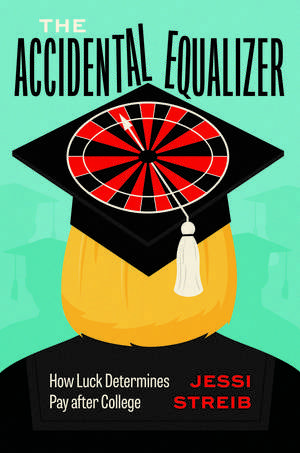
The Accidental Equalizer: How Luck Determines Pay after College
Autor Jessi Streiben Limba Engleză Hardback – 16 noi 2023
Descoperim în The Accidental Equalizer o perspectivă contraintuitivă asupra tranziției de la facultate la carieră, fundamentată pe interviurile detaliate ale autoarei cu agenți de recrutare și absolvenți. Reținem că, deși diploma de licență este adesea văzută ca un instrument de meritocrație, Jessi Streib demonstrează că egalizarea veniturilor între clasele sociale diferite apare mai degrabă dintr-un proces de selecție opac, unde „norocul chior” devine factorul determinant. Remarcăm modul în care angajatorii, prin ascunderea criteriilor de selecție și a grilelor de salarizare, anulează involuntar avantajele de clasă, forțând toți candidații să navigheze într-un mediu lipsit de repere clare.
Această lucrare acoperă o arie similară cu Pedigree de Lauren A Rivera, însă acolo unde Rivera punea accentul pe modul în care elitele își securizează pozițiile prin capital cultural, Jessi Streib propune o abordare care evidențiază cum haosul din procesul de recrutare acționează ca un egalizator accidental. De asemenea, dacă Success and Luck de Robert H. Frank discuta norocul la nivel macroeconomic și filosofic, The Accidental Equalizer oferă o analiză sociologică aplicată pe mecanismele interne ale departamentelor de resurse umane.
Structurată în trei părți esențiale — formarea „norocrației”, strategiile de căutare a locurilor de muncă și consecințele sistemice — cartea progresează de la analiza datelor empirice către o interogație provocatoare despre viitorul clasei de mijloc. În contextul operei sale, Jessi Streib continuă explorarea tensiunilor de clasă începută în Privilege Lost și The Power of the Past, dar mută focalizarea de la traiectoriile individuale către structurile instituționale care, în mod paradoxal, pot reduce inegalitatea prin simplă dezorganizare.
Preț: 157.98 lei
Carte disponibilă
Livrare economică 14-28 noiembrie
Specificații
ISBN-10: 0226829316
Pagini: 256
Ilustrații: 3 tables
Dimensiuni: 152 x 229 x 23 mm
Greutate: 0.48 kg
Ediția:First Edition
Editura: University of Chicago Press
Colecția University of Chicago Press
De ce să citești această carte
Recomandăm această carte profesioniștilor din resurse umane, sociologilor și studenților care vor să înțeleagă realitatea din spatele procesului de angajare. Cititorul va câștiga o perspectivă onestă asupra limitelor meritocrației și va înțelege de ce succesul profesional nu urmează întotdeauna o rețetă logică. Este o lectură esențială pentru a demistifica „visul american” și pentru a vedea cum hazardul modelează structura socială actuală.
Despre autor
Jessi Streib este o sociologă recunoscută pentru studiile sale asupra mobilității sociale și a dinamicii claselor în societatea contemporană. În lucrările sale anterioare, precum Privilege Lost, ea a analizat mecanismele prin care statusul socio-economic este menținut sau pierdut de-a lungul generațiilor. De asemenea, în The Power of the Past, a investigat impactul originii sociale asupra relațiilor interpersonale și căsătoriilor inter-clasă. Prin The Accidental Equalizer, publicată la University of Chicago Press, Streib își consolidează poziția de cercetător critic al instituțiilor educaționale și profesionale americane.
Descriere scurtă
As a gateway to economic opportunity, a college degree is viewed by many as America’s great equalizer. And it’s true: wealthier, more connected, and seemingly better-qualified students earn exactly the same pay as their less privileged peers. Yet, the reasons why may have little to do with bootstraps or self-improvement—it might just be dumb luck. That’s what sociologist Jessi Streib proposes in The Accidental Equalizer, a conclusion she reaches after interviewing dozens of hiring agents and job-seeking graduates.
Streib finds that luck shapes the hiring process from start to finish in a way that limits class privilege in the job market. Employers hide information about how to get ahead and force students to guess which jobs pay the most and how best to obtain them. Without clear routes to success, graduates from all class backgrounds face the same odds at high pay. The Accidental Equalizer is a frank appraisal of how this “luckocracy” works and its implications for the future of higher education and the middle class. Although this system is far from eliminating American inequality, Streib shows that it may just be the best opportunity structure we have—for better and for worse.
Notă biografică
Cuprins
Part I: Forming the Luckocracy
Two: Hidden Information on Jobs and Pay
Three: Hidden Information on Class-Neutral Hiring Criteria
Part II: Playing the Game
Four: Preparing for the Luckocracy
Five: Searching for Jobs
Part III: The Consequences and Continuation of the Luckocracy
Six: The Consequences of the Luckocracy
Seven: The Luckocracy, Redux
Eight: Should We Keep America’s Best Equalizing System?
Acknowledgments
Appendix A: Theoretical Contribution
Appendix B: Data and Methods
Appendix C: Interview Guides and Questionnaires
Notes
References
Index