
Techniques of Writing: Business Letters, Memos, and Reports
Autor Courtland L. Boveeen Limba Engleză Paperback – 1989
Preț: 628.32 lei
Preț vechi: 815.99 lei
-23%
Puncte Express: 942
Carte tipărită la comandă
Livrare economică 05-19 decembrie
Livrare prin curier în România Termenul estimat este afișat lângă disponibilitate.
Transport gratuit pentru acest produs Plată online sau ramburs, în funcție de opțiunile comenzii.
Retur gratuit în 14 zile Comandă securizată și suport în română.
Specificații
ISBN-13: 9780195329636
ISBN-10: 0195329635
Pagini: 90
Dimensiuni: 211 x 135 x 8 mm
Greutate: 0.13 kg
Ediția:2
Editura: Oxford University Press
Colecția OUP USA
Locul publicării:New York, United States
ISBN-10: 0195329635
Pagini: 90
Dimensiuni: 211 x 135 x 8 mm
Greutate: 0.13 kg
Ediția:2
Editura: Oxford University Press
Colecția OUP USA
Locul publicării:New York, United States
V-ar putea interesa
-
 The Intellectual and Social Organization of the SciencesRichard Whitley-32%Preț: 726.93 lei1071.12 lei
-
 -22%Preț: 224.62 lei288.78 lei
-
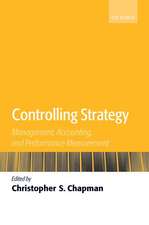 Controlling Strategy: Management, Accounting, and Performance MeasurementChristopher S. Chapman-28%Preț: 490.94 lei678.29 lei
-
 The Production of Knowledge: The Challenge of Social Science ResearchWilliam H. Starbuck-19%Preț: 665.38 lei821.46 lei
-
 The Work of Managers: Towards a Practice Theory of ManagementStefan Tengblad-22%Preț: 358.66 lei459.56 lei
-
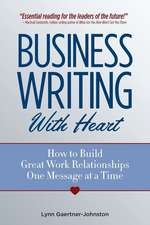 Preț: 141.45 lei
-
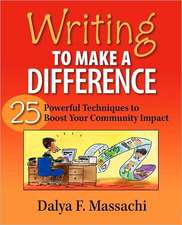 Preț: 258.70 lei
-
 Preț: 366.91 lei
-
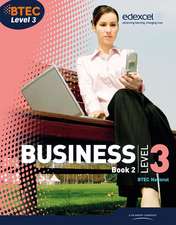 Richards, C: BTEC Level 3 National Business Student Book 2Catherine RichardsPreț: 278.77 lei
-
 Preț: 107.16 lei
-
 Preț: 96.07 lei
-
 Ferdinand PiëchRita Stiens-15%Preț: 528.42 lei621.67 lei
Notă biografică
Courtland L. Bovee is co-author of Random House's bestselling Business Communication Today. He also wrote Business Writing Workshop (Roxbury) and Contemporary Advertising (Irwin). A lecturer and communications consultant to business and industry, he is also a member of the faculty in the business department at Grossmont College, El Cajon, California.
Cuprins
- Part I: Principles of Written Communication
- General Techniques
- Write to People
- Make Reading Easy
- Style Is A Help
- Correcting Faults in Technique
- Words
- Strong words
- Familiar Words
- Short Words
- Concrete Words
- Active Words
- Camouflaged Words
- Technical Words
- Unnecessary Words
- Phrases
- Replaceable Phrases
- Infinitive Substitutes
- Obsolete Phrases
- Sentences
- Short Sentences
- Pompous Sentences
- Overloaded Sentences
- Undue Enthusiasm
- Crowded-Together Sentences
- Hedging Sentences
- Pronoun Starters
- Parallelism
- Awkward Pointers
- Misassembled Sentences
- Paragraphs
- Paragraph Unity
- Topic Sentences
- Short Paragraphs
- Part II. Principles of Writing Letters
- Letter Writing Techniques
- Organizational Steps
- Types of Letters
- Neutral
- Good News
- Bad News
- Persuasive
- Persuasion
- Tone
- "You" Viewpoint
- Positive vs. Negative Viewpoint
- Euphemisms
- Confidence and Conviction
- Warmth
- Parallel Experience
- Good Manners
- Letter Mechanics
- Image
- Company Image
- Letterheads
- Format
- Form Letters
- Part III: Principles of Writing Memorandums
- Purposes
- Format
- Coverage
- Style
- Tone
- Part IV: Principles of Writing Formal Reports
- Types of Reports
- Introduction
- Informational
- Examinational
- Analytical
- Report Planning
- Problem Determination
- Problem Factors
- Data Research
- Research Methods
- Note-Taking
- Data Organization
- Data Grouping
- Outline Requirements
- Report Elements
- Title Fly
- Title Page
- Letter of Authorization
- Letter of Transmittal
- Table of Contents
- Synopsis
- Introduction
- Report Body
- Summary/Conclusions/Recommendations
- Appendixes
- Bibliography
- Index
- Data Interpretation
- The Data Base
- Logic
- Evaluation Attitudes
- Checking
- Interpretation Procedure
- Communication Essentials
- Believability
- Viewpoint
- Coherence
- Style
- Excerpts
- Footnotes
- Bibliography
- Illustrations and Tables
- Plan
- Location
- General Mechanics
- Tables
- Final Format
- Physical Presentation
- Typing
- Special Formats
- Part V: Principles of Writing Informal Reports
- Scope
- Techniques
- Part VI: Appendixes
- A. References for Business Writers
- B. Skill-Building Writing Exercises
- C. Checklist of Wordy and Trite Expressions