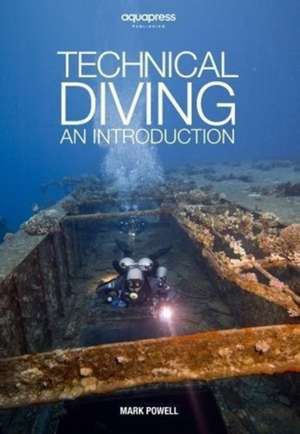
Technical Diving
Autor Mark Powellen Limba Engleză Paperback – 5 mar 2018
Găsim în această carte o poartă de acces către o lume care, până recent, părea rezervată exclusiv profesioniștilor: explorarea adâncurilor dincolo de limitele recreative. Technical Diving nu este doar un manual, ci un ghid de tranziție care începe prin a demonta miturile despre echipamentele redundante și amestecurile de gaze exotice. Remarcăm modul în care Mark Powell structurează informația, transformând o disciplină adesea percepută ca intimidantă într-un parcurs logic și sigur. Autorul explică în detaliu ce presupune gestionarea riscurilor atunci când plafonul fizic al apei este înlocuit de barierele fiziologice ale decompresiei. Notăm cu interes calitatea grafică a volumului; cele 240 de pagini sunt bogat ilustrate color, facilitând înțelegerea configurațiilor complexe de echipament fără a fi nevoie de o experiență prealabilă în inginerie. Stilul este direct, eliminând jargonul inutil pentru a se concentra pe fundamentele siguranței. Complementar lui Scuba Confidential, unde Simon Pridmore se concentrează pe secretele profesioniștilor și analiza accidentelor pentru a îmbunătăți abilitățile generale, acest volum al lui Mark Powell explorează specific metodologia și rigoarea necesară pentru a depăși pragul de 40 de metri. De asemenea, dacă Diving Equipment de Jonas Arvidsson analizează mecanica interioară a detentoarelor și vestelor, Technical Diving pune aceste instrumente în contextul unei planificări riguroase de scufundare. Această ediție de la AQUAPRESS reușește să ofere cititorului o viziune de ansamblu asupra a ceea ce înseamnă cu adevărat scufundarea tehnică astăzi: o disciplină a preciziei, nu a teribilismului.
Preț: 272.99 lei
Carte disponibilă
Livrare economică 06-20 noiembrie
Livrare express 23-29 octombrie pentru 47.30 lei
Specificații
ISBN-10: 1905492316
Pagini: 240
Ilustrații: Full colour illustrations throughout
Dimensiuni: 169 x 246 x 20 mm
Greutate: 0.64 kg
Editura: AQUAPRESS
V-ar putea interesa
-
 Thirteen Lessons that Saved Thirteen LivesJohn Volanthen-19%Preț: 64.22 lei79.03 lei
 -
 Preț: 190.38 lei
 -
 Staying AliveMR Steve LewisPreț: 167.81 lei
 -
 AquanautRick Stanton-36%Preț: 60.53 lei94.08 lei
 -
 Surfing the SouthSteve EstesPreț: 145.45 lei
 -
 The Dark Corner: A NovelMark PowellPreț: 142.25 lei
 -
 Prodigals: A NovelMark PowellPreț: 132.20 lei
 -
 Blood Kin: A NovelMark PowellPreț: 133.43 lei
 -
 Deco for DiversMark Powell-5%Preț: 254.42 lei267.81 lei
 -
 The Figure 8 VoyageRandall ReevesPreț: 187.87 lei
De ce să citești această carte
Recomandăm această carte oricărui scafandru recreativ care privește cu curiozitate spre epavele adânci sau peșterile inundate. Cititorul câștigă o înțelegere corectă a investiției de timp și formare necesare pentru a evolua în siguranță. Este pasul esențial înainte de a te înscrie la un curs tehnic, oferindu-ți argumentele necesare pentru a decide dacă acest stil de viață ți se potrivește.