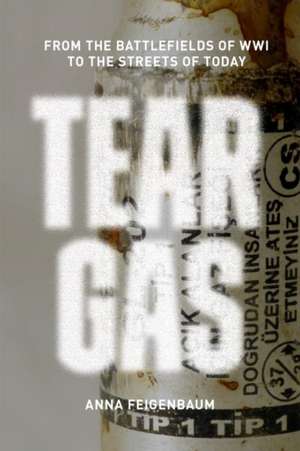
Tear Gas
Autor Anna Feigenbaumen Limba Engleză Paperback – 7 noi 2017
Această lucrare semnată de Anna Feigenbaum aduce în premieră o istorie globală a unei arme chimice paradoxale: gazul lacrimogen. Deși majoritatea statelor au agreat ilegalitatea fabricării și utilizării armelor chimice pe câmpul de luptă, acest agent iritant a migrat spre spațiul civil, devenind un produs comercial de succes în dotarea forțelor de poliție moderne. Considerăm că forța acestui volum rezidă în capacitatea autoarei de a trasa parcursul tehnologic și politic al substanței, de la tranșeele Primului Război Mondial până la evenimentele recente din Ferguson sau teritoriile ocupate. Spre deosebire de lucrări precum War of Nerves de Jonathan Tucker, care se concentrează pe istoria letală a agenților neurotoxici în conflicte militare, Tear Gas: From the Battlefields of World War I to the Streets of Today analizează mecanismele prin care „poliția cu otravă” a devenit o normă socială acceptată. Structura narativă ne poartă din laboratoarele militare direct în taberele de protest, utilizând rapoarte declasificate pentru a demonta mitul armelor „non-letale”. Cartea oferă o perspectivă critică asupra modului în care experiența britanică în controlul revoltelor și producția industrială americană au modelat răspunsul statului în fața disidenței. Aceasta reprezintă o alternativă necesară la Poison Gas pentru cursurile de sociologie a violenței sau studii de securitate, cu avantajul că nu se limitează la aspectele tehnice sau propagandistice, ci explorează impactul uman și transformările geopolitice care au permis ca o armă de război să fie descărcată astăzi pe străzile orașelor noastre.
Preț: 138.33 lei
Carte disponibilă
Livrare economică 09-23 noiembrie
Livrare express 24-30 octombrie pentru 22.59 lei
Specificații
ISBN-10: 178478026X
Pagini: 224
Dimensiuni: 142 x 208 x 17 mm
Greutate: 0.29 kg
Editura: Verso Books
V-ar putea interesa
-
 Below the Radar: How Silence Can Save Civil RightsAlison L. Gash-28%Preț: 427.82 lei595.48 lei
 -
 -19%Preț: 336.76 lei417.15 lei
 -
 Democracy and Disenfranchisement: The Morality of Electoral ExclusionsClaudio López-Guerra-31%Preț: 708.34 lei1029.55 lei
 -
 Inside Immigration DetentionMary Bosworth-22%Preț: 413.99 lei533.82 lei
 -
 -19%Preț: 64.40 lei79.15 lei
 -
 The Sociology of Human RightsMark FrezzoPreț: 195.46 lei
 -
 CitizenshipÉtienne BalibarPreț: 149.34 lei
 -
 Speakers' CornerPhilip WolmuthPreț: 117.15 lei
 -
 Running for FreedomSteven F. LawsonPreț: 425.60 lei
 -
 Preț: 75.04 lei
 -
 Protest CampsAnna Feigenbaum-10%Preț: 162.87 lei181.24 lei
 -
 The Muslims Are ComingArun KundnaniPreț: 193.75 lei
 -
 Preț: 173.49 lei
De ce să citești această carte
Recomandăm această carte cititorilor interesați de istoria militară, sociologia controlului social și drepturile omului. Veți câștiga o înțelegere profundă a modului în care tehnologiile de război sunt adaptate pentru spațiul civil, descoperind mecanismele politice și economice din spatele unei industrii globale care transformă substanțele chimice iritante în instrumente de ordine publică.
Despre autor
Anna Feigenbaum este o cercetătoare și autoare preocupată de intersecția dintre tehnologie, comunicare și mișcări sociale. Prin activitatea sa academică și investigațiile de teren, ea explorează modul în care designul și utilizarea tehnologiilor de control influențează spațiul public și protestul politic. În Tear Gas: From the Battlefields of World War I to the Streets of Today, Feigenbaum sintetizează ani de cercetare în arhive și interviuri cu martori oculari, oferind o analiză riguroasă a modului în care armamentul chimic a fost integrat în practicile polițienești contemporane, devenind o voce de referință în studiul violenței instituționalizate.
Descriere scurtă
One hundred years ago, French troops fired tear gas grenades into German trenches. Designed to force people out from behind barricades and trenches, tear gas causes burning of the eyes and skin, tearing, and gagging. Chemical weapons are now banned from war zones. But today, tear gas has become the most commonly used form of less-lethal police force. In 2011, the year that protests exploded from the Arab Spring to Occupy Wall Street, tear gas sales tripled. Most tear gas is produced in the United States, and many images of protestors in Tahrir Square showed tear gas canisters with Made in USA printed on them, while Britain continues to sell tear gas to countries on its own human-rights blacklist.
An engrossing century-spanning nar-rative, "Tear Gas" is the first history of this weapon, and takes us from military labs and chemical weapons expos to union assemblies and protest camps, drawing on declassified reports and witness testimonies to show how policing with poison came to be."