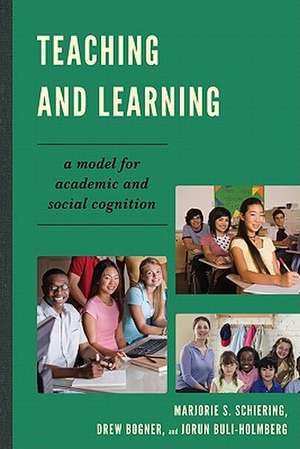
Teaching and Learning: A Model for Academic and Social Cognition
Autor Marjorie S. Schiering, Drew Bogner, Jorun Buli-Holmbergen Limba Engleză Paperback – 16 iun 2011
Preț: 337.11 lei
Preț vechi: 413.86 lei
-19%
Puncte Express: 506
Preț estimativ în valută:
59.68€ • 69.49$ • 51.85£
59.68€ • 69.49$ • 51.85£
Carte tipărită la comandă
Livrare economică 23 februarie-09 martie
Preluare comenzi: 021 569.72.76
Specificații
ISBN-13: 9781610484275
ISBN-10: 1610484274
Pagini: 322
Dimensiuni: 156 x 231 x 24 mm
Greutate: 0.5 kg
Editura: Bloomsbury Publishing
Colecția R&L Education
Locul publicării:New York, United States
ISBN-10: 1610484274
Pagini: 322
Dimensiuni: 156 x 231 x 24 mm
Greutate: 0.5 kg
Editura: Bloomsbury Publishing
Colecția R&L Education
Locul publicării:New York, United States
Cuprins
Chapter 1 Forward
Chapter 2 Acknowledgement
Chapter 3 Introduction
Part 4 Part One: A New Learning and Teaching Model
Chapter 5 Chapter 1: Acquiring Memory, Realizing Cognition, and Comprehension
Chapter 6 Chapter 2: Varied Learning and Teaching Perspectives
Chapter 7 Chapter 3: An Overview: A Model for Academic and Social Cognition
Chapter 8 Chapter 4: The Model's Foundation: S.O.W., R.E.A.P. and Umbrella of Reflection
Chapter 9 Chapter 5: Two Interior Components of the "Model"
Chapter 10 Chapter 6: The Third Interior Component of the Model: An Overview of the Cognitive Collective
Chapter 11 Chapter 7: The Cognitive Collective's Reciprocal Thinking Phases
Chapter 12 Chapter 8: The Cognitive Collective's Reciprocal Feelings
Part 13 Part Two: Practical Applications of the Model
Chapter 14 Introduction
Chapter 15 Chapter 9: Practical "Model" Application: Classroom Design and Instruction
Chapter 16 Chapter 10: Practical "Model" Application: Lesson Planning
Chapter 17 Chapter 11: Applying the "Model" in the Classroom: Differentiated and Interactive Instruction
Chapter 18 Chapter 12: Practical "Model" Application: Character Development
Chapter 19 Afterward
Part 20 Appendices Overview
Chapter 21 Appendix A
Chapter 22 Appendix B
Chapter 23 Appendix C
Chapter 24 Appendix D
Chapter 2 Acknowledgement
Chapter 3 Introduction
Part 4 Part One: A New Learning and Teaching Model
Chapter 5 Chapter 1: Acquiring Memory, Realizing Cognition, and Comprehension
Chapter 6 Chapter 2: Varied Learning and Teaching Perspectives
Chapter 7 Chapter 3: An Overview: A Model for Academic and Social Cognition
Chapter 8 Chapter 4: The Model's Foundation: S.O.W., R.E.A.P. and Umbrella of Reflection
Chapter 9 Chapter 5: Two Interior Components of the "Model"
Chapter 10 Chapter 6: The Third Interior Component of the Model: An Overview of the Cognitive Collective
Chapter 11 Chapter 7: The Cognitive Collective's Reciprocal Thinking Phases
Chapter 12 Chapter 8: The Cognitive Collective's Reciprocal Feelings
Part 13 Part Two: Practical Applications of the Model
Chapter 14 Introduction
Chapter 15 Chapter 9: Practical "Model" Application: Classroom Design and Instruction
Chapter 16 Chapter 10: Practical "Model" Application: Lesson Planning
Chapter 17 Chapter 11: Applying the "Model" in the Classroom: Differentiated and Interactive Instruction
Chapter 18 Chapter 12: Practical "Model" Application: Character Development
Chapter 19 Afterward
Part 20 Appendices Overview
Chapter 21 Appendix A
Chapter 22 Appendix B
Chapter 23 Appendix C
Chapter 24 Appendix D
Recenzii
In part 1 of this book Schiering and Bogner (both, Molloy Univ.) and Buli-Holberg (Univ. of Oslo, Norway) present their learning and teaching model to the reader, which includes a combination of memory, cognition, comprehension, learning, teaching perspectives, beliefs, and value systems. The authors define teaching and learning and indicate that learning is a result of memory, cognition, and metacognition that impacts comprehension. They indicate the importance of combining learning and teaching through a theoretical perspective. Readers learn the SOW (sociology of the world) model, as well as REAP (religion, economics, academics, and politics), and reflection. The authors present two interior components that are central, namely, societal realities, belief and value systems. Furthermore, they state that these are areas of commonality within all cultures. Part 2 of the book provides practical applications of the model. It is worth noting that there are three appendices written to add clarification and/or extended information on initially addressed topics in the book. Summing Up: Recommended. All readership levels.
In Teaching and Learning, the authors skillfully demonstrate for teachers, teachers-in-training, school psychologists, and parents the enormous impact of the Cognitive Collective on performance in the classroom setting. The awareness and understanding of the interplay of thinking on feeling and feelings on thinking by academic and school-based mental health teams can facilitate students' ability to meet the varied demands of the 21st century classroom. The authors' view of students in a holistic manner reinforce the principles of excellence in the field of education.
As someone with a life-long curiosity regarding the complex dynamics of the educational process, I'm impressed by the passion for teaching that drives this cogent, illuminating, and well-researched work. The innovative ideas on the foundation of effective education and cognitive theories, learning styles, the roles of emotion and environment in learning are valuable tools for all teachers. Teaching and Learning is a wonderful and welcome guide for teacher candidates, veteran educators, and for those parents attempting to home school their children.
I found 'consistency and coherence.' What seemed to especially make the book cohesive is the section on lesson planning using the concepts presented in the first section. It's like a smorgasbord of options for thinking about the lesson and tailoring it into a format for the class you are teaching. It is like an orthotic-training your foot to walk so it doesn't hurt-learing to teach so it is meaningful for the students and your own style.
Concerning academic and social cognition, this book skillfully links thinking and feeling in the social and academic spectrums. The book addresses external factors including religion, politics, and academics. It can be a most useful resource in college education courses of study, as well as useful for practicing teachers and parents interested in gaining knowledge about ways to assist their children in learning.
In Teaching and Learning, the authors skillfully demonstrate for teachers, teachers-in-training, school psychologists, and parents the enormous impact of the Cognitive Collective on performance in the classroom setting. The awareness and understanding of the interplay of thinking on feeling and feelings on thinking by academic and school-based mental health teams can facilitate students' ability to meet the varied demands of the 21st century classroom. The authors' view of students in a holistic manner reinforce the principles of excellence in the field of education.
As someone with a life-long curiosity regarding the complex dynamics of the educational process, I'm impressed by the passion for teaching that drives this cogent, illuminating, and well-researched work. The innovative ideas on the foundation of effective education and cognitive theories, learning styles, the roles of emotion and environment in learning are valuable tools for all teachers. Teaching and Learning is a wonderful and welcome guide for teacher candidates, veteran educators, and for those parents attempting to home school their children.
I found 'consistency and coherence.' What seemed to especially make the book cohesive is the section on lesson planning using the concepts presented in the first section. It's like a smorgasbord of options for thinking about the lesson and tailoring it into a format for the class you are teaching. It is like an orthotic-training your foot to walk so it doesn't hurt-learing to teach so it is meaningful for the students and your own style.
Concerning academic and social cognition, this book skillfully links thinking and feeling in the social and academic spectrums. The book addresses external factors including religion, politics, and academics. It can be a most useful resource in college education courses of study, as well as useful for practicing teachers and parents interested in gaining knowledge about ways to assist their children in learning.