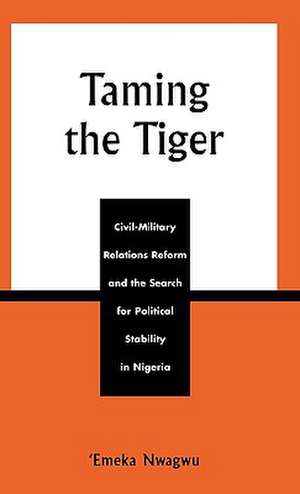
Taming the Tiger: Civil-Military Relations Reform and the Search for Political Stability in Nigeria
Autor Emeka Nwagwuen Limba Engleză Hardback – 10 dec 2002
Preț: 589.63 lei
Preț vechi: 911.43 lei
-35%
Puncte Express: 884
Carte tipărită la comandă
Livrare economică 10-24 noiembrie
Livrare prin curier în România Termenul estimat este afișat lângă disponibilitate.
Transport gratuit pentru acest produs Plată online sau ramburs, în funcție de opțiunile comenzii.
Retur gratuit în 14 zile Comandă securizată și suport în română.
Specificații
ISBN-13: 9780761824084
ISBN-10: 0761824081
Pagini: 292
Dimensiuni: 148 x 221 x 29 mm
Greutate: 0.53 kg
Editura: Bloomsbury Publishing
Colecția University Press of America
Locul publicării:New York, United States
ISBN-10: 0761824081
Pagini: 292
Dimensiuni: 148 x 221 x 29 mm
Greutate: 0.53 kg
Editura: Bloomsbury Publishing
Colecția University Press of America
Locul publicării:New York, United States
Cuprins
Chapter 1 Introduction
Chapter 2 Contemporary Africa De Colonization
Chapter 3 Territorial and Ethnic Divisions
Chapter 4 Political Instability
Chapter 5 Lack of Development
Chapter 6 Contemporary Nigeria
Chapter 7 The Legacy of Military Rule in Nigeria
Chapter 8 Untamed Tigers
Chapter 9 Why this Contribution
Chapter 10 Limitations of this Work
Chapter 11 Organization of Book
Chapter 12 Notes
Chapter 13 Chapter I: Colonialism and the Development of Nigerian Military Institutions; The Development of the Nigerian Military; Recruitment Policy; Recruitment Policy in Preparation for Independence; Soldiers as Social Outcasts; Colonialism and the Nigerian
Chapter 14 Chapter II: Abacha: Last Warrior?; Causes of Military Intervention in Nigerian Politics; Cultural Pluralism; Safety and Security of Citizens; Regime Values; Social Mobilization; Multipartism; The Nigerian Syndrome; The Decline of the Nigerian Milita
Chapter 15 Chapter III: The Need for Civil-Military Relations Reform in Nigeria; Killing: An Insufficient Deterrent to Military Coups; Prolonged Military Rule; Dominate Influence of the Retired Generals; Leadership Deficit; Old Wine in New Barrels; Official Co
Chapter 16 Chapter IV: Military Reform Policy; Economic Sanctions and Political Ostracism; Civil Resistance; Mutiny in the Armed Forces; Objectives of Civil-Military Reform; Elements of the Military Reform Plan; Shared Governance; Balanced Appointments; Creati
Chapter 17 Chapter V: Civil-Military Relations Studies; Models of Civil-Military Relations; Traditional or Aristocratic; Democratic; Penetration; Contemporary Models; Subjective- Civilian Control; Objective- Civilian Control; Concordance Model; Structural Mode
Chapter 18 Chapter VI: Military and Political Stability; Why Israel?; Civil- Military Partnerships in Israel; The Influence of Zionism Military; Training and Education; Notes
Chapter 19 Chapter VII: Rapid Promotions and Out-Placement Systems and Political Stability; Notes
Chapter 20 Chapter VIII: Civil-Military Partnership and Political Stability; Role for Former Presidents; Notes
Chapter 21 Chapter IX: Conclusions and Epilogue; National Scandals; The Turning Point; The Babangida SAGA; Sharia in One State and Political Stability; The Nationalities Conference; International Organizations and Political Stability; An Equitable System of In
Chapter 2 Contemporary Africa De Colonization
Chapter 3 Territorial and Ethnic Divisions
Chapter 4 Political Instability
Chapter 5 Lack of Development
Chapter 6 Contemporary Nigeria
Chapter 7 The Legacy of Military Rule in Nigeria
Chapter 8 Untamed Tigers
Chapter 9 Why this Contribution
Chapter 10 Limitations of this Work
Chapter 11 Organization of Book
Chapter 12 Notes
Chapter 13 Chapter I: Colonialism and the Development of Nigerian Military Institutions; The Development of the Nigerian Military; Recruitment Policy; Recruitment Policy in Preparation for Independence; Soldiers as Social Outcasts; Colonialism and the Nigerian
Chapter 14 Chapter II: Abacha: Last Warrior?; Causes of Military Intervention in Nigerian Politics; Cultural Pluralism; Safety and Security of Citizens; Regime Values; Social Mobilization; Multipartism; The Nigerian Syndrome; The Decline of the Nigerian Milita
Chapter 15 Chapter III: The Need for Civil-Military Relations Reform in Nigeria; Killing: An Insufficient Deterrent to Military Coups; Prolonged Military Rule; Dominate Influence of the Retired Generals; Leadership Deficit; Old Wine in New Barrels; Official Co
Chapter 16 Chapter IV: Military Reform Policy; Economic Sanctions and Political Ostracism; Civil Resistance; Mutiny in the Armed Forces; Objectives of Civil-Military Reform; Elements of the Military Reform Plan; Shared Governance; Balanced Appointments; Creati
Chapter 17 Chapter V: Civil-Military Relations Studies; Models of Civil-Military Relations; Traditional or Aristocratic; Democratic; Penetration; Contemporary Models; Subjective- Civilian Control; Objective- Civilian Control; Concordance Model; Structural Mode
Chapter 18 Chapter VI: Military and Political Stability; Why Israel?; Civil- Military Partnerships in Israel; The Influence of Zionism Military; Training and Education; Notes
Chapter 19 Chapter VII: Rapid Promotions and Out-Placement Systems and Political Stability; Notes
Chapter 20 Chapter VIII: Civil-Military Partnership and Political Stability; Role for Former Presidents; Notes
Chapter 21 Chapter IX: Conclusions and Epilogue; National Scandals; The Turning Point; The Babangida SAGA; Sharia in One State and Political Stability; The Nationalities Conference; International Organizations and Political Stability; An Equitable System of In