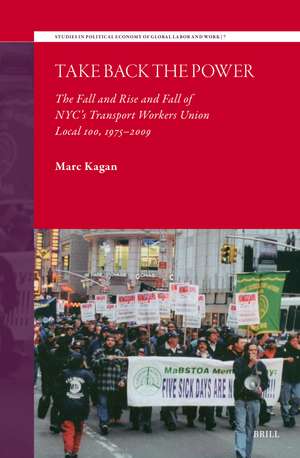
Take Back the Power: The Fall and Rise and Fall of NYC’s Transport Workers Union Local 100, 1975-2009: Studies in Political Economy of Global Labor and Work, cartea 7
Autor Marc Kaganen Limba Engleză Hardback – 2 feb 2026





Preț: 768.60 lei
Preț vechi: 937.32 lei
-18%
Puncte Express: 1153
Carte disponibilă
Livrare economică 06-17 noiembrie
Livrare prin curier în România Termenul estimat este afișat lângă disponibilitate.
Transport gratuit pentru acest produs Plată online sau ramburs, în funcție de opțiunile comenzii.
Retur gratuit în 14 zile Comandă securizată și suport în română.
Specificații
ISBN-13: 9789004748637
ISBN-10: 9004748636
Pagini: 492
Dimensiuni: 155 x 235 mm
Greutate: 0.86 kg
Editura: Brill
Colecția Brill
Seria Studies in Political Economy of Global Labor and Work
ISBN-10: 9004748636
Pagini: 492
Dimensiuni: 155 x 235 mm
Greutate: 0.86 kg
Editura: Brill
Colecția Brill
Seria Studies in Political Economy of Global Labor and Work
Notă biografică
Marc Kagan is a former transit worker, a life-long union and shopfloor activist, and sometime union officer. He has taught American, NYC, and Labor History, and is co-author of Gains and Losses: How Protestors Win and Lose (Oxford, 2022).
Cuprins
Acknowledgements
List of Figures
1 The Fall of the House of Labor, and the New Directions Project
1 Transformational Efforts and Union Dilemmas
2 Three Theories on the Decline of American Trade Unions – and Their Implications
3 Challenging and Changing the Structure and Culture of American Unions
4 The “Long” History of TWU Local 100 and the New Directions Project in the Neoliberal Era
5 An Outline of the Book
2 Local 100, the Transit Industry, and New York City’s Fiscal Crisis
1 Life as a Transit Worker
2 The First Decades of Transport Workers Union Local 100
3 Union Reorganization(s)
4 Distinctions across Transit and Local 100
5 Local 100 in the Long 1960s
6 The Taylor Law, New York City’s Fiscal Crisis, and Austerity
7 Conclusion: Priming the Fall
3 A Bottle-Rocket that Led to Only a Wage Increase
1 1978 Contract Ratification
2 The 1979 Election
3 The 1980 Strike: Victory or Defeat?
4 Controlling the Narrative of the Strike; and After
5 Conclusion: the Dilemmas of Oppositionist Organizations
4 The Fall of TWU Local 100
1 The Fight at 207th St.
2 Management’s Agenda, Union Complicity, 1982–1999
3 Conclusion: Neither the Army Nor the Town Hall
5 Divisional Efforts at “Shop-Floor” Struggle
1 Sort-of Top-Down Militancy in Structure
2 Mass Action in Car Equipment
3 Sort-of Bottom-Up in Track
4 RTO Spawns New Directions
5 Conclusion: Four Different Countriesv
6 The Rise of New Directions
1 The Early Years of HoW-ND
2 Toward Electoralism, 1989–1995
3 Staving Off New Directions
4 Democracy in New Directions; New Blood and New Questions, 1996–1998
5 Success? 1998–2000
6 Conclusion: the Blemishes on the Golden Apple
7 The Trials and Tasks of Running a Union, 2001–02
1 Not a “Productive Bargaining Relationship”
2 The Successes and Limits of Fighting Back within the Web of Rules
3 A Case Study in Bargaining: Local 100’s Health Benefit Crisis
4 Union and Worker Action
5 Problems of Union and Workplace Democracy in Theory and Local 100 Practice
6 The Officers Replicate the Stewards
7 Management at the Union Hall
8 The Break-Up of New Directions
9 Conclusion: Big Gains and Squandered Opportunities
8 Negotiating a Contract
1 Goals and Priorities
2 Organizational Preparations for Negotiations
3 Lots of Expectations: Bargaining Begins
4 Outside Pressures
5 Down from the Pinnacle: the 2002 Contract
6 Final Contract and Fallout: Why No Strike?
7 Ratification and Objections
8 Conclusion: a Better Bargain?
9 The Union on the Defensive
1 Contract Implementation Bogs Down
2 Accountability, the 2003 Elections, and the Final Demise of the New Directions Left
3 Union Building …
4 … And Union Unbuilding
5 Fighting Transit?
6 Conclusion: a House Divided
10 The 2005 New York City Transit Strike
1 Contract Preparations and Messaging
2 Final Pre-Strike Negotiations and Agreements
3 A Deadline Is a Deadline?
4 The Strike
5 The Rejection of the Contract
6 I Hate the Members; and Contract Arbitration, after All
7 Conclusion: an Odd Strike, an Odder Ending
11 The End, and “Back to Normalcy”
1 The 2006 Elections and New Rounds of Internal Warfare
2 Amending the Taylor Law, and Other Political Efforts
3 Cooperation with Transit
4 Bad Decisions: the Union Bleeds Money, and Members
5 By-Laws Changes
6 A Very Bizarre Contract Round
7 2009 Election
8 Conclusion: Back to Normalcy
12 The Dilemmas of Union Revitalization
1 Dilemma: Fight the Boss, or Fight the Union to Fight the Boss
2 Dilemma: Educational Campaigns or First Win
3 Dilemma: Leadership, or Participatory Democracy, in the New Directions Caucus
4 Dilemma: the Army or the Democratic Town Meeting at the Union Hall
5 Dilemma: the Union Caucus after Victory
6 Dilemma: Things, or Industrial Democracy
7 Dilemma: Urgent, or Important? 4348 Dilemma: Risk, or Is Another World Possible?
Appendix A: The Problems and Possibilities of Writing Contemporary and Presentist History
Appendix B: Marxist-Leninist Party Leaflets
Appendix C: Transition Issues for Local 100 (December 2000)
Bibliography
Index
List of Figures
PART 1: Introduction
1 The Fall of the House of Labor, and the New Directions Project
1 Transformational Efforts and Union Dilemmas
2 Three Theories on the Decline of American Trade Unions – and Their Implications
3 Challenging and Changing the Structure and Culture of American Unions
4 The “Long” History of TWU Local 100 and the New Directions Project in the Neoliberal Era
5 An Outline of the Book
2 Local 100, the Transit Industry, and New York City’s Fiscal Crisis
1 Life as a Transit Worker
2 The First Decades of Transport Workers Union Local 100
3 Union Reorganization(s)
4 Distinctions across Transit and Local 100
5 Local 100 in the Long 1960s
6 The Taylor Law, New York City’s Fiscal Crisis, and Austerity
7 Conclusion: Priming the Fall
PART 2: Fall
3 A Bottle-Rocket that Led to Only a Wage Increase
1 1978 Contract Ratification
2 The 1979 Election
3 The 1980 Strike: Victory or Defeat?
4 Controlling the Narrative of the Strike; and After
5 Conclusion: the Dilemmas of Oppositionist Organizations
4 The Fall of TWU Local 100
1 The Fight at 207th St.
2 Management’s Agenda, Union Complicity, 1982–1999
3 Conclusion: Neither the Army Nor the Town Hall
PART 3: Rise
5 Divisional Efforts at “Shop-Floor” Struggle
1 Sort-of Top-Down Militancy in Structure
2 Mass Action in Car Equipment
3 Sort-of Bottom-Up in Track
4 RTO Spawns New Directions
5 Conclusion: Four Different Countriesv
6 The Rise of New Directions
1 The Early Years of HoW-ND
2 Toward Electoralism, 1989–1995
3 Staving Off New Directions
4 Democracy in New Directions; New Blood and New Questions, 1996–1998
5 Success? 1998–2000
6 Conclusion: the Blemishes on the Golden Apple
7 The Trials and Tasks of Running a Union, 2001–02
1 Not a “Productive Bargaining Relationship”
2 The Successes and Limits of Fighting Back within the Web of Rules
3 A Case Study in Bargaining: Local 100’s Health Benefit Crisis
4 Union and Worker Action
5 Problems of Union and Workplace Democracy in Theory and Local 100 Practice
6 The Officers Replicate the Stewards
7 Management at the Union Hall
8 The Break-Up of New Directions
9 Conclusion: Big Gains and Squandered Opportunities
8 Negotiating a Contract
1 Goals and Priorities
2 Organizational Preparations for Negotiations
3 Lots of Expectations: Bargaining Begins
4 Outside Pressures
5 Down from the Pinnacle: the 2002 Contract
6 Final Contract and Fallout: Why No Strike?
7 Ratification and Objections
8 Conclusion: a Better Bargain?
PART 4: Fall
9 The Union on the Defensive
1 Contract Implementation Bogs Down
2 Accountability, the 2003 Elections, and the Final Demise of the New Directions Left
3 Union Building …
4 … And Union Unbuilding
5 Fighting Transit?
6 Conclusion: a House Divided
10 The 2005 New York City Transit Strike
1 Contract Preparations and Messaging
2 Final Pre-Strike Negotiations and Agreements
3 A Deadline Is a Deadline?
4 The Strike
5 The Rejection of the Contract
6 I Hate the Members; and Contract Arbitration, after All
7 Conclusion: an Odd Strike, an Odder Ending
11 The End, and “Back to Normalcy”
1 The 2006 Elections and New Rounds of Internal Warfare
2 Amending the Taylor Law, and Other Political Efforts
3 Cooperation with Transit
4 Bad Decisions: the Union Bleeds Money, and Members
5 By-Laws Changes
6 A Very Bizarre Contract Round
7 2009 Election
8 Conclusion: Back to Normalcy
12 The Dilemmas of Union Revitalization
1 Dilemma: Fight the Boss, or Fight the Union to Fight the Boss
2 Dilemma: Educational Campaigns or First Win
3 Dilemma: Leadership, or Participatory Democracy, in the New Directions Caucus
4 Dilemma: the Army or the Democratic Town Meeting at the Union Hall
5 Dilemma: the Union Caucus after Victory
6 Dilemma: Things, or Industrial Democracy
7 Dilemma: Urgent, or Important? 4348 Dilemma: Risk, or Is Another World Possible?
Appendix A: The Problems and Possibilities of Writing Contemporary and Presentist History
Appendix B: Marxist-Leninist Party Leaflets
Appendix C: Transition Issues for Local 100 (December 2000)
Bibliography
Index