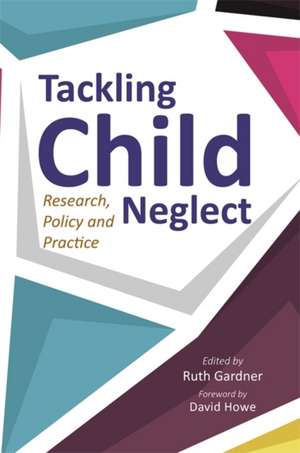
Tackling Child Neglect: Research, Policy and Evidence-Based Practice
Editat de Ruth Gardner Contribuţii de Jane Barlow, Jan Horwath, Jenny Woodman, Andrew Turnell, Hilary Kennedy, Sarah Gorin, Amanda Bunn, Debra Allnock, Jan McAllister, Wendy Lee, Marian Brandon, Pippa Belderson, Dan Koziolek, Leigh Taylor, Maeve Macdonald, Whitney R. Rostad, Katelyn M. Guastaferro, John R. Lutzker, Paul Whalley Cuvânt înainte de David Hoween Limba Engleză Paperback – 18 aug 2016
Analizând bazele de date și literatura de specialitate privind protecția minorului, observăm că Tackling Child Neglect ocupă un loc central prin abordarea sa bazată pe dovezi (evidence-based practice). Sub coordonarea lui Ruth Gardner, acest volum reușește să sintetizeze contribuțiile unor experți recunoscuți internațional pentru a oferi o imagine de ansamblu asupra unei problematici adesea umbrite de formele mai vizibile de abuz. Ne-a atras atenția în mod deosebit rigoarea cu care sunt tratate efectele neglijenței asupra dezvoltării comunicării și a experienței de viață a copilului în primii doi ani.
Cartea este organizată metodic în trei secțiuni. Prima parte analizează impactul neuro-psihologic și social, a doua explorează peisajul cercetării și învățămintele extrase din analizele cazurilor grave (Serious Case Reviews), iar ultima secțiune se concentrează pe strategii de intervenție și prevenție. Spre deosebire de Child Neglect de Moira Walker, care oferă un cadru general de bune practici în recunoașterea semnelor, lucrarea editată de Gardner este mai analitică și mai ancorată în cercetarea academică recentă, oferind o perspectivă interdisciplinară ce include vocea medicilor de familie și a cercetătorilor în politici publice.
Această abordare continuă preocuparea autoarei pentru sprijinirea sistemelor de protecție, temă prezentă și în lucrarea sa anterioară, Supporting Families. Dacă în volumele precedente accentul cădea pe evaluarea serviciilor, aici accentul se mută pe responsabilitatea parentală și pe tehnici specifice de intervenție. Structura capitolelor, care includ rezumate ale punctelor cheie și studii de caz concrete, facilitează tranziția de la teorie la aplicabilitatea clinică și socială.
Preț: 229.27 lei
Preț vechi: 300.39 lei
-24%
Carte disponibilă
Livrare economică 03-17 iunie
Specificații
ISBN-10: 1849056625
Pagini: 368
Dimensiuni: 155 x 228 x 21 mm
Greutate: 0.54 kg
Editura: JESSICA KINGSLEY PUBLISHERS
Colecția Jessica Kingsley Publishers
Locul publicării:London, United Kingdom
V-ar putea interesa
-
 Tell Me Why, MummyDavid ThomasPreț: 77.17 lei
 -
 Victims No Longer (Second Edition)Mike LewPreț: 133.41 lei
 -
 How Could She?Dana FowleyPreț: 109.05 lei
 -
 I Shot DaddyStacey LannertPreț: 110.51 lei
 -
 Touched by EvilMichele Knight-8%Preț: 70.16 lei76.50 lei
 -
 Living With EvilCynthia Owen-28%Preț: 66.56 lei92.07 lei
 -
 Moving on from Munro: Improving Children's ServicesMaggie BlythPreț: 199.53 lei
 -
 The Story of Baby P: Setting the Record StraightR. A. Y. JonesPreț: 127.95 lei
 -
 Psychology of NeglectYlenia Spiteri-30%Preț: 816.90 lei1170.05 lei
 -
 Child Neglect: Assessment & PreventionFranklin Moss-26%Preț: 1003.67 lei1348.92 lei
 -
 -26%Preț: 1001.86 lei1347.63 lei
 -
 Learning from Baby P: The politics of blame, fear and denialSharon Shoesmith-21%Preț: 151.67 lei192.73 lei
 -
 -26%Preț: 87.22 lei117.34 lei
 -
 -24%Preț: 225.52 lei298.05 lei
 -
 -26%Preț: 247.27 lei333.53 lei
 -
 Challenging Child Protection: New Directions in Safeguarding ChildrenLorraine Waterhouse-26%Preț: 245.17 lei332.22 lei
 -
 Helping Children to Tell About Sexual Abuse: Guidance for HelpersRosaleen McElvaney-22%Preț: 123.07 lei157.08 lei
 -
 Managing Child Sexual Abuse CasesBrian Corby-27%Preț: 191.46 lei262.38 lei
De ce să citești această carte
Recomandăm această resursă profesioniștilor din asistență socială, sănătate și educație care doresc să înțeleagă mecanismele profunde ale neglijenței infantile. Cititorul câștigă o metodologie clară de identificare timpurie și intervenție, susținută de dovezi științifice. Este un instrument esențial pentru cursuri universitare și pentru fundamentarea politicilor de protecție a copilului, oferind soluții practice pentru cazuri complexe.
Despre autor
Ruth Gardner a fost o figură marcantă în domeniul serviciilor umane, având o experiență vastă ca asistent social și consultant. Cu studii în asistență socială și o carieră dedicată cercetării în cadrul NSPCC (National Society for the Prevention of Cruelty to Children) din Marea Britanie, Gardner s-a specializat în evaluarea serviciilor de suport pentru familii și în dezvoltarea practicilor colaborative. Lucrările sale, precum Collaboration in Social Work Practice, reflectă angajamentul său pentru îmbunătățirea sistemelor de protecție a copilului prin integrarea cercetării academice cu realitățile de pe teren.
Descriere
Comprehensive and current, the book takes an expansive look at how we can better address this prevalent issue. It explores the effects of neglect on the developing child and makes recommendations on how to identify neglect at the earliest opportunity. It considers common causal and contributing factors in neglect cases and the impact of these on children. The book details effective intervention techniques alongside case vignettes and shows how change can be achieved. It highlights the importance of supporting parental care and developing parental responsibility in families where children are neglected. Chapters provide in-depth descriptive examples and include a summary of learning points.
Including practical suggestions for combating child neglect, this is an essential guide to best practice for students and practitioners working with children and families. The book also contains useful insights relevant to researchers and policy makers.
Recenzii
In this excellent book, Ruth Gardner has brought together a number of leading international experts in the business of recognising and understanding, assessing and dealing with neglect. We hear of the latest research on what causes and sustains neglect. We are introduced to some imaginative and engaging ways of assessing neglect that actively and therapeutically involve the parents themselves... This is a book full of sound thinking and original ideas. I defy anyone who reads this compilation not to come away feeling even more inspired, enthused and yes, even optimistic as they work with both the parents who neglect and the children who are neglected.
Tackling Child Neglect is an excellent and thought provoking book which critically re-examines the importance of neglect and its pernicious effect on the well-being and welfare of children and young people. The book comprises three main sections as authors present renewed and challenging commentary for the multi-professional audience in revisiting our understandings of neglect, various perspectives of neglect and international approaches on prevention. There are many salutary messages including a reminder of the significance of the chronic, negative impact of the lack of emotional availability of the child's care giver. The voices of children and young people are amplified in their understandings and experiences of neglect and this important focus should inform further research and improve practice in prevention and early help for children and their families.