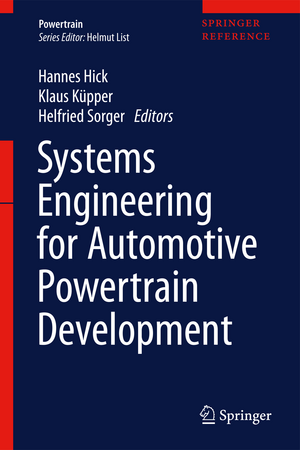
Systems Engineering for Automotive Powertrain Development: Powertrain
Editat de Hannes Hick, Klaus Küpper, Helfried Sorgeren Limba Engleză Hardback – 25 feb 2021
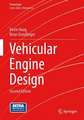
ABORDAREA PRACTICĂ: Systems Engineering for Automotive Powertrain Development reușește să creeze o punte solidă între rigoarea teoretică a ingineriei de sistem și implementarea sa efectivă în cod și arhitecturi hardware. Dacă Systems Engineering in Research and Industrial Practice v-a oferit cadrul teoretic general și viziunea holistică asupra ciclului de viață, această carte oferă instrumentele practice și metodele specifice necesare pentru a naviga prin complexitatea noilor tehnologii de propulsie. Observăm o organizare riguroasă în cinci secțiuni care reflectă progresia naturală a unui proiect de inginerie. Notăm cu interes modul în care editorii Hannes Hick, Klaus Küpper și Helfried Sorger au structurat tranziția de la provocările legislative și de mediu către nucleul tehnic al Model-Based Systems Engineering (MBSE). Considerăm că punctul forte al lucrării rezidă în Partea a IV-a, unde studiile de caz pe sisteme hibride, baterii și pile de combustie transformă conceptele abstracte în soluții aplicabile. Spre deosebire de Powertrain Instrumentation and Test Systems, care se concentrează pe faza de testare și monitorizare, volumul de față acoperă întregul proces de dezvoltare, punând un accent deosebit pe interacțiunea dintre disciplinele software și hardware. Descoperim aici o analiză pertinentă a factorului uman și a standardelor de calitate, elemente critice în dezvoltarea vehiculelor autonome și conectate. Această ediție din 2021, publicată de Springer în seria Powertrain, reprezintă un ghid metodologic esențial pentru gestionarea sistemelor complexe într-o eră a transformării tehnologice accelerate.

Preț: 3452.33 lei
Preț vechi: 4210.16 lei
-18%
Carte disponibilă
Livrare economică 16-30 noiembrie
Specificații
ISBN-10: 3319996282
Pagini: 400
Ilustrații: Bibliographie
Dimensiuni: 160 x 241 x 51 mm
Greutate: 1.64 kg
Ediția:Ausgabe von 2020
Editura: Springer
Seria Powertrain
Locul publicării:Cham, Switzerland
V-ar putea interesa
-
 -24%Preț: 573.97 lei755.57 lei
 -
 Basic Motorsport EngineeringAndrew Livesey-8%Preț: 451.51 lei490.78 lei
 -
 -19%Preț: 526.02 lei649.41 lei
 -
 MechatronicsW. Bolton-11%Preț: 667.57 lei750.07 lei
 -
 -18%Preț: 945.22 lei1152.70 lei
 -
 Electrical Power System EssentialsPieter Schavemaker-19%Preț: 601.23 lei742.26 lei
 -
 -23%Preț: 1294.93 lei1681.72 lei
 -
 -26%Preț: 385.77 lei518.94 lei
 -
 -11%Preț: 345.33 lei389.98 lei
 -
 Advances in Systems Engineering ResearchElena Fermi-27%Preț: 890.29 lei1211.50 lei
 -
 -24%Preț: 1651.31 lei2172.78 lei
 -
 Laws and Patterns of Systems DevelopmentVladimir Petrov-18%Preț: 1295.61 lei1580.02 lei
 -
 Components Operationally: Reversibility and System EngineeringClaudio Antares Mezzina-20%Preț: 389.32 lei486.66 lei
 -
 -20%Preț: 547.54 lei684.43 lei
 -
 Powertrain Instrumentation and Test SystemsMichael Paulweber-18%Preț: 1164.89 lei1420.60 lei
 -
 Automotive Air ConditioningQuansheng Zhang-9%Preț: 712.95 lei783.46 lei
 -
 -18%Preț: 813.56 lei992.15 lei
De ce să citești această carte
Această carte este indispensabilă inginerilor de dezvoltare și studenților la master care doresc să stăpânească metodologiile de Systems Engineering aplicate în industria auto modernă. Cititorul câștigă o înțelegere profundă a modului în care pot fi integrate sistemele electrice, hibride și software-ul complex într-un produs finit coerent, utilizând studii de caz reale și standarde industriale actualizate pentru a reduce erorile de proiectare.
Despre autor
Volumul este coordonat de un colectiv de experți reputați: Hannes Hick, Klaus Küpper și Helfried Sorger, profesioniști cu o vastă experiență academică și industrială în domeniul sistemelor de propulsie. Hannes Hick, activ în cadrul Universității Tehnice din Graz, este recunoscut pentru cercetările sale în ingineria sistemelor și dezvoltarea sustenabilă a vehiculelor. Împreună cu echipa editorială, aceștia aduc o perspectivă integrată asupra provocărilor tehnice și organizaționale din industria auto, colaborând frecvent cu lideri din sectorul automotive pentru a implementa metode avansate de dezvoltare a produselor complexe.
Descriere scurtă
To show how systems engineering manages the increasing complexity of modern powertrain systems, by providing processes, methods, organizational aspects and tools, this book has been structured into five parts.
Starting with Challenges for Powertrain Development, which describes automotive-related challenges at different levels of the system hierarchy and from different point of views.
The book then continues with the core part, Systems Engineering, in which all the basics of systems engineering, model-based systems engineering, and their related processes, methods, tools, and organizational matters are described. A special focus is placed on important standards and the human factor.
The third part, Automotive Powertrain Systems Engineering Approach, puts the fundamentals of systems engineering into practice by adding the automotive context. This part focuses on system development and also considers the interactions to hardware and software development. Several approaches and methods are presented based on systems engineering philosophy.
Part four, Powertrain Development Case Studies, adds the practical point of view by providing a range of case studies on powertrain system level and on powertrain element level and discusses the development of hybrid powertrain, internal combustion engines, e-drives, transmissions, batteries and fuel cell systems. Two case studies on a vehicle level are also presented.
The final part, Outlook, considers the development of systems engineering itself with particular focus on information communication technologies.
Even though this book covers systems engineering from an automotive perspective, many of the challenges, fundamental principles, conclusions and outlooks can be applied to other domains too. Therefore, this book is not only relevant for automotive engineers and students, but also for specialists in scientific and industrial positions in other domains and anyone who has to cope with the challenge of successfully developing complex systems with a large number of collaborating disciplines.
Cuprins
.