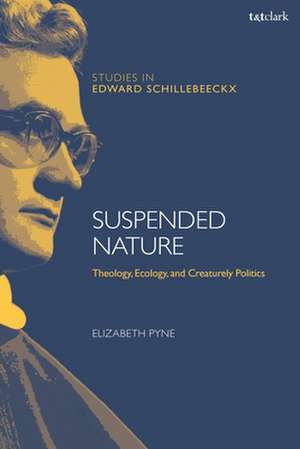
Suspended Nature
Autor Elizabeth Pyne Editat de Frederiek Depoortere, Stephan van Erp, O Pen Limba Engleză Hardback – 2 mar 2028
Preț: 550.36 lei
Preț vechi: 815.82 lei
-33% Nou
Puncte Express: 826
Carte nepublicată încă
Doresc să fiu notificat când acest titlu va fi disponibil:
Se trimite...
Specificații
ISBN-13: 9780567694980
ISBN-10: 0567694984
Pagini: 256
Dimensiuni: 156 x 234 x 25 mm
Greutate: 0.45 kg
Editura: BLOOMSBURY ACADEMIC
Locul publicării:London, United Kingdom
ISBN-10: 0567694984
Pagini: 256
Dimensiuni: 156 x 234 x 25 mm
Greutate: 0.45 kg
Editura: BLOOMSBURY ACADEMIC
Locul publicării:London, United Kingdom
Caracteristici
The first monograph to bring Schillebeeckx's theology squarely into the thick of contemporary debates in ecotheology
Notă biografică
Elizabeth Pyne is Adjunct Instructor at Fordham University's London Centre, UK.
Cuprins
Introduction Chapter 1Theological Anthropology, Modernity, and the Problem of Nature Chapter 2Edward Schillebeeckx on the Cause of CreationChapter 3Species of Negativity: Human Integrity and the Mystery of Suffering in Schillebeeckx's Theology of Creation Faith Chapter 4Critical Theory and Nature's Nonidentity: Thinking Ecologically with Adorno Chapter 5A Political Ecology of Creation Faith: Toward the Liberation of Creaturely Difference Conclusion BibliographyIndex