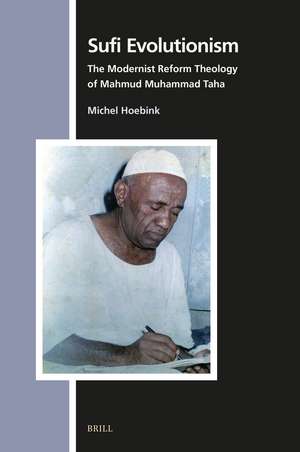
Sufi Evolutionism: The Modernist Reform Theology of Mahmud Muhammad Taha: Numen Book Series, cartea 183
Autor Michel Hoebinken Limba Engleză Hardback – 16 dec 2025
Găsim în lucrarea Sufi Evolutionism o perspectivă academică rară asupra fundamentelor metafizice ale reformei islamice, pornind de la capitolul dedicat „Întoarcerii la Sufism”. În timp ce majoritatea studiilor despre Mahmud Muhammad Taha se concentrează pe aspectele sale politice sau juridice, Michel Hoebink demonstrează că viziunea reformatorului sudanez nu a fost doar o reacție la modernitatea occidentală, ci o evoluție organică a misticismului islamic premodern. Credem că această abordare este esențială pentru a înțelege cum Taha a reușit să fundamenteze drepturile femeilor și ale non-musulmanilor în interiorul tradiției, nu în afara ei.
Structura volumului este riguros organizată în trei mari secțiuni: o biografie intelectuală și politică a Mișcării Republicane (1909–1985), o analiză a necesității reformei în contextul modernismului și islamismului, și o explorare profundă a ontologiei sufi. Autorul explică modul în care conceptele de „progres spiritual” și „iluminare” devin piloni pentru o guvernanță democratică. Această ediție de la Brill se distinge prin rigoarea documentării proceselor de apostazie din 1968 și 1985, oferind un context istoric complet asupra tensiunilor dintre tradiționaliști și reformatori.
Alternativă la Quest for Divinity de Mohamed A. Mahmoud pentru cursurile de filosofie islamică contemporană, Sufi Evolutionism are avantajul de a integra teoria evoluției islamice direct în tradiția mistică, oferind o bază teologică mai solidă decât analizele pur politice. Față de Islam's Perfect Stranger, care se concentrează pe diversitatea socială a Sudanului, volumul de față este o monografie de idei, adresată cercetătorilor care doresc să înțeleagă arhitectura internă a gândirii lui Taha.






Preț: 833.12 lei
Preț vechi: 1016.01 lei
-18%
Carte disponibilă
Livrare economică 06-17 noiembrie
Specificații
ISBN-10: 9004748237
Pagini: 388
Dimensiuni: 155 x 235 mm
Greutate: 0.72 kg
Editura: Brill
Colecția Brill
Seria Numen Book Series
De ce să citești această carte
Recomandăm această carte cercetătorilor în istoria ideilor și studenților la teologie islamică. Cititorul va obține o înțelegere profundă a modului în care misticismul sufi poate servi drept fundament pentru drepturile omului și democrație într-un context musulman. Este o resursă academică esențială pentru a vedea cum un gânditor african a oferit un răspuns original atât secularismului vestic, cât și salafismului radical.
Despre autor
Michel Hoebink este un cercetător specializat în gândirea islamică modernă și reformismul religios din Africa de Nord și Orientul Mijlociu. Prin această contribuție în Numen Book Series, el se impune ca un expert în analiza intersecției dintre misticismul tradițional și provocările politice contemporane. Munca sa se concentrează pe recuperarea vocilor intelectuale marginalizate, oferind o perspectivă critică asupra modului în care teologia se transformă sub presiunea regimurilor militare și a mișcărilor religioase conservatoare, așa cum a fost cazul în Sudanul secolului XX.
Notă biografică
Descriere
Cuprins
Preface
Introduction
1 Ṭaha and His Republican Movement
1909–32 Childhood and Education
1932–45 Nationalist Activism
1945–6 The Republican Party
1946–51 Spiritual Retreat
1951–58 Democracy and Independence
1958–64 ʿAbbūd’s Military Regime
1964–69 Second Democratic Period
1968 Apostasy Trial
1969–76 Numayrī’s Military Regime
1969–85 Republican Practice
1969–77 The Quarrel with the Traditionalist Scholars
1977–85 Return of the Muslim Brothers
1980–82 Millenarian Expectations and Internal Controversy
1983–85 Numayrī’s Islamic Law
1985 Apostasy Trial
1985–6 Evaluations of the Trial
Conclusion: the Development of Ṭaha’s Views
2 The Need for Reform
2.0 Introduction: Muslim Modernism and Islamism
2.1 Reform of Western Modernity
2.2 Reform of Traditional Islam
2.3 Conclusion
3 The Return to Sufism
3.0 Introduction: Ṭaha and the Sufi Tradition
3.1 Fall and Return
3.2 Existence
3.3 Man
3.4 Spiritual Progress
3.5 Enlightenment
3.6 Prophets and Saints
3.7 Unity and Development of Religion
3.8 The Qurʾān
3.9 Following the Prophet
3.10 Individualism
3.11 Death and Afterlife
3.12 The Return of Jesus
3.13 The Sealing of Prophethood and Sainthood
3.14 Conclusion
4 Evolution
4.0 Introduction: Evolution
4.1 Spiritual Universe
4.2 Evolution Re-enchanted
4.3 Emergence of Man
4.4 History of Science and Religion
4.5 God’s Kingdom on Earth
5 The Second Message of Islam
5.0 Introduction: Legal Reform
5.1 The Concept of the Second Message
5.2 The Sealing of Guardianship
5.3 Socialism and Democracy
5.4 Non-Muslims
5.5 Women
5.6 Corporal Punishments
5.7 Perfect Man
Conclusion
Sources and References
Index
Recenzii
Hoebink analyzes Maḥmūd Muḥammad Ṭaha’s life and thought in the context of a wide range of intellectual traditions – western and eastern, local Sudanese and global, as well as premodern Sufi and modern esoteric and idealist. He shows how Ustādh Maḥmūd and the Sudan were an integral part of world-wide intellectual developments. A must read for students of both Sudanese and Islamic history. - Lidwien Kapteijns, author of Stringing Coral Beads: The Religious Poetry of Brava (c. 1890 -1975)