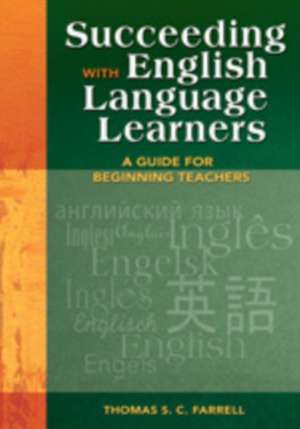
Succeeding with English Language Learners
Autor Thomas S. C. Farrellen Limba Engleză Paperback – noi 2005
La intersecția dintre pedagogia aplicată, psihologia educațională și lingvistică, Succeeding with English Language Learners propune un cadru de sprijin esențial pentru profesorii aflați la început de drum. Găsim în această carte o soluție pragmatică pentru ceea ce autorul numește „șocul realității” — discrepanța dintre idealurile teoretice din facultate și provocările cotidiene ale predării limbii engleze ca limbă secundară (ESL) sau străină (EFL).
Structura volumului este riguros organizată pentru a ghida cititorul prin fazele critice ale primului an de învățământ. Primele capitole analizează etapele de dezvoltare ale cadrului didactic și importanța mentoratului, în timp ce secțiunile ulterioare plonjează în aspecte tehnice: planificarea lecțiilor, predarea gramaticii, a vocabularului și dezvoltarea competențelor de scriere și ascultare. Un element distinctiv îl reprezintă cele 104 „Exploratory Breaks”, momente de reflecție care transformă lectura dintr-una pasivă într-un dialog constructiv cu un mentor sau supervizor.
Cititorii familiarizați cu Navigating the English Language Classroom de Lía D. Kamhi-Stein vor aprecia modul în care acest volum aduce un plus de interactivitate prin exercițiile de reflecție aplicate. În contextul operei sale, Thomas S. C. Farrell continuă direcția stabilită în Reflective Language Teaching și TESOL Teacher Education, rafinând conceptul de „practică reflexivă”. Dacă lucrările anterioare se concentrau pe fundamentul teoretic al educației profesorilor, volumul de față este o ancoră practică, axată pe supraviețuirea și succesul imediat în sala de clasă. Credem că această abordare modulară, susținută de experiența de aproape trei decenii a autorului, oferă siguranța necesară oricărui debutant în fața unui colectiv divers de elevi.
Preț: 248.41 lei
Carte tipărită la comandă
Livrare economică 07-21 noiembrie
Specificații
ISBN-10: 1412924391
Pagini: 178
Dimensiuni: 178 x 254 x 10 mm
Greutate: 0.37 kg
Ediția:1
Editura: Corwin
Locul publicării:Thousand Oaks, United States
V-ar putea interesa
-
 Level 2: Tales from the Arabian NightsAnne CollinsPreț: 74.58 lei
 -
 Preț: 74.56 lei
 -
 Preț: 74.56 lei
 -
 The Literacy GapsIvannia Soto-HinmanPreț: 328.66 lei
 -
 Preț: 296.58 lei
 -
 Culturally Responsive Teaching and The BrainZaretta HammondPreț: 196.79 lei
 -
 Diversity, Equality and Achievement in EducationGianna KnowlesPreț: 396.45 lei
De ce să citești această carte
Această carte este recomandată profesorilor debutanți de limba engleză care doresc să facă tranziția lină de la teorie la practica de la catedră. Cititorul câștigă un set de instrumente de reflecție și planificare care reduc stresul primului an. Este un ghid de supraviețuire profesională care transformă provocările de management al clasei în oportunități de învățare, fiind ideal pentru sesiunile de mentorat.
Despre autor
Thomas S. C. Farrell este profesor de lingvistică aplicată la Universitatea Brock din Canada, având o carieră de peste 27 de ani dedicată domeniului ESL. Este recunoscut la nivel internațional pentru expertiza sa în practica reflexivă și formarea cadrelor didactice. A publicat numeroase lucrări de referință la edituri prestigioase precum Corwin Press și Cambridge University Press, printre care se numără „Reflective Practice in Action” și „Professional Development for Language Teachers”. Opera sa se concentrează pe sprijinirea profesorilor în procesul lor de evoluție continuă, oferind punți între cercetarea academică și realitatea de la catedră.
Descriere scurtă
Recenzii
"The tone of the text is easy going and relaxed, a welcome break from over-flowery 'academic' language for students ready to enter the 'real world' of the classroom. By using the 'exploratory breaks,' new teachers should find it simple to further the given lesson plans and work them into useful plans for their own classrooms."
"Very relevant to the real-life teaching situations that first year teachers often encounter. Citations for teacher resources are included as the reader moves along; I found them excellent for immediate references for teachers who want to read more on the topics. The 'Exploratory Breaks' are also easy to find and are helpful and formatted to be teacher-friendly."
"Offers much background information and many teaching suggestions for those who are just beginning to understand how to help ELLs. Farrell invites interaction by providing numerous 'exploratory breaks' within the book to help readers further internalize what they have just read by talking or writing about it."
"A valuable starting point for new teachers to get acquainted with fundamental facets of English language teaching."
Cuprins
Acknowledgments
About the Author
Ch 1: Teaching in the First Year
Exploratory Break 1.1: Teaching in the First Year
Exploratory Break 1.2: First Year Phases of Development
Exploratory Break 1.3: Stages of Development
Exploratory Break 1.4: Stacy's First Years of Development
Exploratory Break 1.5: Stacy's First Years of Support
Exploratory Break 1.6: Mentors
Exploratory Break 1.7: Teaching Load
Exploratory Break 1.8: Nature of Classes during the First Years
Exploratory Break 1.9: Helping Yourself
Chapter Reflection
Ch 2: Planning English Language Lessons
Exploratory Break 2.1: Why Plan Lessons?
Exploratory Break 2.2: Benefits of Planning Lessons
Exploratory Break 2.3: Lesson Plan Details
Exploratory Break 2.4: Writing Lesson Objectives
Exploratory Break 2.5: Lesson Design
Exploratory Break 2.6: Questions to Consider Before Lessons
Exploratory Break 2.7: Components of a Language Lesson
Exploratory Break 2.8: Questions for Teachers to Consider After the Lesson
Exploratory Break 2.9: Questions for Students to Consider After the Lesson
Chapter Reflection
Ch 3: Classroom Management
Exploratory Break 3.1: Teacher: Manager or Conductor
Exploratory Break 3.2: Organizing the Class
Exploratory Break 3.3: Conducting Group Work
Exploratory Break 3.4: Dealing with the Disengaged ESL Student
Exploratory Break 3.5: Facilitating Classroom Communication
Exploratory Break 3.6: Investigating Patterns of Interaction in Your Classroom
Exploratory Break 3.7: Facilitating Diversity
Exploratory Break 3.8: Facilitating Different Learning Styles
Exploratory Break 3.9: Looking Ahead
Chapter Reflection
Ch 4: Teaching Grammar
Exploratory Break 4.1: Teaching and Grammar
Exploratory Break 4.2: Grammar
Exploratory Break 4.3: Teaching Grammar
Exploratory Break 4.4: Inductive and Deductive Grammar Teaching
Exploratory Break 4.5: Why Is English So Hard?
Exploratory Break 4.6: Grammar Activity Using the CRISP Method
Exploratory Break 4.7: Create your own Grammar Activities Using the CRISP Method
Chapter Reflection
Ch 5: Teaching Writing
Exploratory Break 5.1: Writing
Exploratory Break 5.2: Purpose and Audience
Exploratory Break 5.3: Writing as Product
Exploratory Break 5.4: Writing as Process
Exploratory Break 5.5: Teaching Writing
Exploratory Break 5.6: Assumptions About Writing
Exploratory Break 5.7: Peer Evaluation
Exploratory Break 5.8: Peer Editing
Exploratory Break 5.9: Feedback
Exploratory Break 5.10: The Place of Grammar
Chapter Reflection
Ch 6: Teaching Speaking
Exploratory Break 6.1: Speaking a Second/Foreign Language
Exploratory Break 6.2: Rules of Face-to-Face Interaction
Exploratory Break 6.3: Turn-taking
Exploratory Break 6.4: Teaching Turn-taking
Exploratory Break 6.5: Establishing Topics
Exploratory Break 6.6: Topics
Exploratory Break 6.7: Conversation Breakdowns
Exploratory Break 6.8: Repair
Exploratory Break 6.9: Teaching Dimensions of Speaking
Exploratory Break 6.10: Accuracy versus Fluency
Exploratory Break 6.11: Guidelines for Planning Speaking Lessons
Exploratory Break 6.12: Project Focus
Exploratory Break 6.13: Project Information
Exploratory Break 6.14: Class Project
Chapter Reflection
Ch 7: Teaching Reading
Exploratory Break 7.1: Reading Habits
Exploratory Break 7.2: Reading Definition
Exploratory Break 7.3: Models of Reading
Exploratory Break 7.4: Reading Strategy Profile
Exploratory Break 7.5: Reading Strategies
Exploratory Break 7.6: Prior Knowledge
Exploratory Break 7.7: Word Association
Exploratory Break 7.8: Direct Experience
Exploratory Break 7.9: Cinquain
Exploratory Break 7.10: Prediction
Exploratory Break 7.11: Skimming
Exploratory Break 7.12: Scanning
Exploratory Break 7.13: Teaching New Vocabulary
Exploratory Break 7.14: Text Structures
Chapter Reflection
Ch 8: Teaching Listening
Exploratory Break 8.1: Listening
Exploratory Break 8.2: Bottom-up Processing
Exploratory Break 8.3: Top-Down Processing
Exploratory Break 8.4: Interactional Purposes
Exploratory Break 8.5: Transactional Purposes
Exploratory Break 8.6: Back-channelling Signals
Exploratory Break 8.7: Local, Global, and Transitional Repairs
Exploratory Break 8.8: Comprehension Checks
Exploratory Break 8.9: Soap Activities
Chapter Reflection
Ch 9: Language Assessment
Exploratory Break 9.1: Language Assessment
Exploratory Break 9.2: Reliability and Validity
Exploratory Break 9.3: Alternative Assessment
Exploratory Break 9.4: Criterion and Norm Reference Assessment
Exploratory Break 9.5: Selected-response Assessment
Exploratory Break 9.6: Multiple-choice Tests
Exploratory Break 9.7: True-false Tests
Exploratory Break 9.8: Matching Tests
Exploratory Break 9.9: Short-answer Tests
Exploratory Break 9.10: Essay Tests
Exploratory Break 9.11: Fill-in Tests
Exploratory Break 9.12: Oral Tests
Exploratory Break 9.13: Portfolios
Exploratory Break 9.14: Self/Peer Assessment
Exploratory Break 9.15: Constructing Language Tests
Exploratory Break 9.16: Create Your Own Language Test
Chapter Reflection
Ch 10: Professional Development
Exploratory Break 10.1: Professional Development Needs Assessment
Exploratory Break 10.2: Opportunities for Reflection and Development
Exploratory Break 10.3: Action Research
Exploratory Break 10.4: Critical Incidents
Exploratory Break 10.5: Teaching Journal
Exploratory Break 10.6: Classroom Observations
Exploratory Break 10.7: Teacher Group Discussion
Chapter Reflection
References
Index
Descriere
New teachers face a special challenge when their first assignment is teaching English language learners. This resource combines teacher induction and mentoring principles with basic ESL and EFL techniques to enhance reading, writing, speaking, listening, and grammar instruction. More than 100 exploratory breaks provide topics for reflective discussion with mentors and supervisors. Each chapter offers novice teachers supportive strategies for:
- Using different models of lesson planning
- Monitoring behavior and classroom interaction
- Assessing students for placement in ESL or general education classes
- Reflecting and exploring the development of their own teaching practice