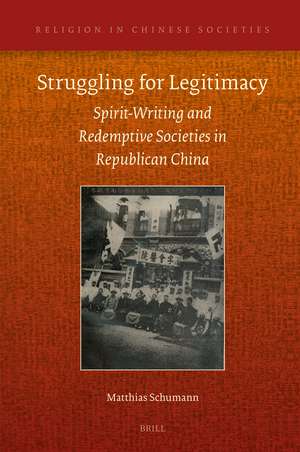
Struggling for Legitimacy: Spirit-Writing and Redemptive Societies in Republican China: Religion in Chinese Societies, cartea 20
Autor Matthias Schumannen Limba Engleză Hardback – 12 feb 2026
Preț: 755.40 lei
Preț vechi: 921.22 lei
-18% Nou
Puncte Express: 1133
Carte disponibilă
Livrare economică 15-26 mai
Specificații
ISBN-13: 9789004727229
ISBN-10: 9004727221
Pagini: 408
Dimensiuni: 155 x 235 mm
Greutate: 0.8 kg
Editura: Brill
Colecția Brill
Seria Religion in Chinese Societies
ISBN-10: 9004727221
Pagini: 408
Dimensiuni: 155 x 235 mm
Greutate: 0.8 kg
Editura: Brill
Colecția Brill
Seria Religion in Chinese Societies
Notă biografică
Matthias Schumann is Postdoctoral Research Fellow at Heidelberg University. His research deals with the interconnections between religion, society and politics in modern Chinese history. He is co-editor of Communicating with the Gods: Spirit-Writing in Chinese History and Society (Leiden: Brill, 2023).
Cuprins
Contents
Acknowledgements
List of Figures
1 Introduction
1 Coming to Terms with Spirit-Writing Organizations in Republican China
2 Legitimation Strategies within a Changing Epistemic Context
3 Spirit-Writing and the Appropriation of Knowledge
4 Overview of the Book
2 From Divination to Redemption: a Brief History of Chinese Spirit-Writing
1 The Origins of Spirit-Writing
2 The Proliferation of Spirit-Writing During the Ming and the Qing
3 Practicing Spirit-Writing to Save the World
4 The Emergence of Redemptive Societies
5 Conclusion
3 Members, Institutions, and Practices: from Local Spirit-Writing Altar to National Redemptive Society
1 A Rocky Start, or the Early History of the Wushanshe
2 The Emergence of the Daoyuan
3 Internal Unification and National Expansion
4 From Philanthropy to Religion
5 From Religion to Philanthropy
6 Members and Networks
7 Practicing Spirit-Writing
8 Conclusion
4 Between jiao and zongjiao: Religion as a Site of Appropriation and Resistance
1 Early Debates on Religion
2 Coming to Terms with zongjiao
3 The Dao of Religion
4 Religion as a Source of Unity
5 Adopting New Institutional Models and Building a Universal Religion
6 “A Great Movement to Unite the World’s Religions”
7 Conclusion
5 Reestablishing the Dao: the Confucian Dimension of Spirit-Writing
1 The Changing Status of Confucianism within the Wushanshe and the Daoyuan
2 The Confucian Classics and the Transmission of the Dao
3 Spirit-Writing and the Restoration of the Dao
4 Making Known the “Divine Way” (shendao)
5 The Political Value of Confucianism and Confucian Learning
6 Conclusion
6 Reconfiguring Philanthropy (cishan): Religion, the Red Cross, and New Forms of Philanthropic Activism
1 Debating the Reform of Philanthropy in the Late Qing
2 The Implementation of “Fundamental Relief Aid”
3 Philanthropy and the Spread of the Red Cross Movement to China
4 Taking Up the Model of Red Cross Disaster Relief
5 Disaster Relief Corps within the Red Swastika Society
6 The Professionalization and Internationalization of Disaster Relief
7 The Religious Appropriation of Philanthropic Activism
8 Conclusion
7 Limits of Legitimacy: Adapting to the Changing Political Context
1 The Politics of Religion in Early Republican China
2 Philanthropy and the Early Republican State
3 Social Stability and the Dangers of Radicalism
4 The Prohibition of Spirit-Writing Under the Nationalist Government
5 The Philanthropic Turn
6 Regrouping Under the New Life Movement
7 Conclusion
8 General Conclusion
1 Spirit-Writing and Redemptive Societies
2 The Limits of Legitimation
Bibliography
Index
Acknowledgements
List of Figures
1 Introduction
1 Coming to Terms with Spirit-Writing Organizations in Republican China
2 Legitimation Strategies within a Changing Epistemic Context
3 Spirit-Writing and the Appropriation of Knowledge
4 Overview of the Book
2 From Divination to Redemption: a Brief History of Chinese Spirit-Writing
1 The Origins of Spirit-Writing
2 The Proliferation of Spirit-Writing During the Ming and the Qing
3 Practicing Spirit-Writing to Save the World
4 The Emergence of Redemptive Societies
5 Conclusion
3 Members, Institutions, and Practices: from Local Spirit-Writing Altar to National Redemptive Society
1 A Rocky Start, or the Early History of the Wushanshe
2 The Emergence of the Daoyuan
3 Internal Unification and National Expansion
4 From Philanthropy to Religion
5 From Religion to Philanthropy
6 Members and Networks
7 Practicing Spirit-Writing
8 Conclusion
4 Between jiao and zongjiao: Religion as a Site of Appropriation and Resistance
1 Early Debates on Religion
2 Coming to Terms with zongjiao
3 The Dao of Religion
4 Religion as a Source of Unity
5 Adopting New Institutional Models and Building a Universal Religion
6 “A Great Movement to Unite the World’s Religions”
7 Conclusion
5 Reestablishing the Dao: the Confucian Dimension of Spirit-Writing
1 The Changing Status of Confucianism within the Wushanshe and the Daoyuan
2 The Confucian Classics and the Transmission of the Dao
3 Spirit-Writing and the Restoration of the Dao
4 Making Known the “Divine Way” (shendao)
5 The Political Value of Confucianism and Confucian Learning
6 Conclusion
6 Reconfiguring Philanthropy (cishan): Religion, the Red Cross, and New Forms of Philanthropic Activism
1 Debating the Reform of Philanthropy in the Late Qing
2 The Implementation of “Fundamental Relief Aid”
3 Philanthropy and the Spread of the Red Cross Movement to China
4 Taking Up the Model of Red Cross Disaster Relief
5 Disaster Relief Corps within the Red Swastika Society
6 The Professionalization and Internationalization of Disaster Relief
7 The Religious Appropriation of Philanthropic Activism
8 Conclusion
7 Limits of Legitimacy: Adapting to the Changing Political Context
1 The Politics of Religion in Early Republican China
2 Philanthropy and the Early Republican State
3 Social Stability and the Dangers of Radicalism
4 The Prohibition of Spirit-Writing Under the Nationalist Government
5 The Philanthropic Turn
6 Regrouping Under the New Life Movement
7 Conclusion
8 General Conclusion
1 Spirit-Writing and Redemptive Societies
2 The Limits of Legitimation
Bibliography
Index