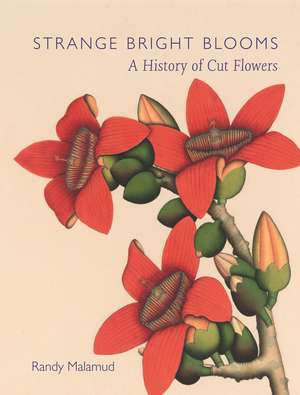
Strange Bright Blooms
Autor Randy Malamuden Limba Engleză Hardback – 16 aug 2021
Spre deosebire de manualele practice de horticultură care ne învață cum să creștem plantele, Strange Bright Blooms investighează de ce simțim nevoia viscerală de a le tăia și de a le aduce în spațiul nostru intim. Ne-a atras atenția această abordare picarescă, un periplu imprevizibil care nu se rezumă la botanică, ci explorează „natura transplantată” prin prisma culturii vizuale și a istoriei sociale. Apreciem modul în care Randy Malamud deconstruiește impulsul uman de a curatoria frumosul efemer. Ca și Blooming Flowers de Kasia Boddy, acest volum pune accent pe semnificația culturală și plăcerea pe care florile ne-o oferă de secole, dar cu un stil propriu, mult mai axat pe ecocriticism și pe modul în care am „îmblânzit” sălbăticia pentru a o transforma în accesoriu de modă sau simbol ritualic. De la florile de sticlă la pălăriile de biserică decorate exuberant, autorul analizează cum aceste „scurtături către frumusețe” reflectă preocupări complexe despre clasă, rasă, viață și moarte. În contextul operei sale, această lucrare continuă explorarea relației dintre om și mediul înconjurător începută în The Global Guide to Animal Protection, însă aici tonul este mai contemplativ și estetic. Dacă în Bouquets of Art accentul cade strict pe floriografia din artele plastice, Strange Bright Blooms extinde cadrul către cultura pop și viața de zi cu zi, oferind o structură narativă bogat ilustrată cu 110 imagini care susțin argumentele autorului despre „flower power” și estetica naturii controlate.
Preț: 264.92 lei
Preț vechi: 282.83 lei
-6%
Carte disponibilă
Livrare economică 17-24 noiembrie
Livrare express 03-07 noiembrie pentru 99.35 lei
Specificații
ISBN-10: 1789144019
Pagini: 352
Ilustrații: 90 color plates, 20 halftones
Dimensiuni: 259 x 198 x 28 mm
Greutate: 1.32 kg
Editura: REAKTION BOOKS
De ce să citești această carte
Suntem de părere că această carte este esențială pentru cei care văd în flori mai mult decât un simplu decor. Cititorul va câștiga o perspectivă critică și fascinantă asupra modului în care arta, moda și istoria au fost modelate de prezența petalelor. Este o lectură pentru spiritele curioase care doresc să înțeleagă psihologia din spatele gestului de a cumpăra sau dărui flori, dincolo de simplul act estetic.
Despre autor
Randy Malamud este profesor de limba engleză la Georgia State University, fiind o voce respectată în domeniul ecocriticismului și al modernismului literar. Experiența sa academică se reflectă în profunzimea cu care analizează conexiunile dintre literatură, etică și lumea naturală. Interesele sale de cercetare sunt vaste, de la studiul exploatării animalelor în The Global Guide to Animal Protection până la istoria culturală a plantelor, reușind să îmbine rigoarea cercetării cu o scriitură accesibilă și plină de nuanțe intelectuale.
Notă biografică
Recenzii
Descriere
Examining all things floral from paintings, fashion and pressed flowers to decorative church hats and flower power, this generously illustrated book takes cuttings from one aspect of the human urge to tame and curate nature.' - Apollo Magazine
'A fascinating and sometimes challenging literary collection of thoughts on the subject of cut blooms and our relationship with them.' - Gardens Illustrated
Virginia Woolf’s novel famously begins - 'Mrs Dalloway said she would buy the flowers herself.' Of course she would: why would anyone surrender the best part of the day to someone else?
Flowers grace our lives at moments of celebration and despair. 'We eat, drink, sing, dance, and flirt with them', writes Kakuzo Okakura. Flowers brighten our homes, our parties, and our rituals with incomparable notes of natural beauty, but the 'nature' in these displays is tamed and conscribed.
This book analyzes the transplanted nature of cut flowers - of our relationship with them and the careful curation of their very existence.
It is a picaresque, unpredictable ramble through the world of flowers, encompassing paintings, murals, fashion, and public art, glass flowers, pressed flowers, flowery church hats, weaponized flowers, deconstructed flowers, flower power. . . and much more.